Landschaft Werratal — History & Facts
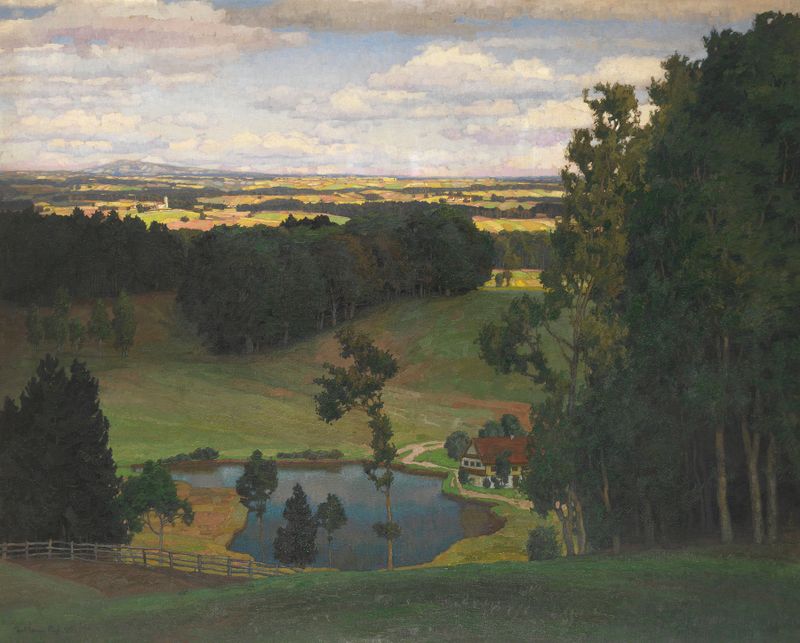
Could a single brushstroke hold eternity? In Landschaft Werratal, the essence of decay permeates the canvas, inviting the viewer to linger in the tension between beauty and transient existence. Look to the foreground, where muted greens and browns intertwine, creating a rich tapestry that embodies both life and decomposition. Notice how the light filters through the trees, casting intricate shadows that dance upon the ground, echoing the fleeting moments of nature’s cycle. The composition unfolds in gentle curves, guiding your gaze toward the horizon, where layered blues suggest a distant, fading day. The painting contrasts the vibrancy of the landscape with subtle hints of decline—a crumbling path leads nowhere, and wilted foliage speaks of a world in transition.
This juxtaposition evokes a bittersweet nostalgia, as if the artist captures not just a scene, but a poignant reminder of the inevitable passage of time. The layers of paint reveal a complexity of emotion, questioning the viewer’s relationship with nature and existence itself. In 1939, Richard Kaiser painted Landschaft Werratal during a period marked by societal upheaval. Living in Germany, he navigated a changing artistic landscape, where traditional forms began to yield to modernist influences.
This work reflects not only his personal exploration of landscape and memory but also resonates with the collective anxiety of his time, capturing an essence that feels both timeless and deeply rooted in the realities of decay.