
Landschaftsstudie — History & Facts
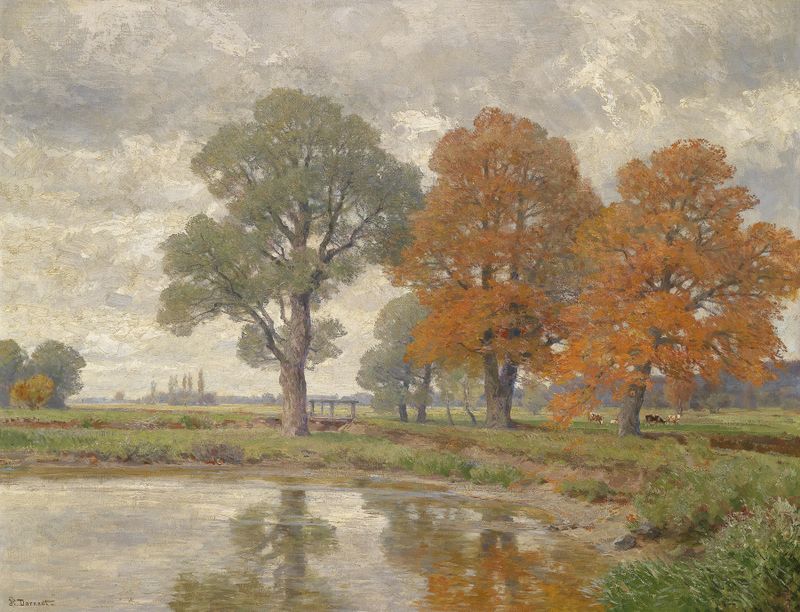
In Landschaftsstudie, the artist invites us to witness the transformative power of faith as nature unfolds its intricate beauty. Look to the horizon where the sun begins its descent, casting a golden glow that dances upon the rolling hills. Notice how the fluid strokes of green and blue coexist, intertwining with soft, warm hues. Each brushstroke captures the essence of the scene, creating a rhythmic unity between sky and earth, inviting the eye to wander and explore.
The composition feels alive, a delicate balance that evokes tranquility and reverence for the landscape. Beneath the surface, the painting communicates a profound sense of faith in nature’s resilience. The contrast between the chaos of untamed foliage and the serene sky reveals an emotional tension between disorder and harmony. This duality reflects not only the artist’s personal journey but also a universal struggle—a reminder of the grace that can emerge from life's uncertainties. In 1880, Hugo Darnaut painted this piece during his time in southern Germany, a period marked by a burgeoning interest in capturing the essence of the natural world.
As the Impressionist movement gained momentum, he sought to convey the dynamic beauty of landscapes with a focus on light and color. Darnaut's work exemplified a dedication to exploration, mirroring the artistic and cultural shifts of his time while establishing his unique voice in the evolving narrative of art.
More Artworks by Hugo Darnaut
Browse all →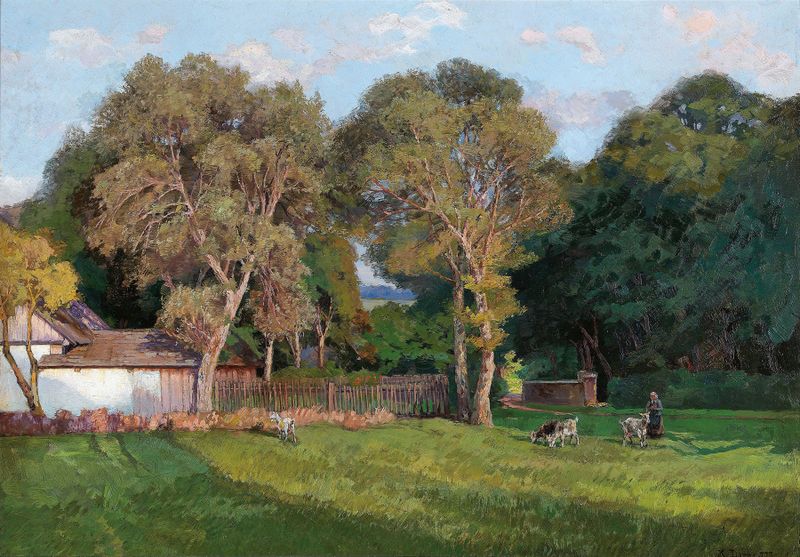
Aus dem Wienerwald
Hugo Darnaut
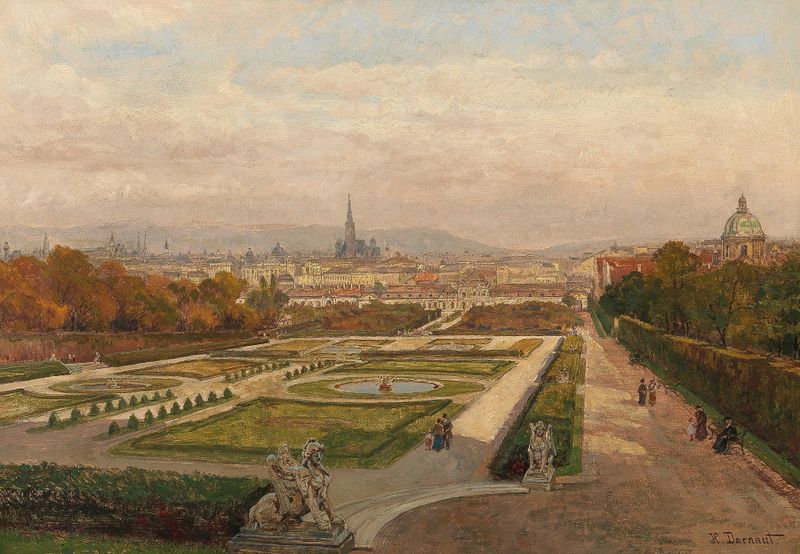
Blick vom Belvedere auf Wien
Hugo Darnaut

Motiv aus Plankenberg
Hugo Darnaut

In einem Wiener Garten (II., Praterstraße 60)
Hugo Darnaut

A Scene at Dusk in Late Autumn
Hugo Darnaut
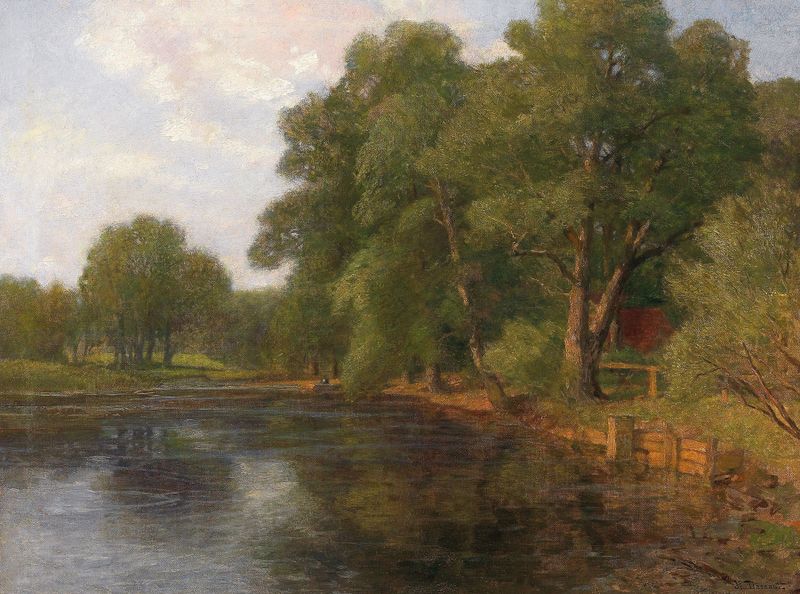
Motiv bei Plankenberg
Hugo Darnaut

Die Ruine Starhemberg im Piestingtal
Hugo Darnaut
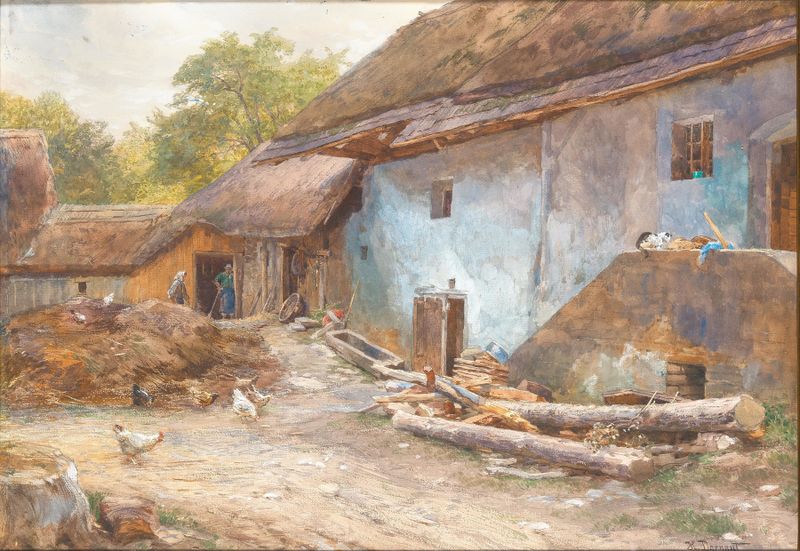
Niederösterreichischer Bauernhof
Hugo Darnaut

River Landscape with Small Herd of Cows and a Village in the background
Hugo Darnaut
Spätherbsttag
Hugo Darnaut





