Landschap met bruggetje — History & Facts
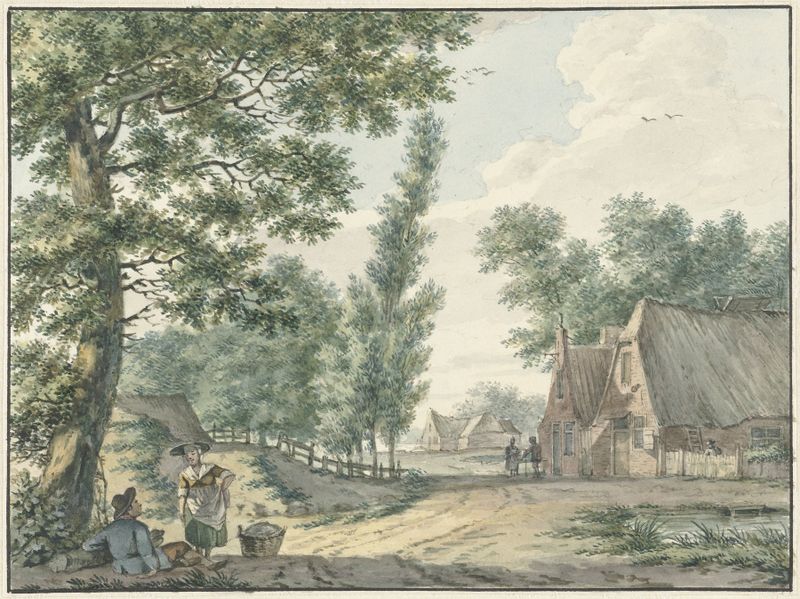
This sentiment resonates deeply in a world where fragility often lies beneath the surface. Look to the center of the composition where a delicate bridge arches gracefully over a gentle stream. The soft greens and browns of the landscape envelop the scene, while dappled sunlight filters through the leaves, casting an ethereal glow. Notice how the artist's brushstrokes blend seamlessly, capturing the essence of nature’s tranquility and the fleeting nature of time in the layers of paint. In the background, the fading light hints at an impending dusk, evoking a sense of nostalgia and longing.
The bridge itself, both sturdy and vulnerable, symbolizes the connection between the solid ground of reality and the ephemeral beauty of the landscape surrounding it. The muted colors convey a serene harmony, yet there is an undercurrent of anxiety — the realization that all moments, however perfect, are transient. Created between 1750 and 1818, the artist painted this work during a time of significant transition in the art world. Izaak Schmidt found himself influenced by the burgeoning Romantic movement, which emphasized emotional depth and the sublime beauty of nature.
This period saw a shift away from strict classical ideals, allowing painters to explore the fragility of existence and the interplay of light and shadow, themes that resonate powerfully in this piece.