Landschap met twee personen bij een boerenwoning — History & Facts
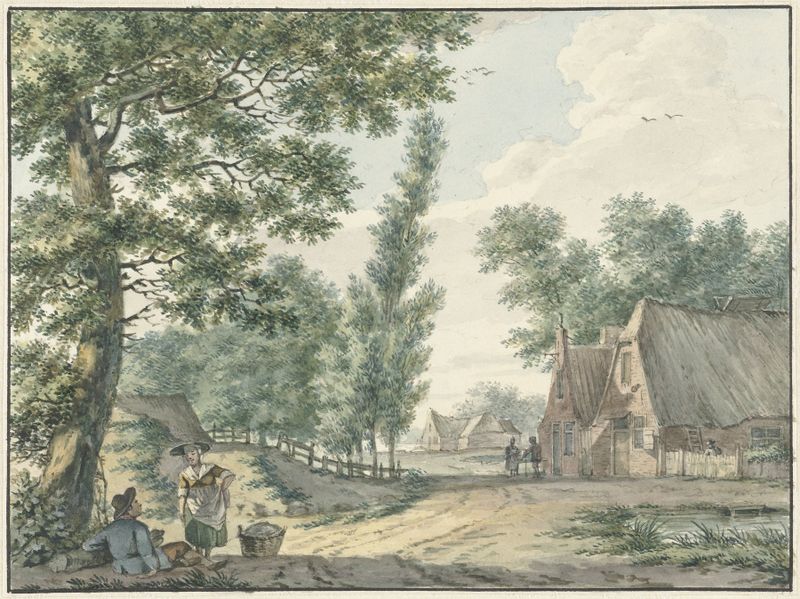
What if silence could speak through light? In the tranquil embrace of day, the landscape breathes a divine hush, inviting contemplation and reverence. Look to the center of the canvas, where two figures stand at the threshold of a rustic farmhouse, their postures and gestures steeped in a stillness that seems to animate the very air around them. The light pours delicately across the scene, illuminating the rich earth tones of the fields and the soft textures of the thatched roof. Notice how the interplay of shadow and sun creates a tapestry of contrasts, evoking a sense of serenity interwoven with the whispers of rural life. Delve deeper into the details, where small elements carry weight.
The figures, side by side, symbolize connection—perhaps a fleeting moment of companionship against the expansive backdrop of nature. Their stillness is in juxtaposition with the vibrant life of the landscape, hinting at a sacred balance between humanity and divinity. The soft brushstrokes reflect a yearning for harmony, where the simplicity of farm life becomes a prayer for peace within the vastness of existence. Izaak Schmidt created this piece between 1750 and 1818, during a period when Dutch painting was undergoing a transformation, moving from the grand historical themes of the past to more intimate, everyday scenes.
Living in a time of societal change, Schmidt’s portrayal offers a serene escape, capturing the essence of a rural landscape that resonates with the viewer's spirit, echoing the divine in the ordinary.