
Landschap met herders en vee bij een rivier — History & Facts
When did color learn to lie? In the vast expanse of nature, vibrant hues often mask a profound emptiness that lies beneath the surface, waiting to be unearthed. Look closely to the foreground where a solitary figure stands, his posture relaxed yet contemplative against the backdrop of rolling hills. The warm ochres and deep greens mingle, but it’s the river's shimmering surface that draws the eye, reflecting an illusion of tranquility. Notice how the subtle brushstrokes create movement in the water, contrasting sharply with the stillness of the cattle grazing lazily nearby.
This interplay of color and texture reveals the artist's deft hand, suggesting a world both serene and deceptively quiet. Yet, the scene evokes an emotional tension. The herders, though surrounded by life, seem enveloped in solitude, hinting at a deeper sense of isolation. The expansive landscape, while beautiful, feels empty, almost echoing the silent conversations left unspoken.
As the viewer, you can't help but feel the weight of this stillness, as if nature itself is holding its breath, inviting reflection on the vastness of existence and the transient connections between man and the natural world. Created between 1605 and 1673, this piece reflects a period of artistic experimentation and transition in the Netherlands. Lucas van Uden painted during a time when landscape painting was gaining prominence, moving away from mythological themes. His work encapsulates the interplay between the burgeoning interest in realism and the philosophical inquiries of his time, revealing a world poised on the brink of modernity yet steeped in contemplative solitude.
More Artworks by Lucas van Uden
Browse all →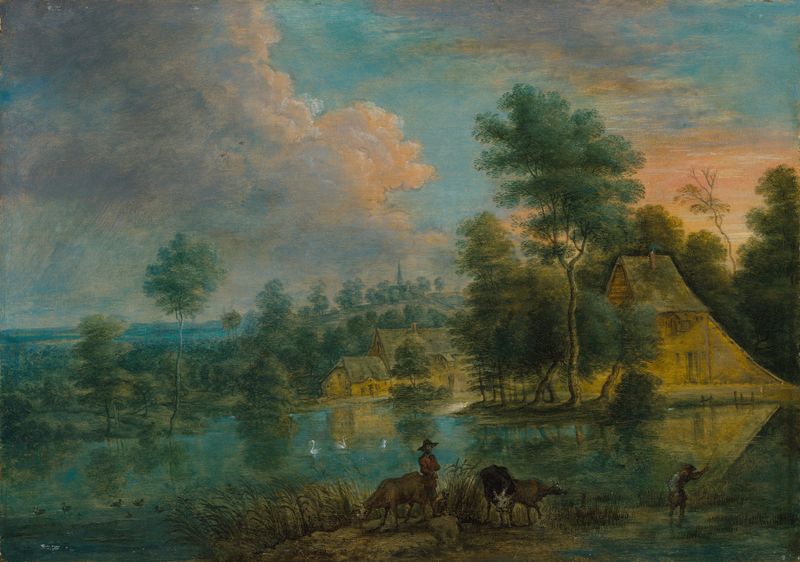
A river landscape with travellers
Lucas van Uden
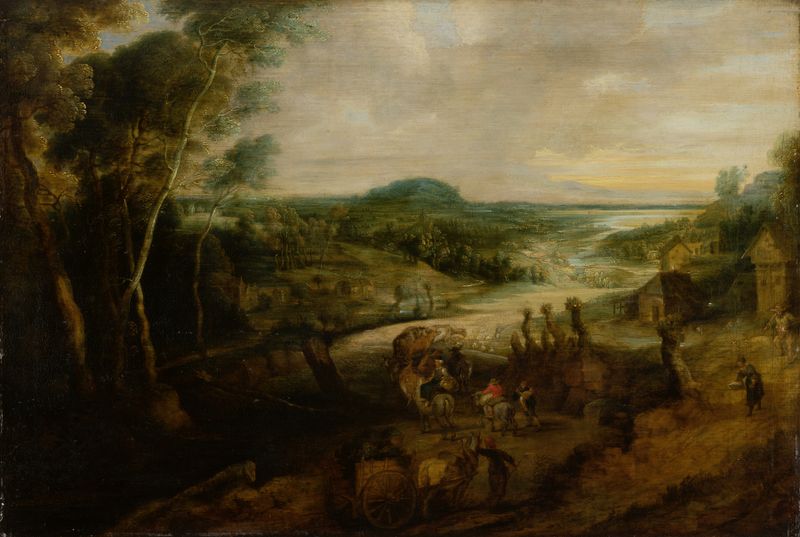
River Landscape with Peasants on the Way to Market
Lucas van Uden
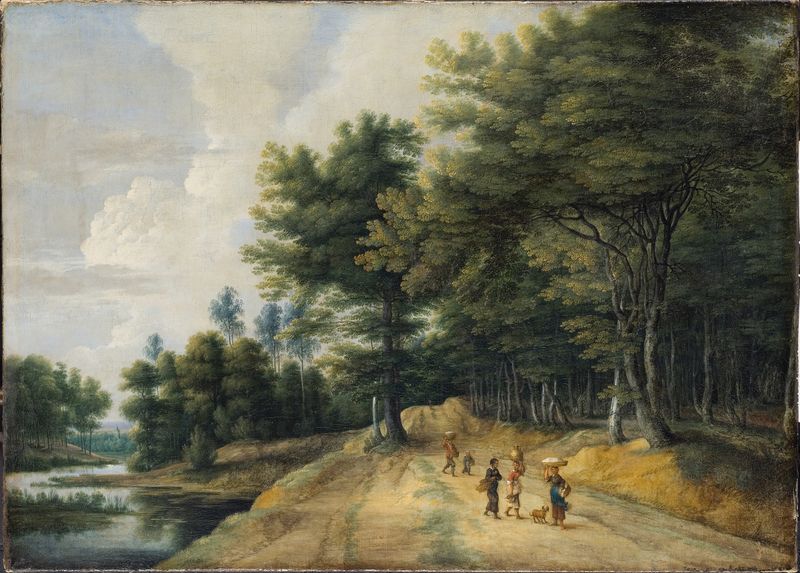
Landscape with a Road through a Wood of Beeches
Lucas van Uden
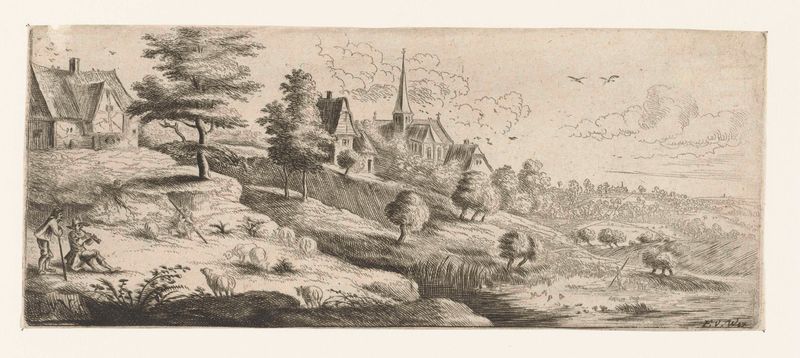
Landschap met een dorp en een schalmei spelende man
Lucas van Uden
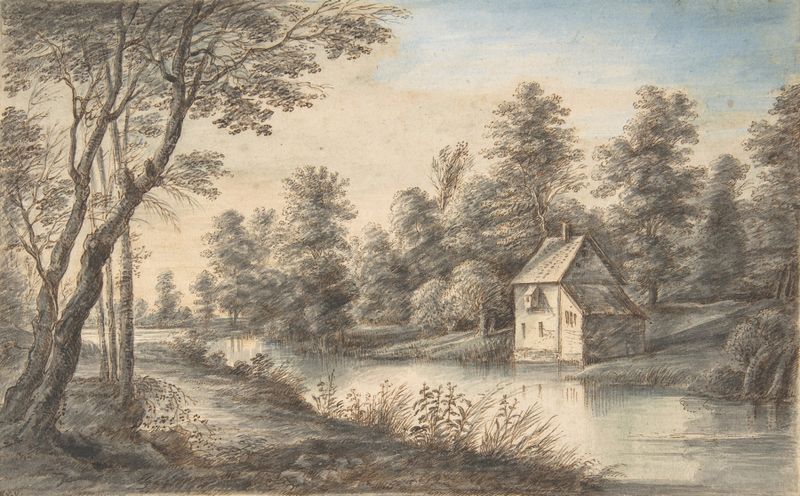
Wooded Landscape with a House beside a River
Lucas van Uden
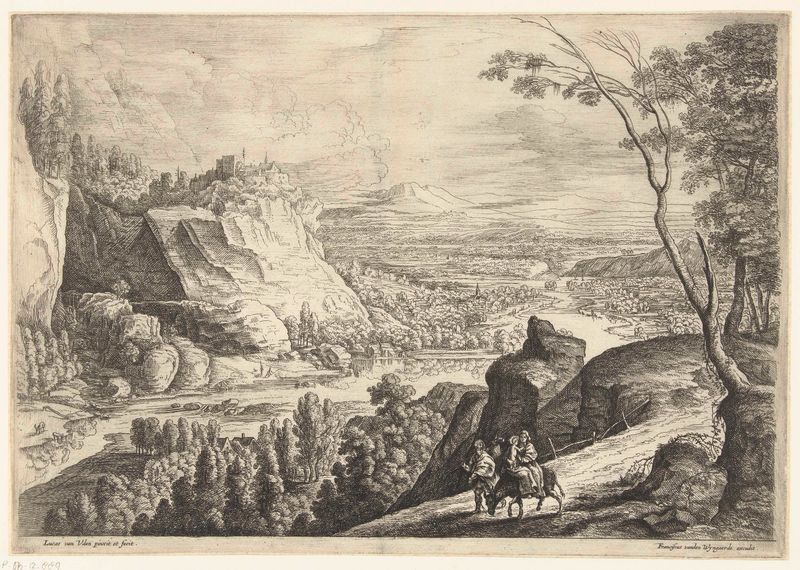
Landschap met de vlucht naar Egypte
Lucas van Uden
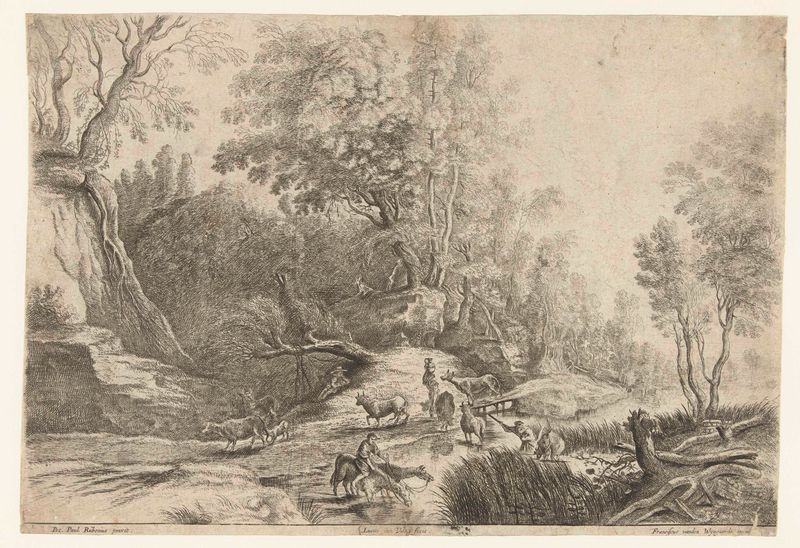
Paarden en koeien bij een drinkplaats
Lucas van Uden
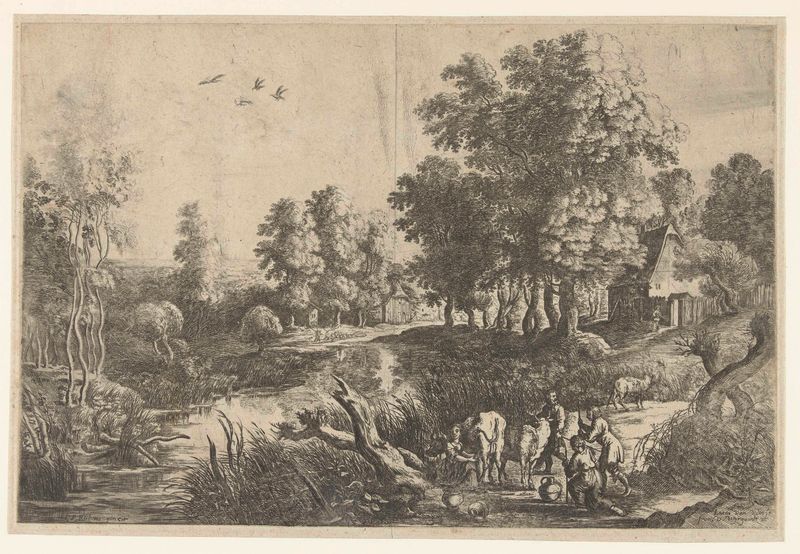
Boeren met vee bij een beek
Lucas van Uden
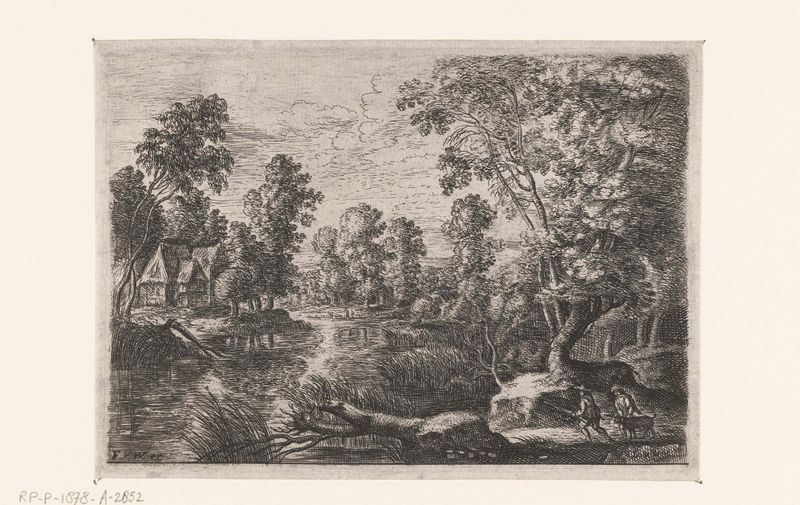
Landschap met een beek en een jager
Lucas van Uden
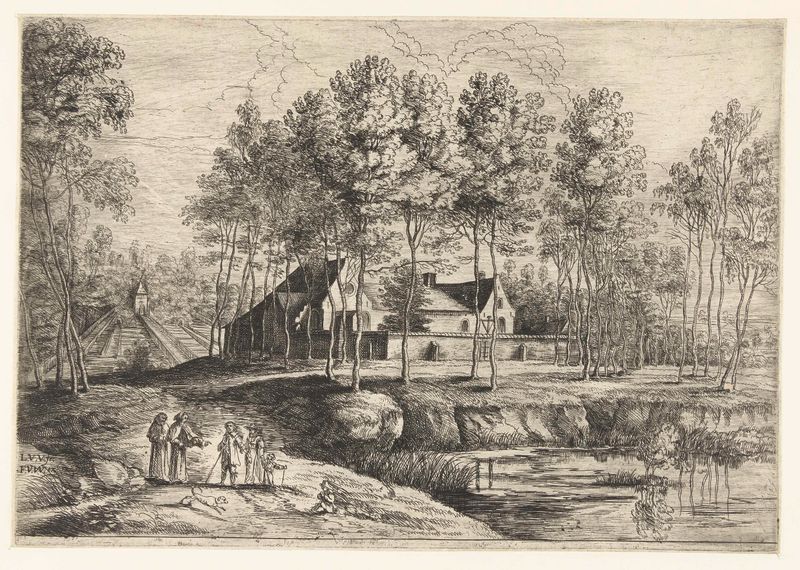
Gezicht op het kapucijnenklooster te Tervuren
Lucas van Uden





