
Landschap met watervalletje en in de verte een kasteel — History & Facts
When did color learn to lie? The interplay of hues in this landscape captivates the eye and whispers secrets of obsession and longing. Focus on the tranquil cascade, where water tumbles down jagged rocks into a crystal-clear pool. The artist employs vibrant greens and deep browns to convey the lushness of the vegetation surrounding the scene, while delicate strokes of blue in the sky create a sense of serenity. Notice how the light dances upon the water, capturing fleeting moments that seem almost alive, inviting contemplation on the passage of time. Dig deeper into the contrasts: the dynamic movement of the waterfall juxtaposed with the stoic silhouette of the distant castle.
The castle, shadowed in blues and grays, stands as a silent sentinel against the fervent backdrop of nature, suggesting human ambition and permanence in the face of nature's relentless flow. The meticulous details of the foliage reveal an obsession with the natural world, rendered with a precision that evokes both admiration and desire. In 1769, Johann Heinrich Müntz, a German-born artist, painted this piece during his time in the Netherlands, amidst the burgeoning Romantic movement. Art was shifting towards capturing emotional landscapes and the sublime, influenced by a growing fascination with nature's beauty and its ability to inspire both awe and introspection.
This work reflects not only Müntz’s skill but also the evolving relationship between man and the natural world.
More Artworks by Johann Heinrich Müntz
Browse all →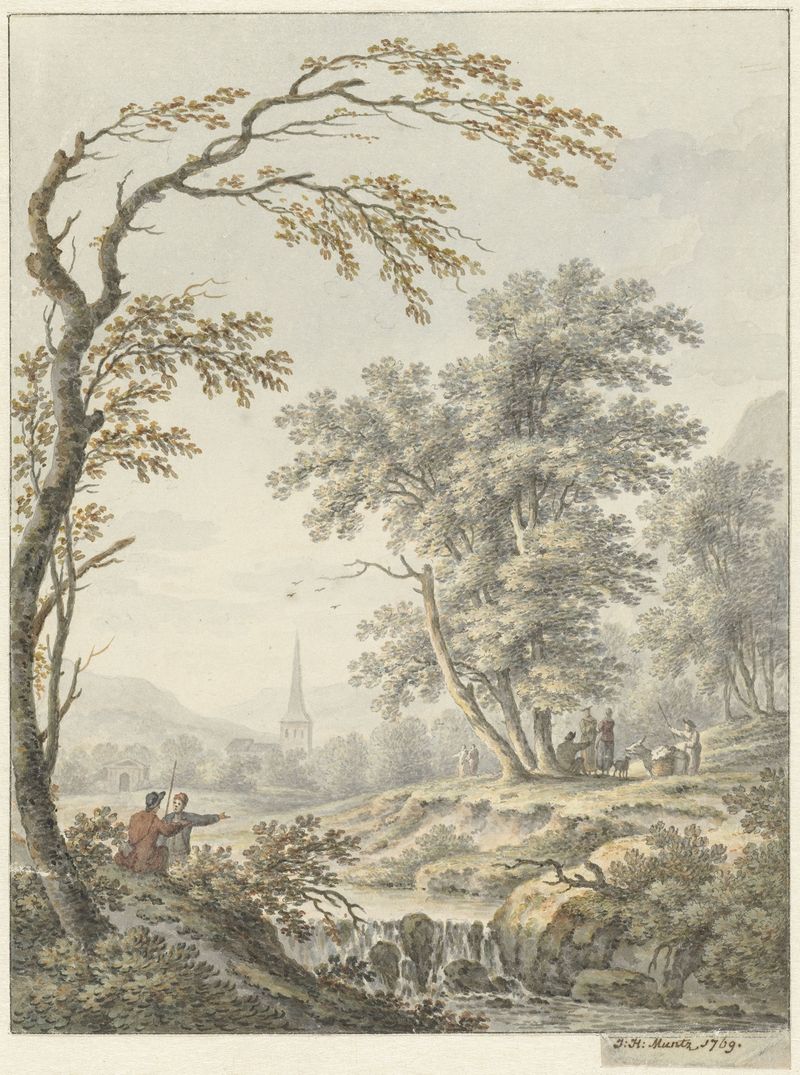
Landschap met waterval en in de verte een kerk
Johann Heinrich Müntz
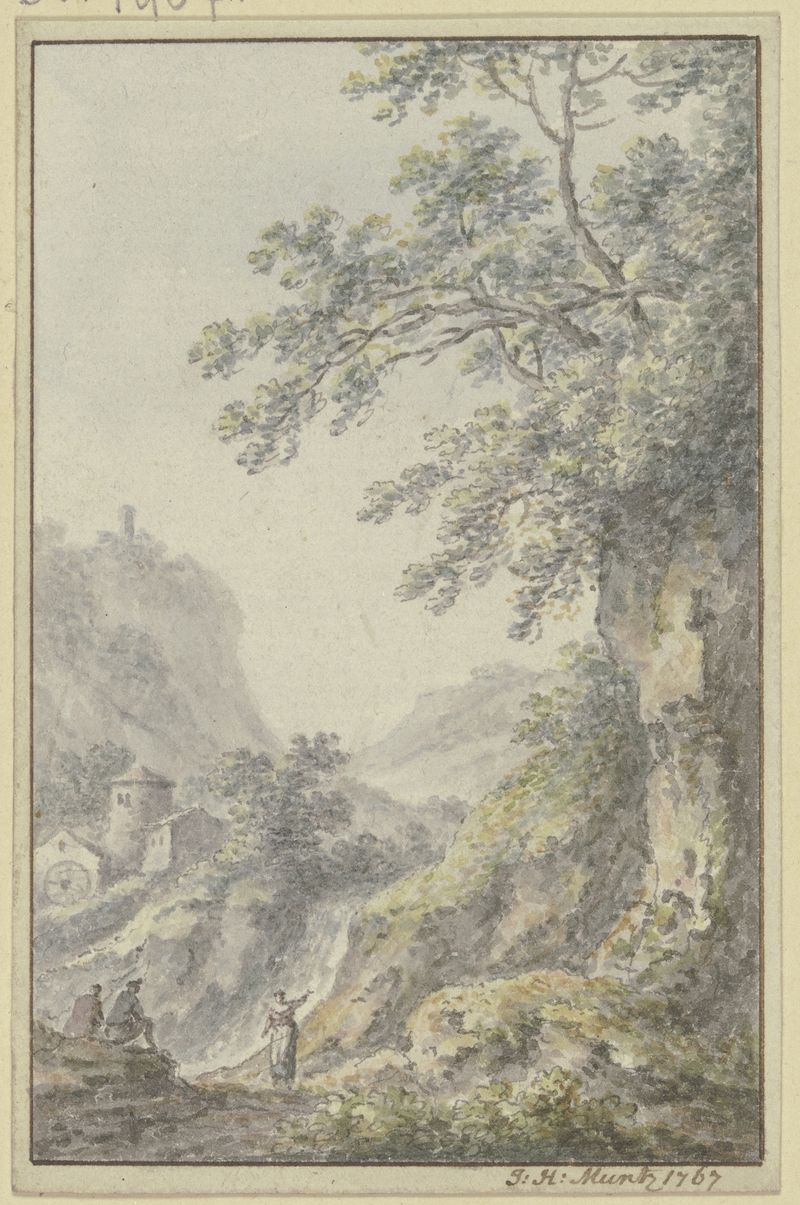
Blick in eine Berglandschaft mit einer Burg, im Vordergrund ein Hohlweg mit drei Figuren
Johann Heinrich Müntz
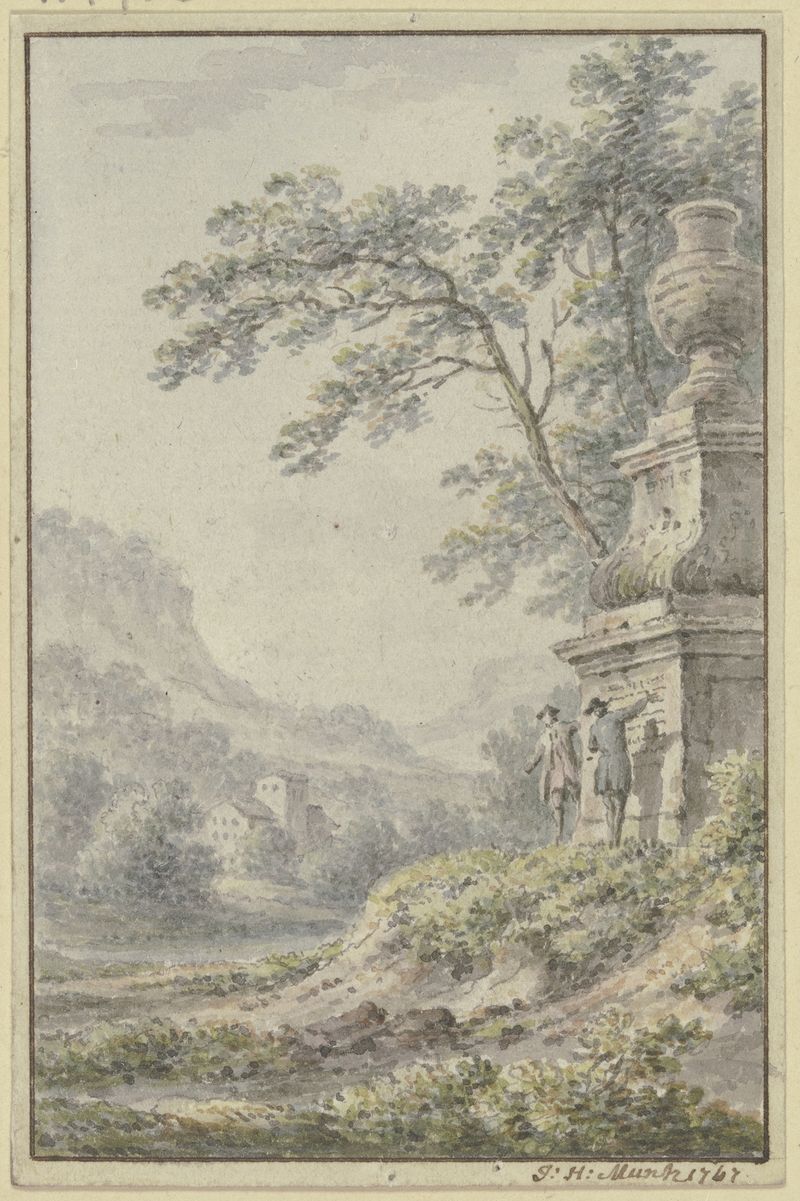
Tallandschaft mit einem Gehöft
Johann Heinrich Müntz
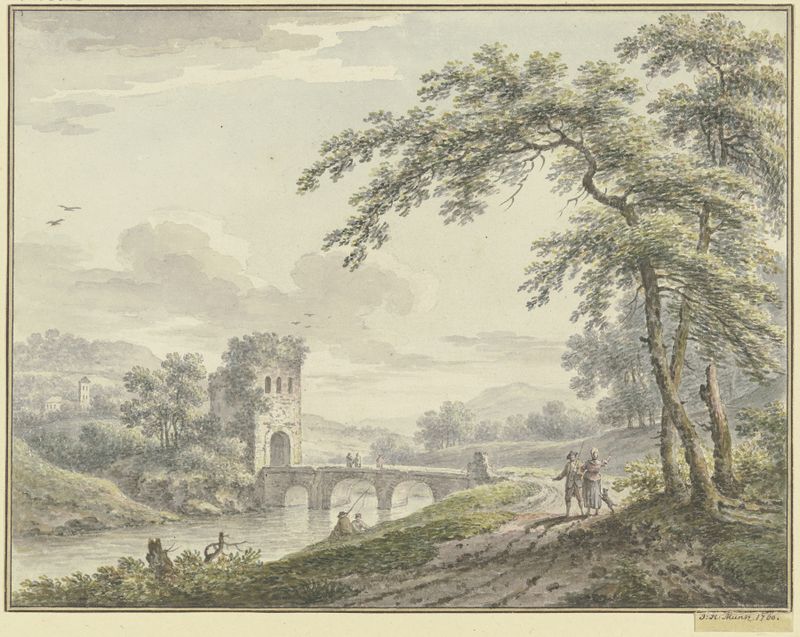
Landschaft mit einer Brücke und Turm, rechts unter einem Baum ein Paar mit einem Hund
Johann Heinrich Müntz
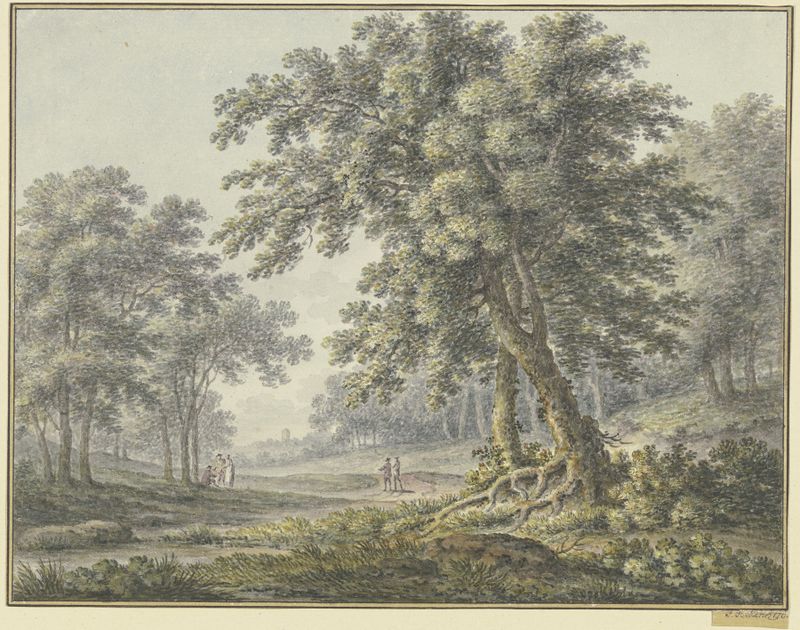
Waldpartie mit zwei Figurengruppen
Johann Heinrich Müntz
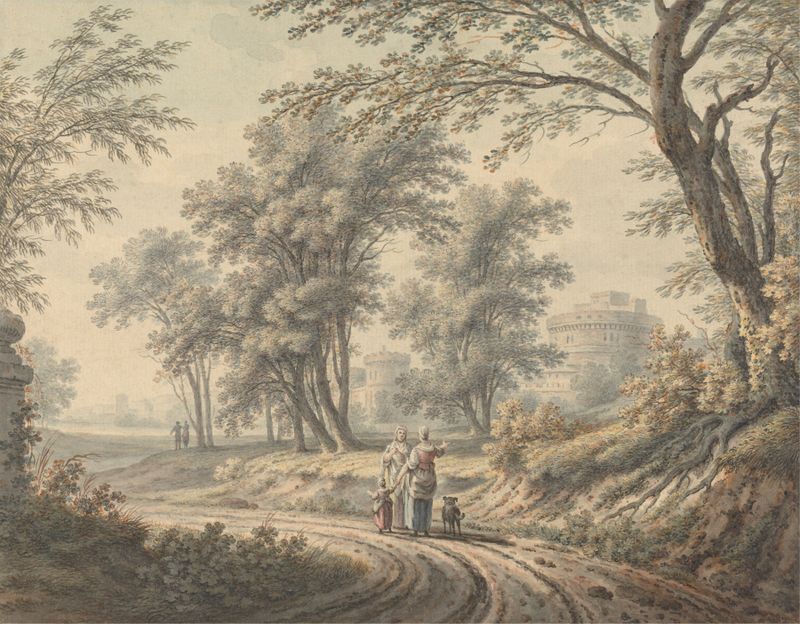
Classical Composition
Johann Heinrich Müntz





