
Tallandschaft mit einem Gehöft — History & Facts
This sentiment echoes through the serene landscapes of 18th-century Europe, where nature dances with human existence, unearthing hidden struggles beneath tranquil surfaces. Look to the left at the delicate farmhouse nestled against the horizon, its roof crowned with a gentle glow. Notice how the brushstrokes unfurl like whispers, creating an interplay of light and shadow that breathes life into every blade of grass. The soft greens and muted browns create a harmonious palette, inviting viewers to wander through the scene while simultaneously anchoring them in a moment of stillness. Amidst the idyllic surroundings, the tension between human labor and the vastness of nature emerges subtly.
The distant hills loom as silent witnesses, hinting at the unknown challenges faced by those who dwell below. The intricate details of the farmhouse and the surrounding fields suggest a fragile coexistence—a reminder that even the most beautiful landscapes carry stories of toil and sacrifice. In 1767, Johann Heinrich Müntz created this work during a period of shifting artistic trends. Having established himself in the vibrant art scene of Germany, he focused on landscapes that celebrated both natural beauty and the human experience.
As Europe grappled with enlightenment ideals, his paintings reflected a longing for connection to the land, capturing the essence of a world in transition.
More Artworks by Johann Heinrich Müntz
Browse all →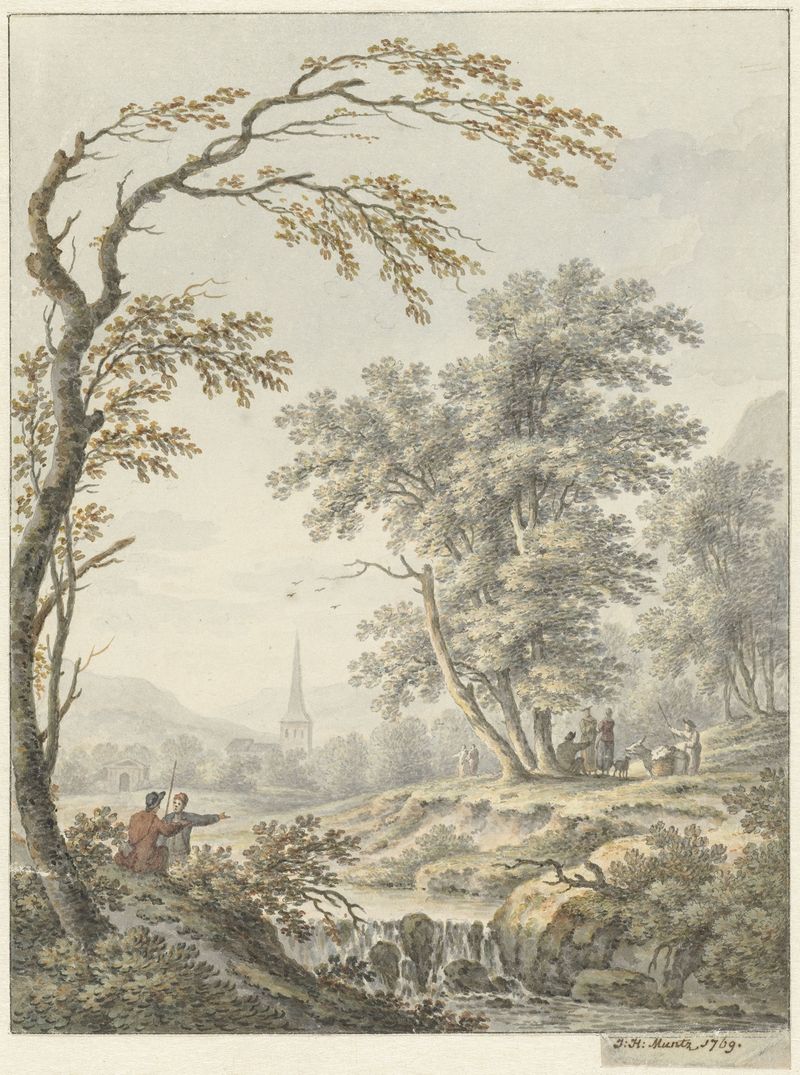
Landschap met waterval en in de verte een kerk
Johann Heinrich Müntz
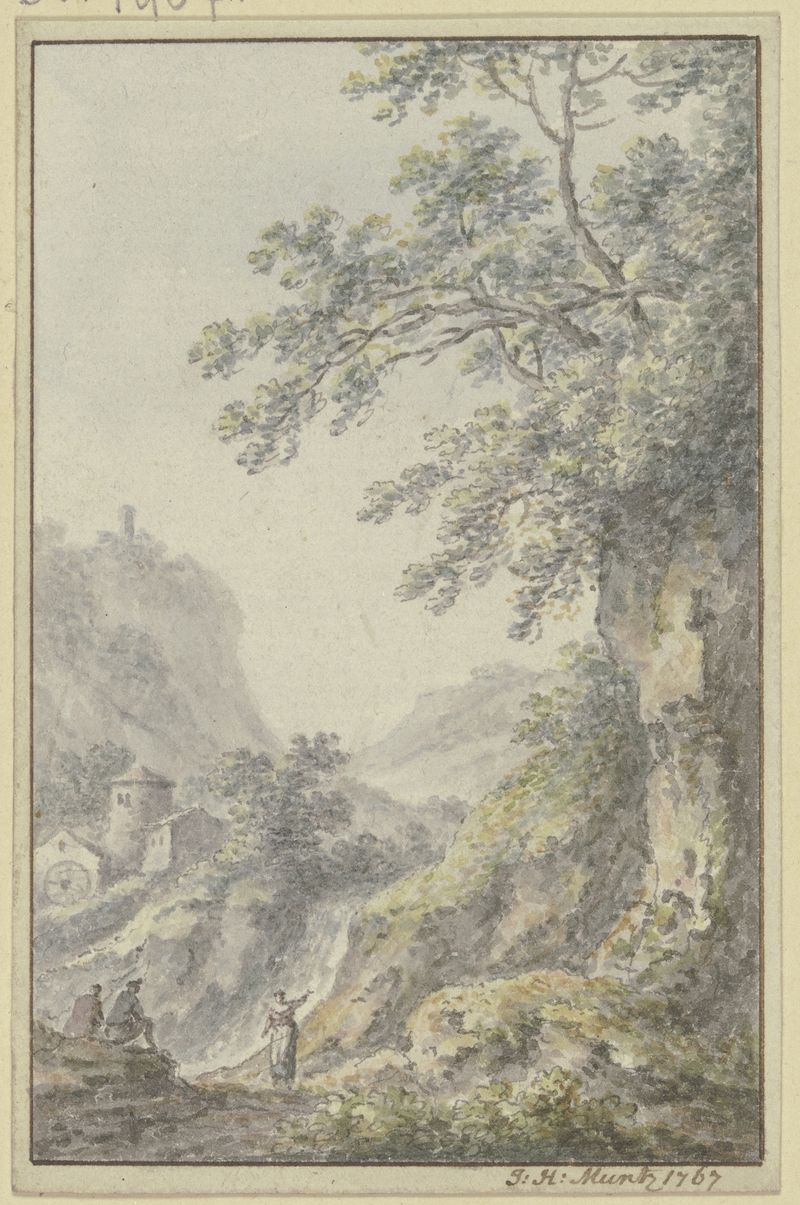
Blick in eine Berglandschaft mit einer Burg, im Vordergrund ein Hohlweg mit drei Figuren
Johann Heinrich Müntz
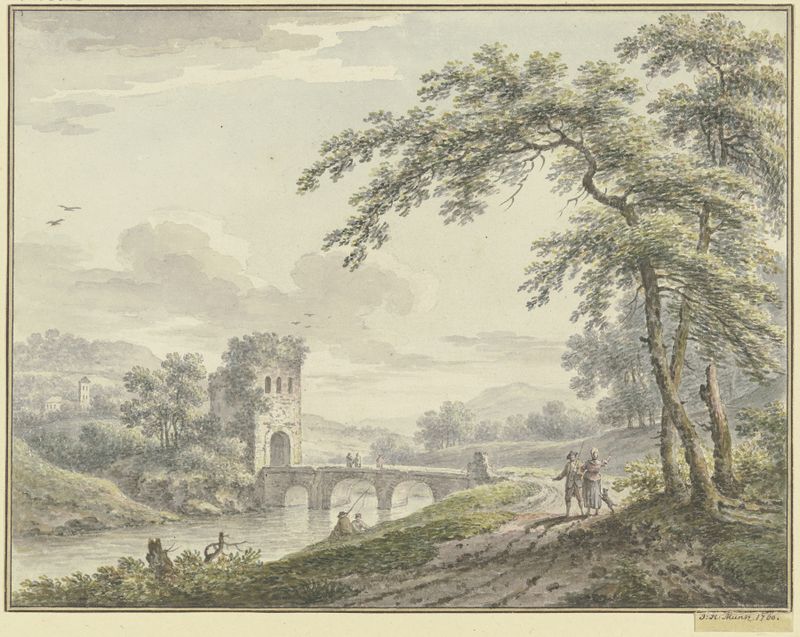
Landschaft mit einer Brücke und Turm, rechts unter einem Baum ein Paar mit einem Hund
Johann Heinrich Müntz
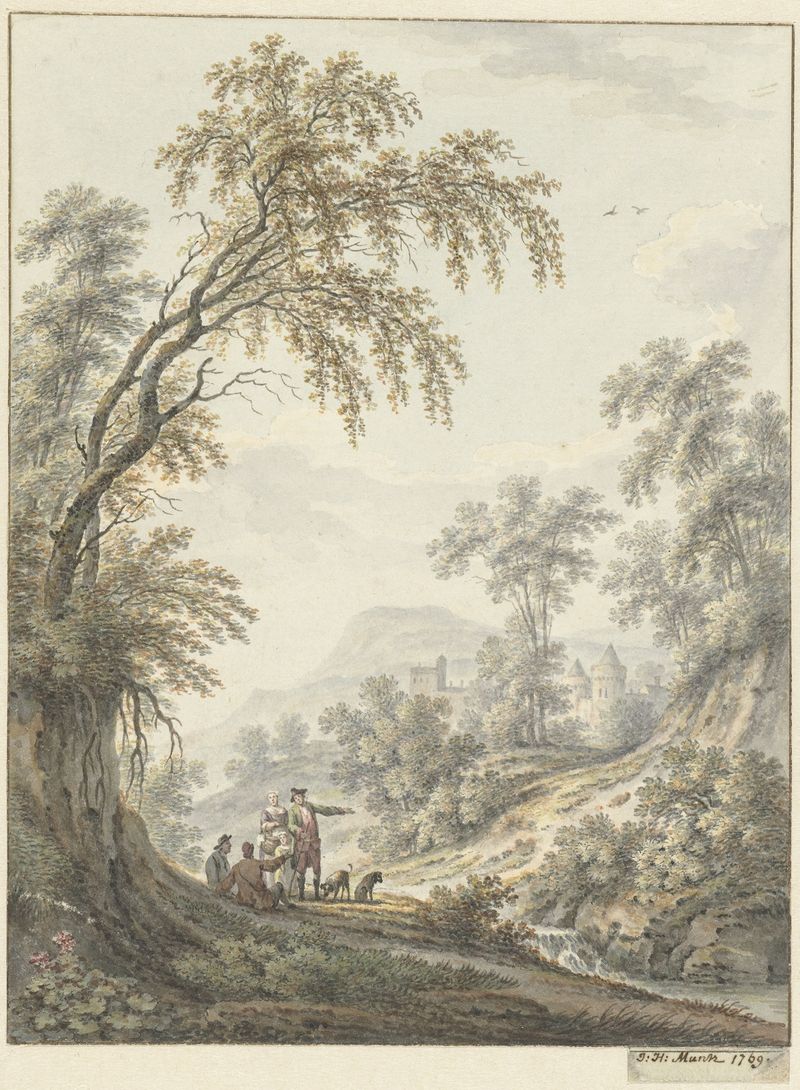
Landschap met watervalletje en in de verte een kasteel
Johann Heinrich Müntz
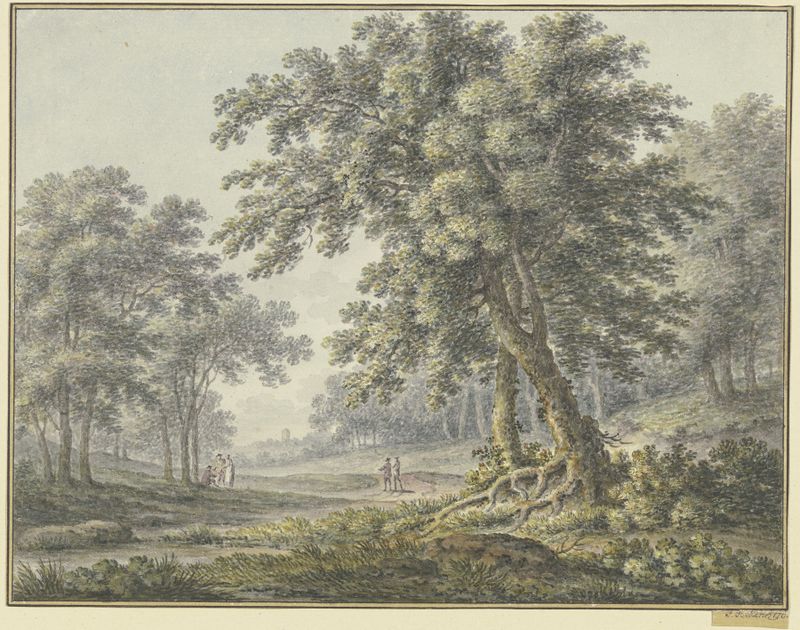
Waldpartie mit zwei Figurengruppen
Johann Heinrich Müntz
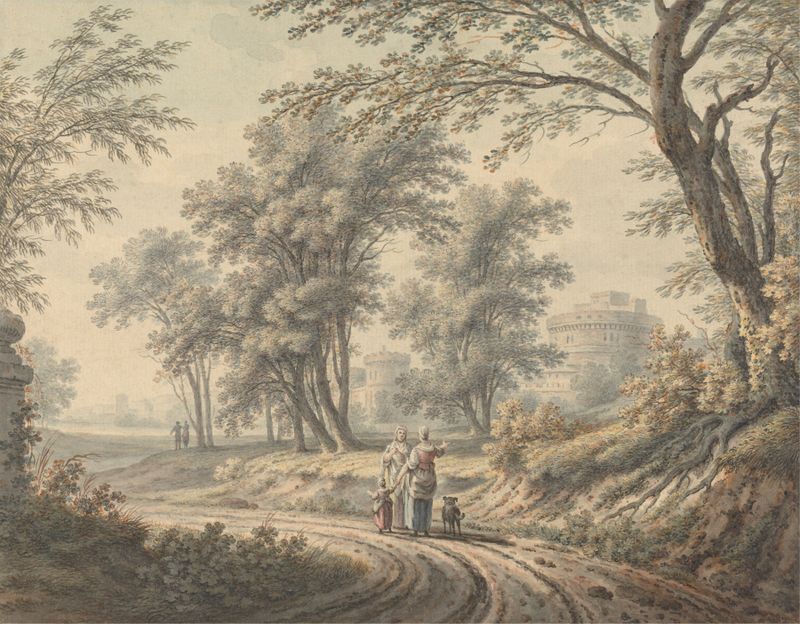
Classical Composition
Johann Heinrich Müntz





