Late Afternoon — History & Facts
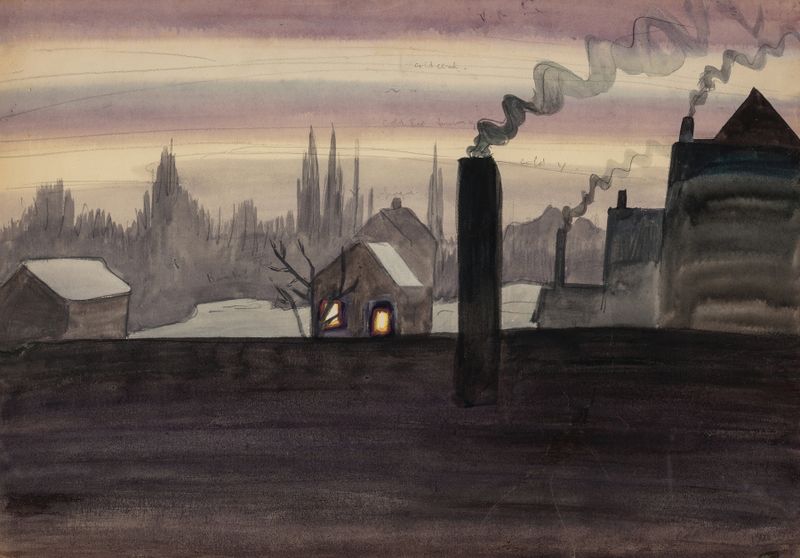
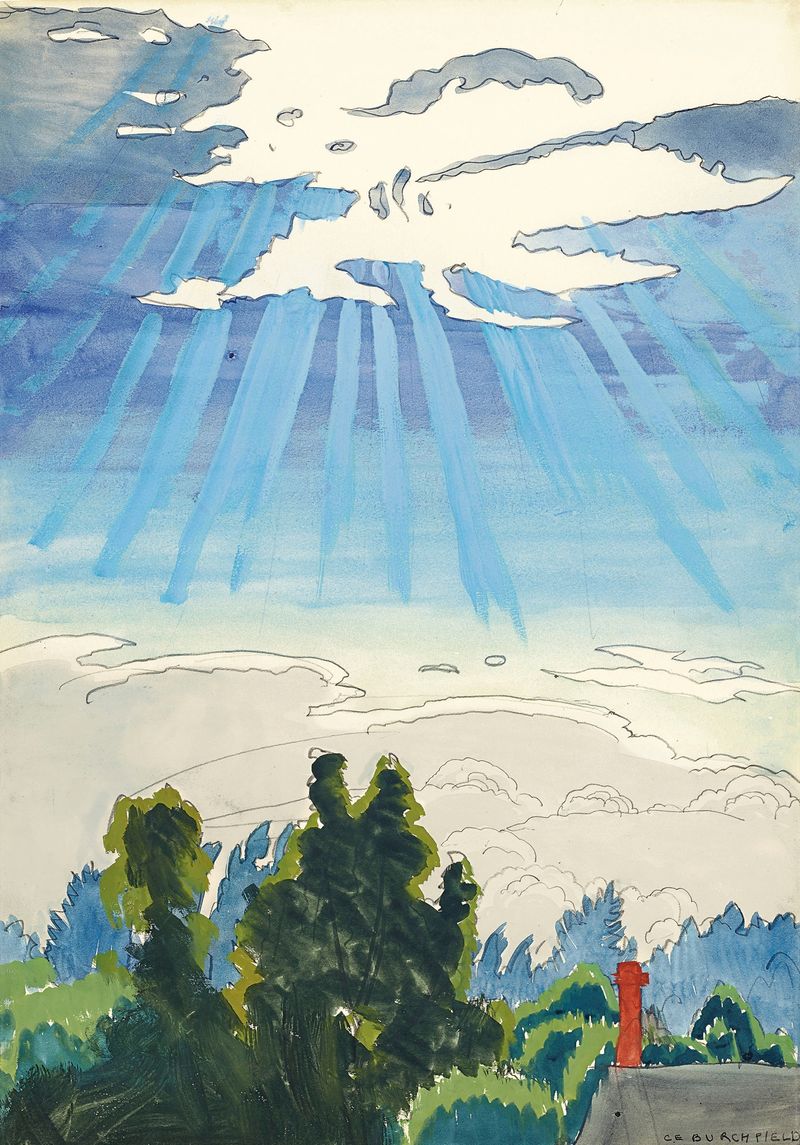
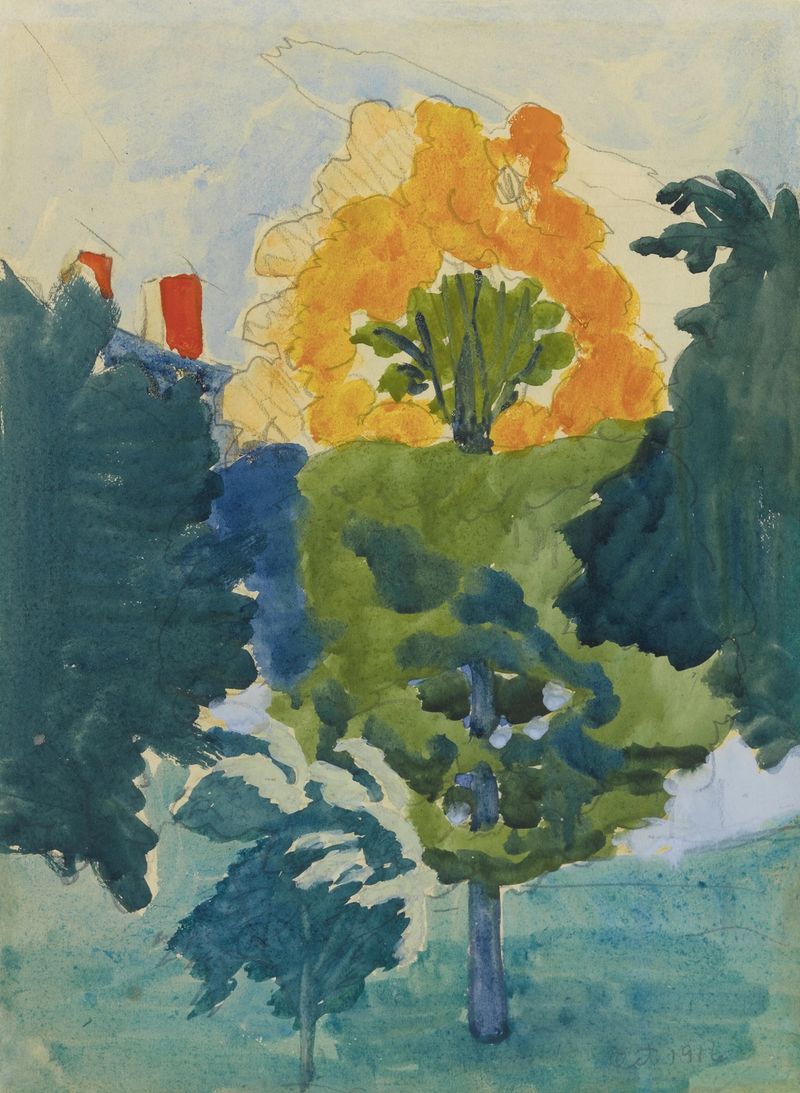
In this ephemeral dance between light and shadow, Late Afternoon beckons us to witness the delicate balance of memory and the present, capturing a moment that transcends the ordinary. Focus first on the horizon, where a golden glow spills across the canvas, casting long shadows that stretch like fingers reaching for the past. The landscape unfolds in soft, muted hues, with trees standing sentinel against the fading light. Notice how Burchfield's brushwork mimics the gentle sway of the breeze, creating a sense of movement that breathes life into the stillness.
Each stroke is a whisper of nostalgia, inviting you to look deeper into the layers of color and texture, revealing a world brimming with quiet emotion. As you examine the details, consider the contrast of light and dark that reflects the duality of existence—joy woven with melancholy. The way the sunlight dances through the leaves evokes a feeling of warmth, yet the encroaching twilight hints at the inevitability of change. There’s a tension between the vibrancy of the present and the looming shadows of the future, prompting contemplation on the fleeting nature of time and our connection to it. Created in 1916, this work emerged during a period of upheaval in both Charles Ephraim Burchfield's life and the art world.
Living in solitude in Ohio, he battled personal struggles while seeking to express the emotional resonance of nature. At the same time, modernism was challenging traditional representations in art, yet Burchfield remained rooted in a romantic view, bridging the gap between the old and the new in a world on the brink of transformation.