Late Afternoon Walk — History & Facts
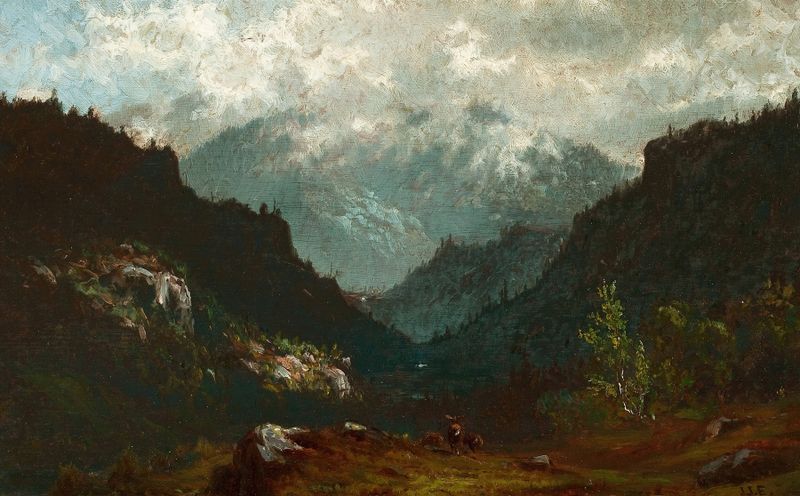
Can beauty exist without sorrow? In John Joseph Enneking’s Late Afternoon Walk, a gentle melancholy envelops the tranquil landscape, inviting the viewer to ponder the solitude inherent in nature's splendor. Look to the left at the winding path, softly illuminated by the warm glow of the setting sun. Notice how the light dances through the leaves of the trees, casting dappled shadows on the ground. The vibrant greens and golds blend seamlessly, creating a harmonious palette that evokes both peace and longing.
Enneking’s brushstrokes capture the essence of the moment, where each delicate stroke serves to enhance the ethereal quality of the scene. In the foreground, a solitary figure meanders along the path, embodying a sense of introspection and quiet contemplation. The contrast between the lush surroundings and the lone traveler hints at themes of loneliness, suggesting that even amidst beauty, a sense of isolation prevails. The fading light symbolizes the passage of time, evoking a bittersweet acknowledgment of life’s transience. Enneking painted Late Afternoon Walk in 1878, during a period of experimentation in American impressionism.
Located in Massachusetts, he was deeply influenced by the natural world around him, capturing the fleeting moments of illumination. This work reflects not only his artistic evolution but also a broader shift in the art world, as artists began to explore emotional depth through the representation of everyday scenes infused with personal significance.