L’avenue du bois de Boulogne — History & Facts
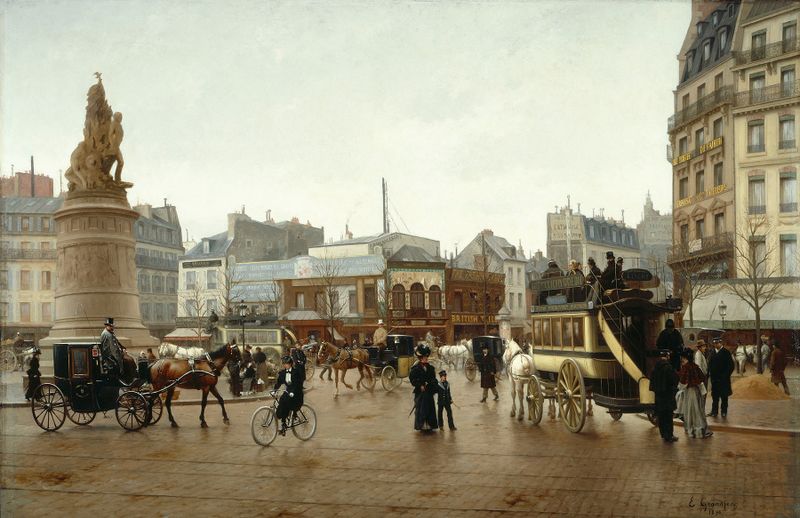
What secret hides in the quiet of the canvas? Each stroke of paint whispers of fragility, inviting contemplation amid the stillness of nature. Look to the left at the soft, dappled shadows that stretch beneath the delicate trees lining the avenue. The artist’s meticulous brushwork creates a sense of movement, as if the leaves themselves are swaying in a gentle breeze. Notice how the muted palette of greens and browns contrasts with the subtle warmth of golden light filtering through the foliage, creating an atmosphere both serene and ephemeral. As you delve deeper, observe the figures leisurely strolling along the path, their postures embodying a quiet intimacy with the landscape.
These silhouettes are not merely subjects; they represent fleeting moments of connection between humanity and nature. The gentle curve of the avenue invites the eye to wander, evoking a sense of nostalgia and the passage of time—a reminder of the fragility of both life and memory. In 1889, Grandjean painted this piece amid the shifting tides of Impressionism, capturing the essence of modern life in Paris. He was exploring how light and color could convey emotion, reflecting the era's fascination with the fleeting nature of beauty.
The world around him was rapidly changing, yet his work remains a serene encapsulation of a tranquil moment, anchoring the viewer in the delicate balance of existence.