La place Clichy — History & Facts
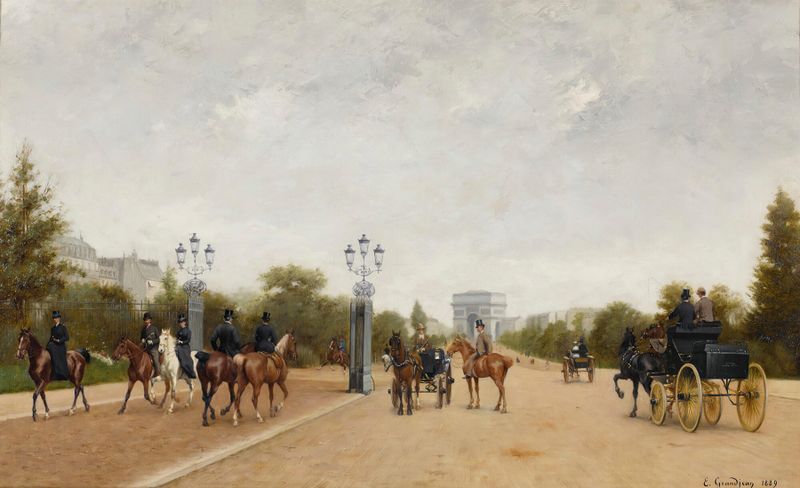
In a world where façades often overshadow authenticity, art becomes a mirror reflecting our truest selves. What truths linger behind the brushstrokes, yearning to be unveiled? Look to the forefront of La place Clichy, where the bustling crowd comes alive under the soft glow of gaslight. The artist employs a delicate palette of warm yellows and earthy browns, inviting you to meander through the scene.
Notice how the figures, though slightly blurred, pulse with motion as they traverse the square, each portrayed with an individuality that speaks of their stories. The slight tilt of the buildings in the background adds an intriguing dynamic, drawing your eyes upward, while the low-hanging clouds promise the impending night. Beneath the vibrant surface lies a juxtaposition of anonymity and connection. The intertwining figures suggest a multitude of narratives, each person caught in their world yet part of a communal story.
There’s a tension between the intimacy of their gathered presence and the ephemeral nature of their interactions, as if these moments of connection are fleeting, destined to dissolve with the dusk. The contrast between light and shadow enhances this poignancy, evoking a sense of nostalgia for moments shared amidst the anonymity of urban life. Edmond Grandjean painted this scene in 1896, a time when Paris was undergoing rapid modernization and social change. The Impressionist movement was in full swing, emphasizing light and movement, and Grandjean was influenced by this environment, capturing the essence of life in the bustling city.
With his work, he reflects the pulse of a society caught between tradition and the promise of modernity.