
Le brûlage de goémon en bord de mer — History & Facts
Where does light end, and longing begin? In the delicate interplay of hues, Le brûlage de goémon en bord de mer beckons us into a world where innocence dances on the edge of the infinite sea. Look to the right at the vibrant strokes of orange and gold, where the sun kisses the horizon, igniting the sky with warmth. The intricate brushwork captures not only the scene but the very essence of time — a moment suspended in the fragrant air of the shore. Notice how the figures, seemingly lost in their task, are framed by the gentle undulation of waves, their silhouettes merging effortlessly with the natural landscape, evoking a harmony between humanity and nature. Yet, beneath this serene surface lies a profound tension: the fragile connection between toil and tranquility.
The burning seaweed, symbolizing both the labor of the fishermen and the fleeting nature of life, represents a raw innocence that is at once beautiful and ominous. The juxtaposition of light against shadow reveals the duality of hope and despair, inviting contemplation on what is lost in the relentless passage of time. In 1912, Henry Moret painted this piece while living in Brittany, immersed in the vibrant artistic community that celebrated the region's coastal beauty. A period marked by artistic experimentation, he sought to capture the essence of the landscape and its people, reflecting the broader movement of Impressionism as artists turned their gaze toward the natural world.
This painting is not merely a scene; it is a testament to a moment in history where innocence thrives in the embrace of nature's ephemeral gifts.
More Artworks by Henry Moret
Browse all →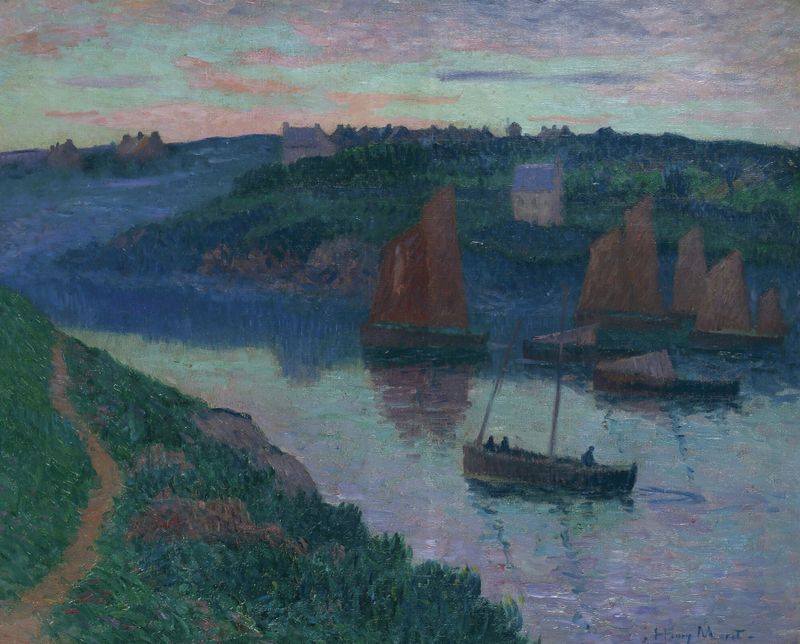
Bateaux De Pêche En Bretagne
Henry Moret
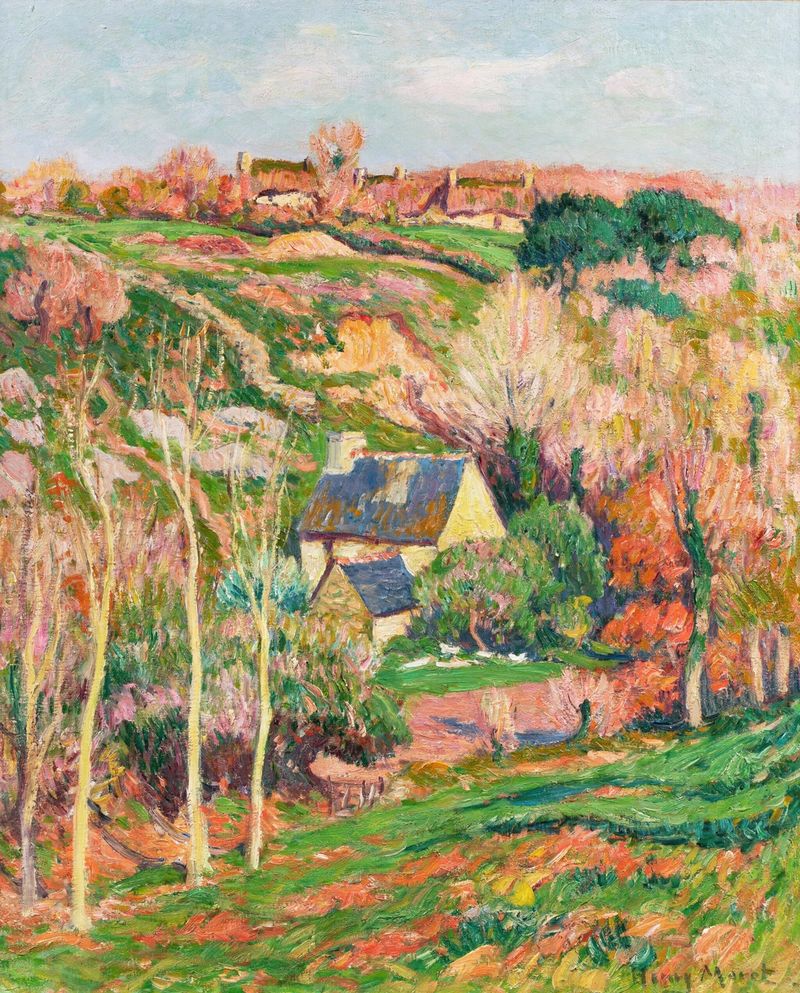
Fermes en Bretagne
Henry Moret
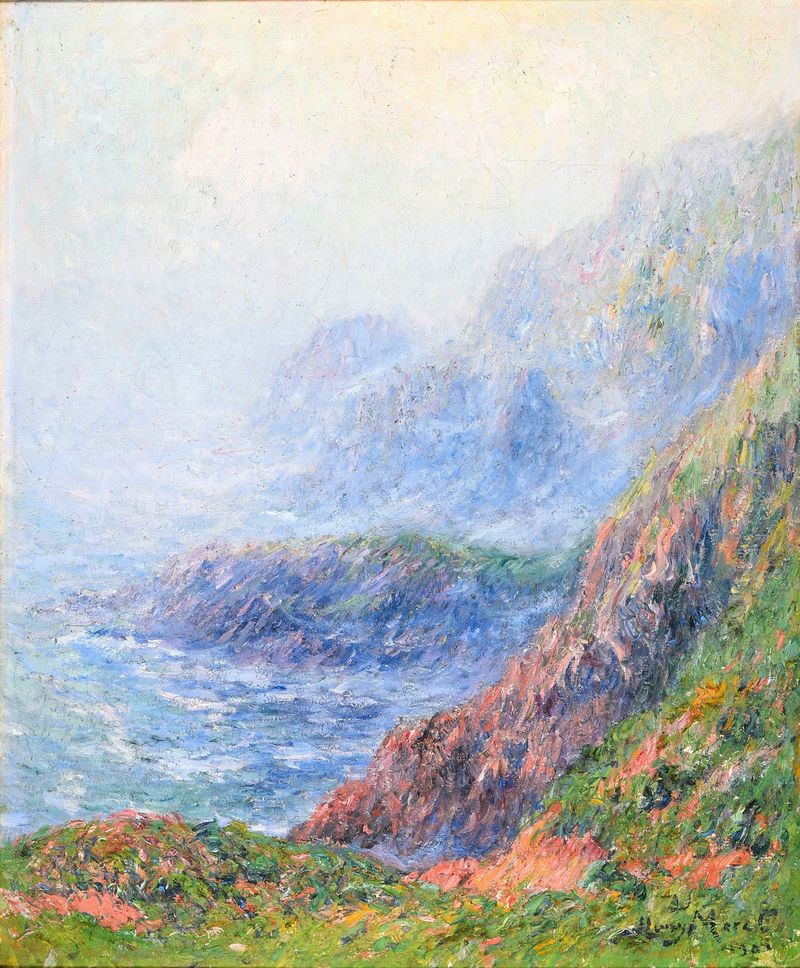
Matinée brumeuse à Ouessant
Henry Moret
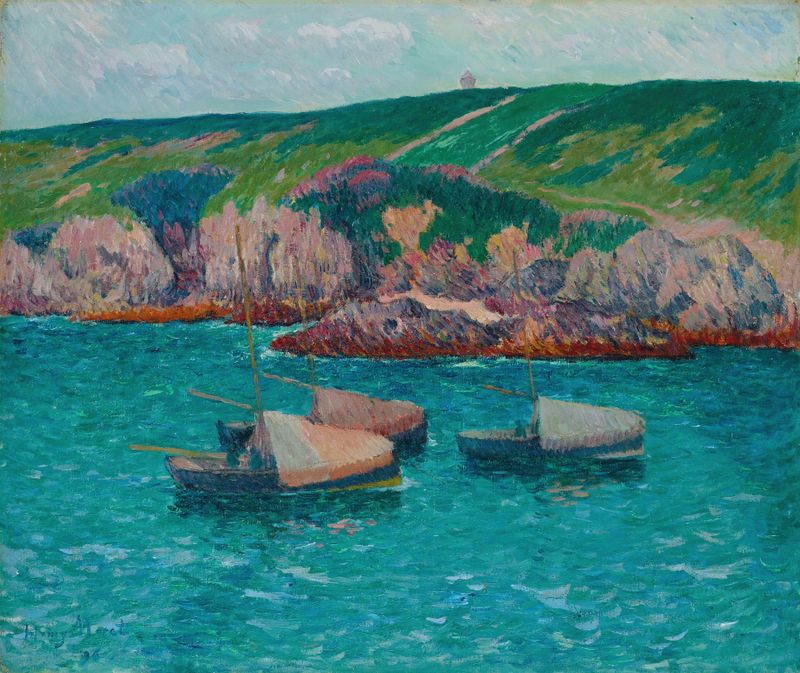
Les Barques à Doëlan
Henry Moret
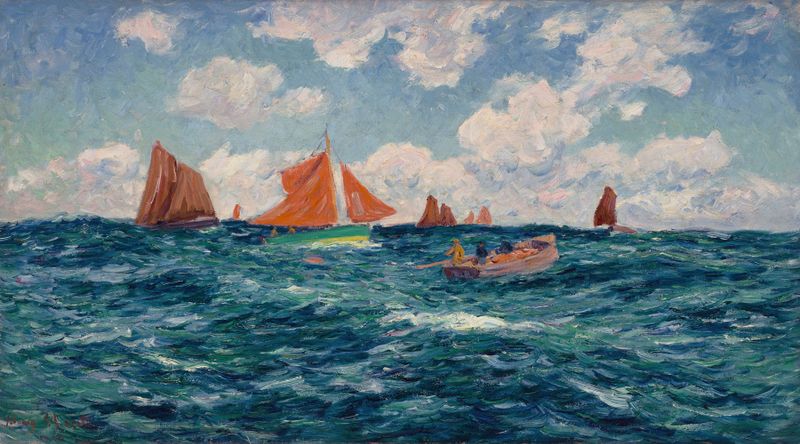
Pêcheurs au large
Henry Moret
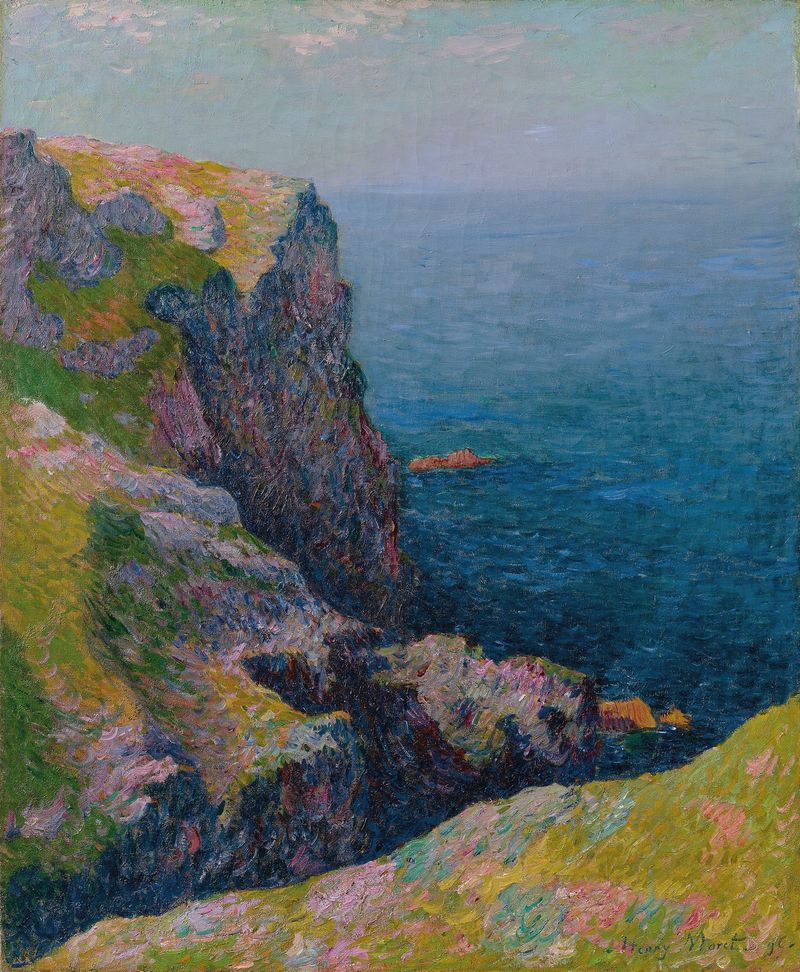
Ile de Groix, Pointe de l’Enfer
Henry Moret
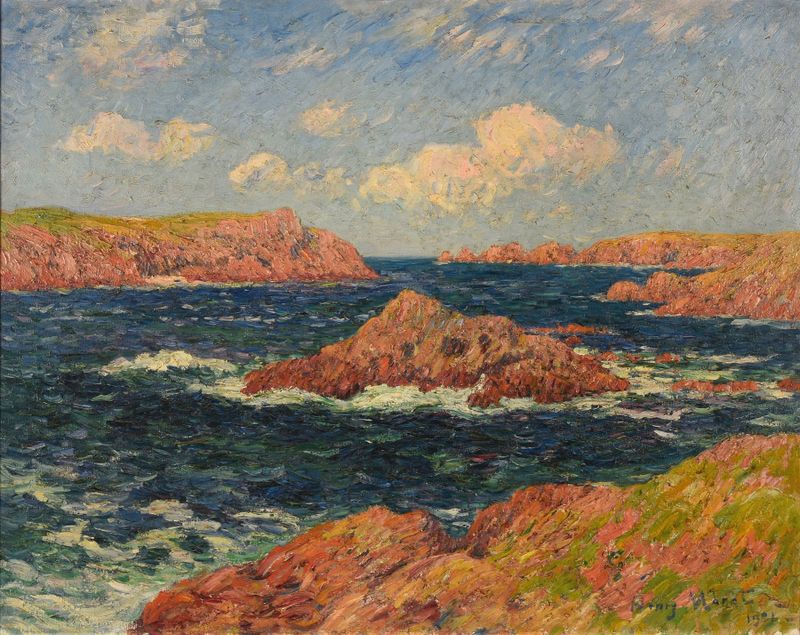
L’Ile de Kerellec (Ouessant)
Henry Moret
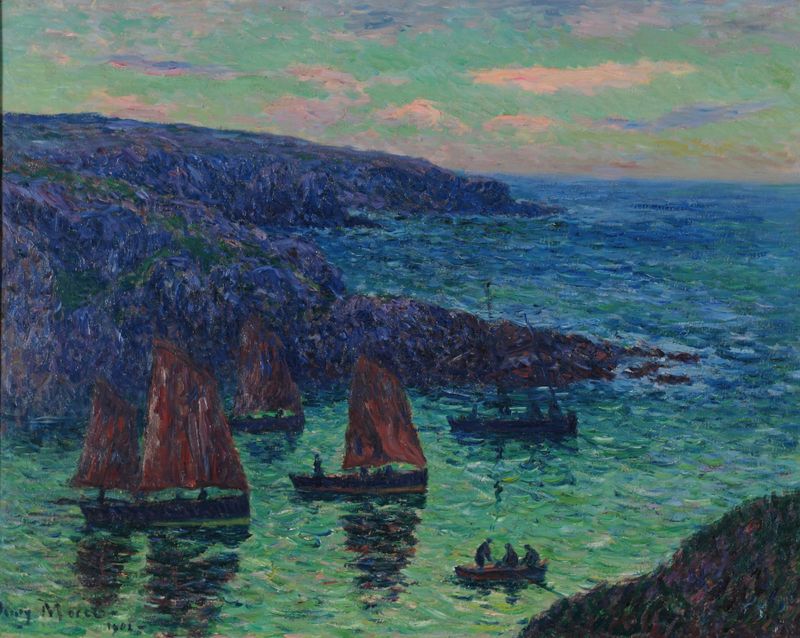
Le soir à Douëlan
Henry Moret
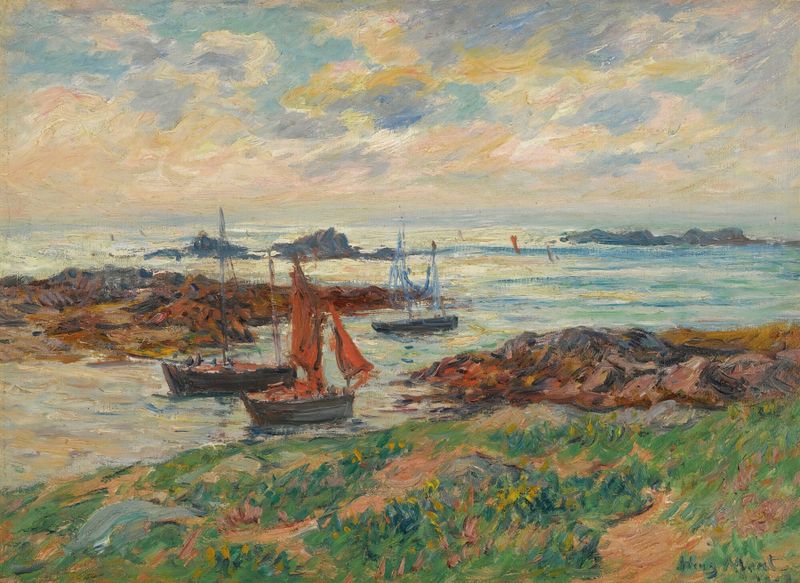
Les Glénans, Finistère
Henry Moret
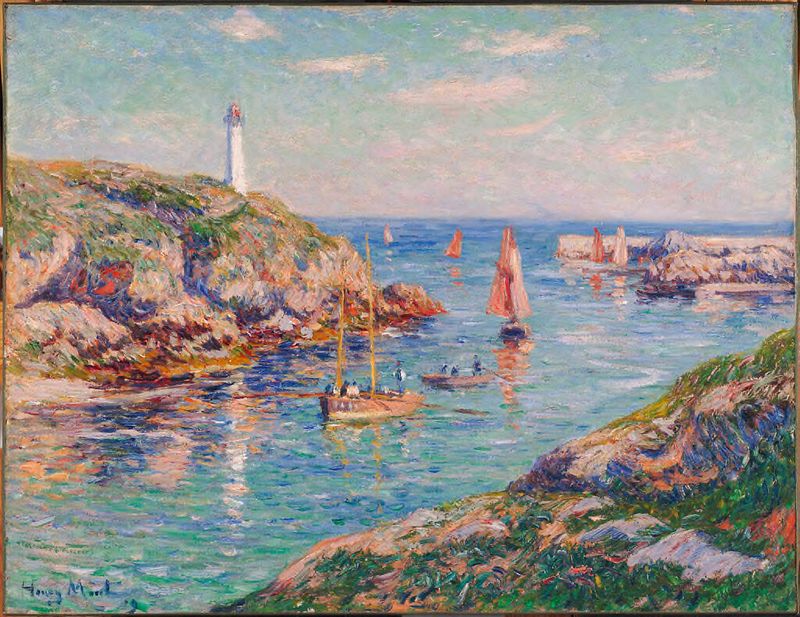
The Port of Douvelan
Henry Moret





