Le Cannet, Le Rideau Bleu — History & Facts
Can paint confess what words never could? In Le Cannet, Le Rideau Bleu, the vibrant hues of blue and gold evoke a feeling of solitude that seems to whisper of unspoken thoughts and lingering memories. Look to the left at the delicate folds of the blue curtain, its texture almost tangible, inviting you to imagine the gentle breeze that dances with it. Notice how the sunlight filters through, casting soft shadows that frame the intimate space and create a warm contrast against the coolness of the blue. The artist’s brushstrokes are both fluid and deliberate, drawing you deeper into the composition, where light and color become characters in a silent narrative. The emotional tension lies in the juxtaposition of the lively colors and the stillness of the scene, suggesting a moment frozen in time.
As the viewer's gaze wanders, subtle details emerge: the untouched chair, the silent table set for one, and the soft interplay between light and shadow—each element contributing to an overwhelming sense of loneliness. This poignant isolation is amplified by the intimate setting, as if the room cradles its secrets and sorrows in the folds of the curtain. Henri Lebasque painted this work in 1926 while residing in the picturesque town of Le Cannet, France. At this point in his career, he was increasingly exploring themes of domesticity and solitude, reflecting the broader currents of post-World War I art that sought to express personal introspection amidst a changing world.
His work resonated with a desire to capture the fleeting beauty of everyday life, revealing layers of emotion concealed within vibrant landscapes and intimate interiors.
More Artworks by Henri Lebasque
Browse all →
Sur les bords de la Marne
Henri Lebasque

Le Jardin Fleuri
Henri Lebasque

Voiliers dans le port de Saint-Tropez
Henri Lebasque
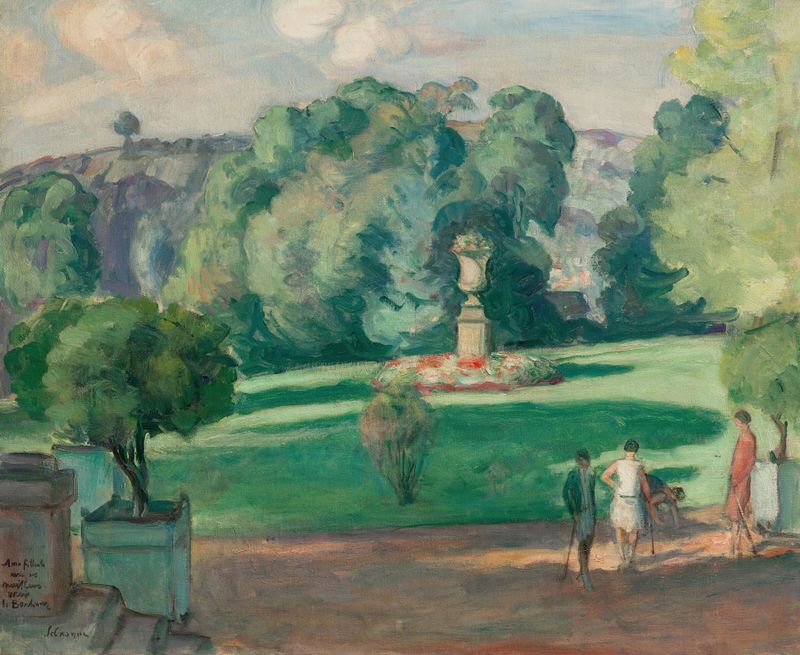
Joueurs de criket dans un parc
Henri Lebasque

Paysage de neige aux environs de Paris
Henri Lebasque
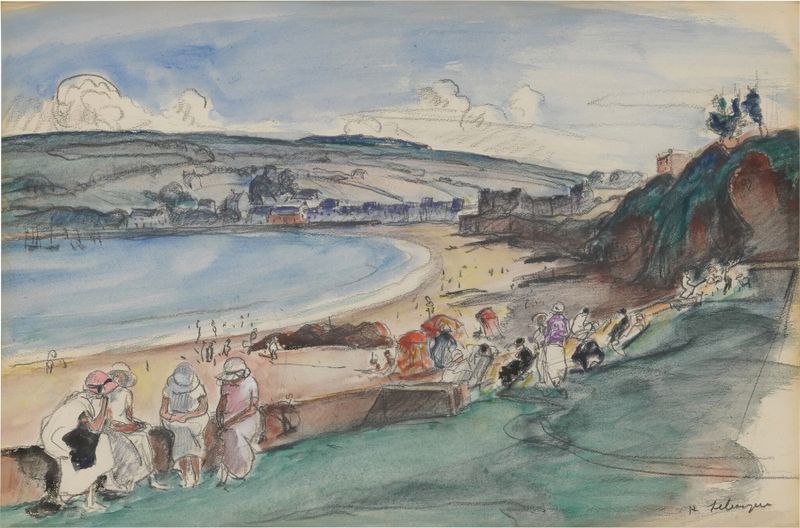
Paysage
Henri Lebasque

Jeunes Femmes Et Fillettes Dans Un Paysage
Henri Lebasque

Saint-Tropez, deux jeunes filles à la fontaine
Henri Lebasque

Le Repos sous les arbres
Henri Lebasque
Sanary, vue sur le Cap Sicié
Henri Lebasque