
Le cimetière de Picpus et le champs des Martyrs, où furent enterrées les victimes de la Révolution, guillotinées à la barrière du Trône — History & Facts
Could a single brushstroke hold eternity? In the quiet embrace of the cemetery, time seems to linger, weaving serenity into the fabric of loss and memory. Look to the left where the delicate arch of trees frames a solemn row of gravestones, their weathered surfaces echoing the passage of time. Notice how the dappled sunlight filters through the leaves, casting soft, ethereal patterns on the earth below, inviting contemplation. The muted palette of greens and browns imbues the scene with a sense of tranquility, urging the viewer to pause and reflect upon the lives that once thrived within these solemn grounds. At first glance, the peacefulness of this place might seem to mask its history, yet the subtle contrasts emerge as you delve deeper.
The stillness of the cemetery sharply contrasts with the violent echoes of the Revolution, generating a palpable tension between the past's brutality and the present's calm. Each gravestone stands as a silent witness, embodying not only the loss of individual lives but also the collective memory of a society grappling with its own identity, and the weight of history rests heavily on this tranquil landscape. In 1898, Victor Marec painted this poignant scene amidst a Europe still reverberating from the upheavals of the late 19th century. As an artist, he navigated the tension between realism and impressionism, seeking to capture the essence of moments in time.
At this point in his life, he was exploring the themes of memory and loss, reflecting both his personal experiences and the larger societal shifts that defined an era grappling with its own past.
More Artworks by Victor Marec
Browse all →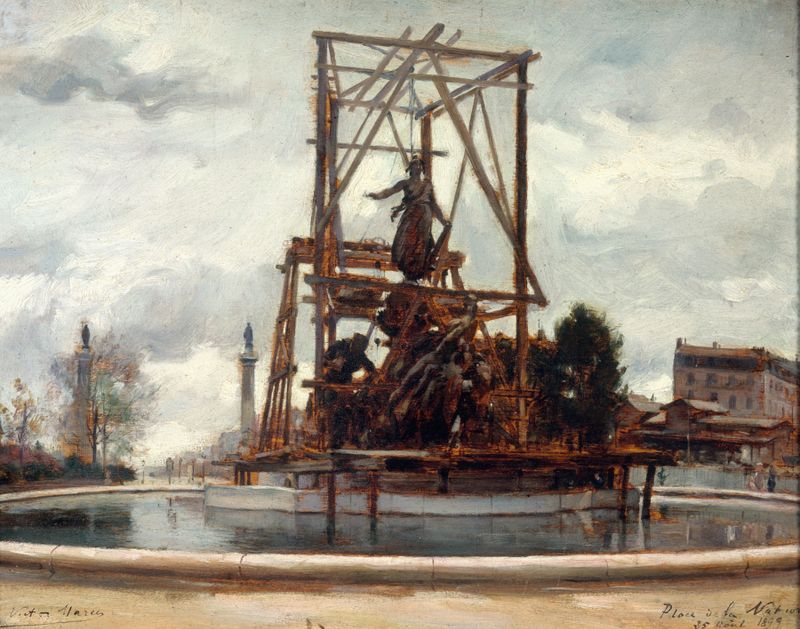
Mise en place du monument du ‘Triomphe de la République’ de Jules Dalou, place de la Nation
Victor Marec

L’embarcadère de l’Ouest, gare de Paris à Saint-Germain
Victor Marec
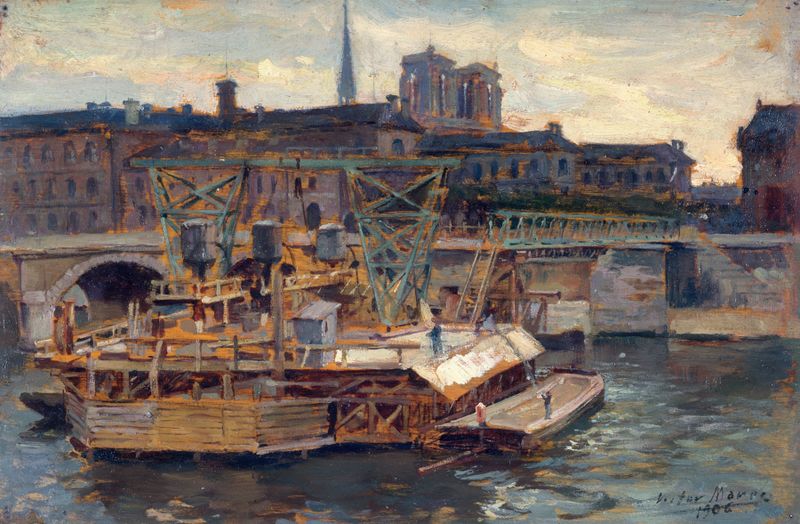
Les travaux du métropolitain au pont Notre-Dame
Victor Marec
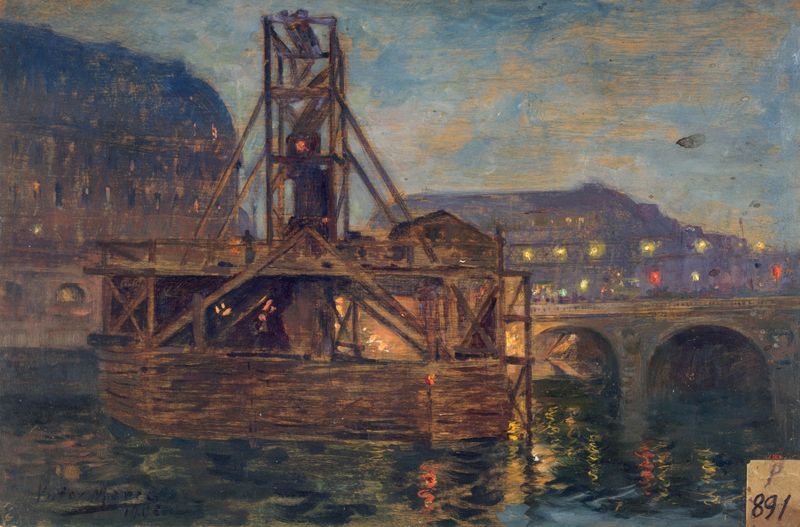
Les travaux du métropolitain au pont Saint-Michel
Victor Marec
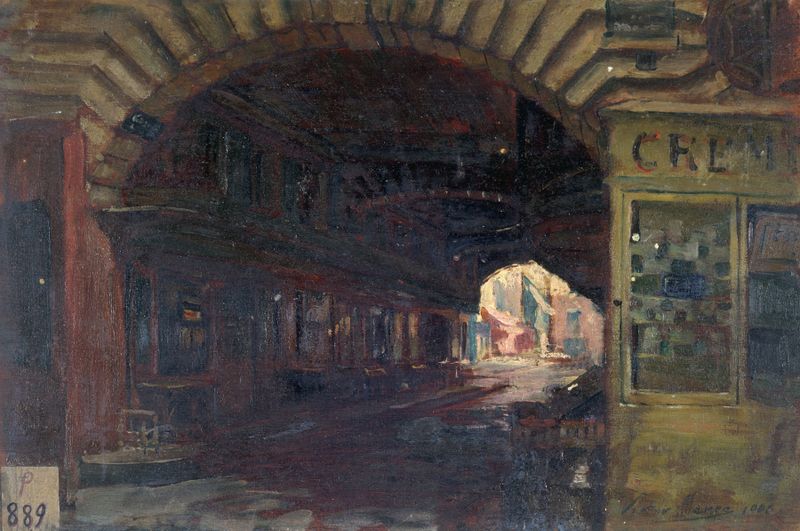
Entrée du cloître Saint-Honoré, rue des Bons-Enfants
Victor Marec
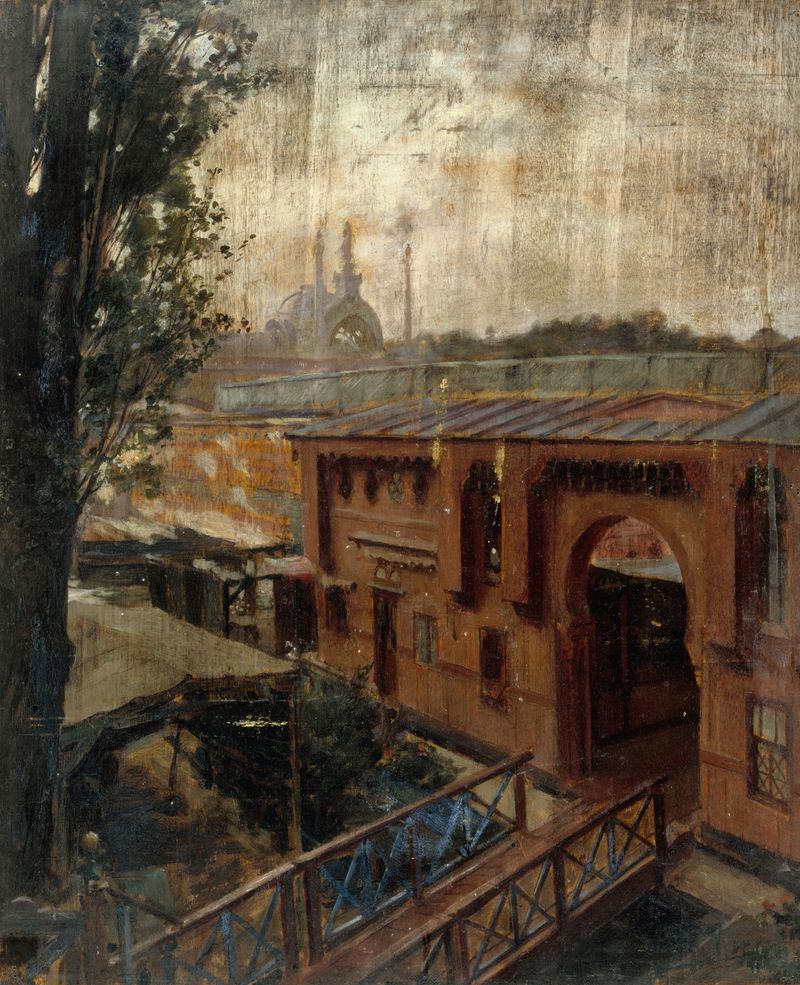
Les bains Deligny, au quai d’Orsay
Victor Marec

La cour de l’auberge du Cheval-Blanc, rue Mazet
Victor Marec
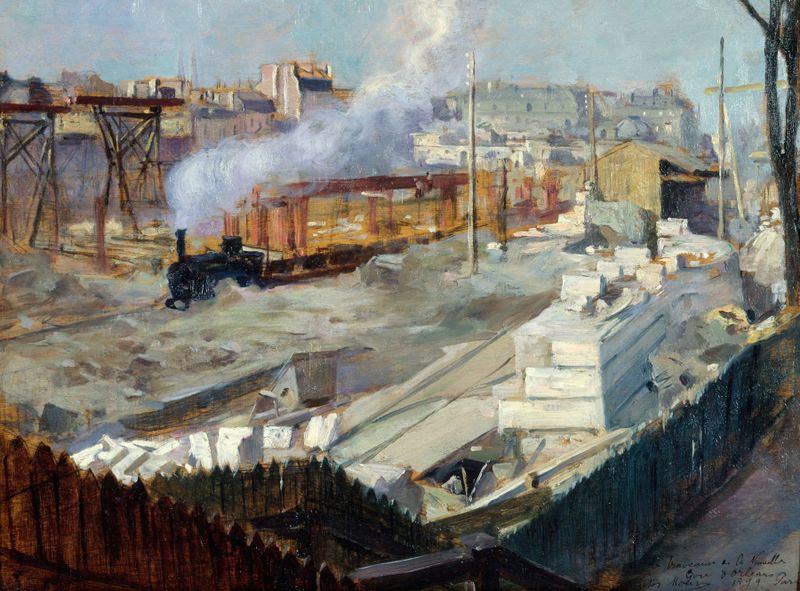
Les travaux de la nouvelle gare d’Orléans
Victor Marec

Entrée de l’auberge du Cheval-blanc, rue Mazet
Victor Marec

Travaux du métropolitain au Pont-Neuf
Victor Marec





