Le Lendemain de Trafalgar — History & Facts
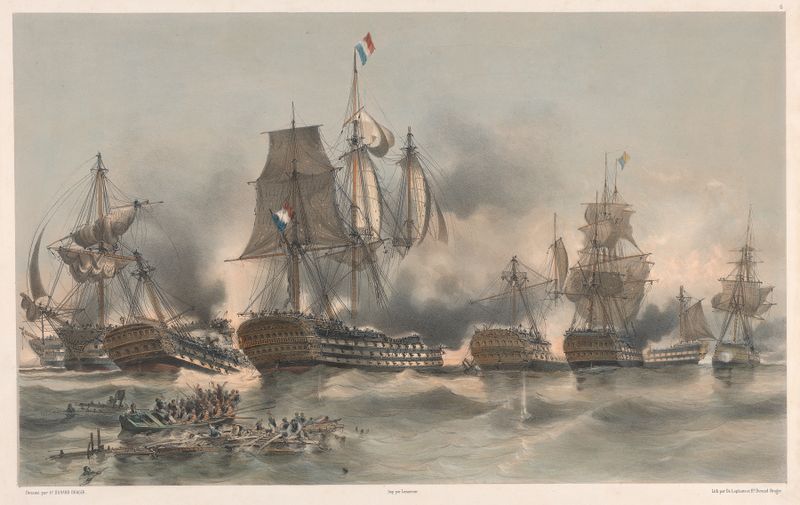
What secret hides in the quiet of the canvas? Beneath the tranquil surface of Le Lendemain de Trafalgar, an obsession unfolds, revealing the weight of history and memory. Look to the horizon, where a whisper of light dances on the gentle waves, illuminating the remnants of the naval struggle that transpired just beyond the frame. The muted palette of blues and grays envelops the viewer, evoking a sense of melancholy. Notice how the soft brushstrokes capture the texture of the water, while the distant ships, shrouded in mist, emerge as ghosts from the past, urging contemplation of both loss and survival. As your gaze wanders, you might discover the juxtaposition of calm waters against the tumultuous history that lies beneath.
The stillness belies the chaos that accompanied the historic battle of Trafalgar, evoking a tension between peace and violence. The solitary ship in the foreground acts as a vessel of memory, inviting reflections on the sacrifices made and the haunting allure of obsession with glory and defeat. Henri Durand-Brager painted this piece in 1844, just a few decades after the decisive naval battle that shaped European history. Living in France during this time, he was influenced by the Romantic movement, which sought to capture the dramatic interplay of nature and human emotion.
The work reveals his deep engagement with maritime subjects and reflects the era's fascination with the sea and its monumental events.