
Le Louvre, Paris — History & Facts
Could beauty survive in a century of chaos? In a world often shrouded by turmoil, the allure of place and reflection beckons us to find solace in the ephemeral. Guide your eyes to the shimmering water in the foreground, where the reflective surface captures not just the grandeur of the Louvre but the soft pastel colors of an evening sky. Look closely at the interplay of light — golden hues kiss the edges of the historic architecture, revealing intricate details of the façade. The composition draws you in, with leading lines directing your gaze towards the inviting entrance, almost whispering for you to step through time into history itself. Yet beneath the surface lies a poignant tension.
The serene beauty of the scene contrasts sharply with the knowledge of the political unrest and upheaval that characterized the artist's era. The stillness of the water reflects a moment frozen in time, suggesting a longing for peace amidst the surrounding chaos. Notice the figures, small and almost overshadowed by the monumental structure, representing mankind’s insignificance in the face of cultural giants and historical legacy. Luigi Loir created this captivating piece during a time when France was reflecting on its past while grappling with the changes brought by the 19th century.
Although the exact date of the painting is unknown, Loir was active during a period marked by the Industrial Revolution, which transformed Paris and its artistic landscape. This era saw the rise of Impressionism, yet Loir chose a more classical approach, illustrating the enduring significance of historical beauty amidst the rapidly evolving world around him.
More Artworks by Luigi Loir
Browse all →
Marché aux fleurs sous la neige
Luigi Loir
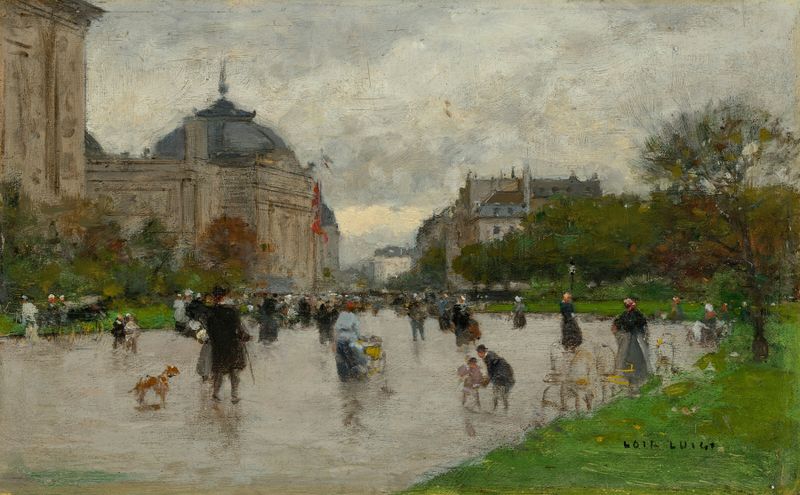
The Champs Élysées, Paris
Luigi Loir
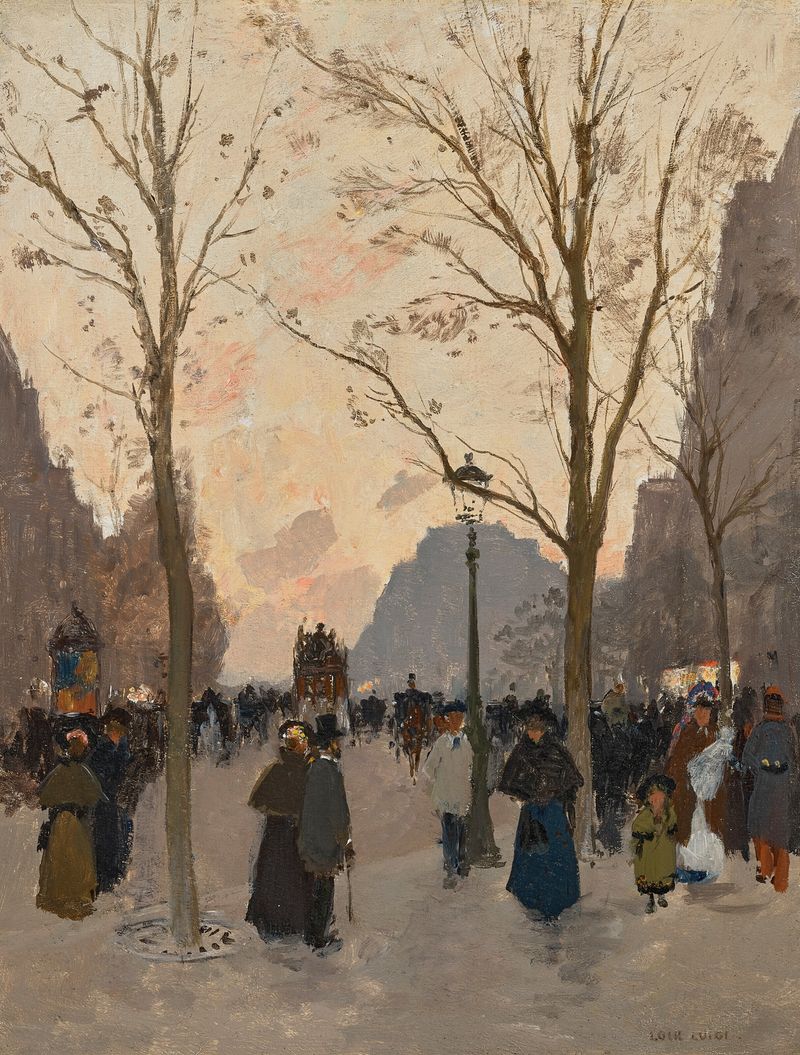
La Place de la République, Paris
Luigi Loir

Le boulevard du Palais, vu de la place Saint-Michel
Luigi Loir

La fête foraine
Luigi Loir
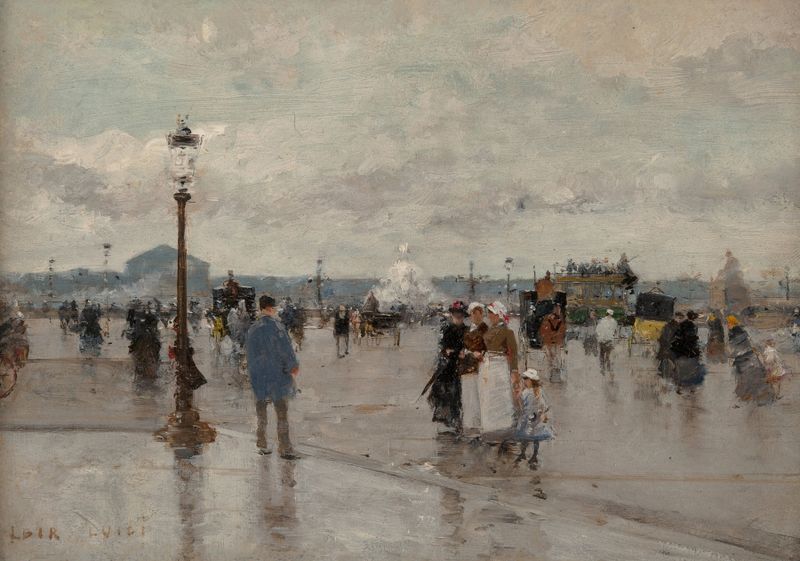
La sortie de Paris, Porte d’Asnières
Luigi Loir
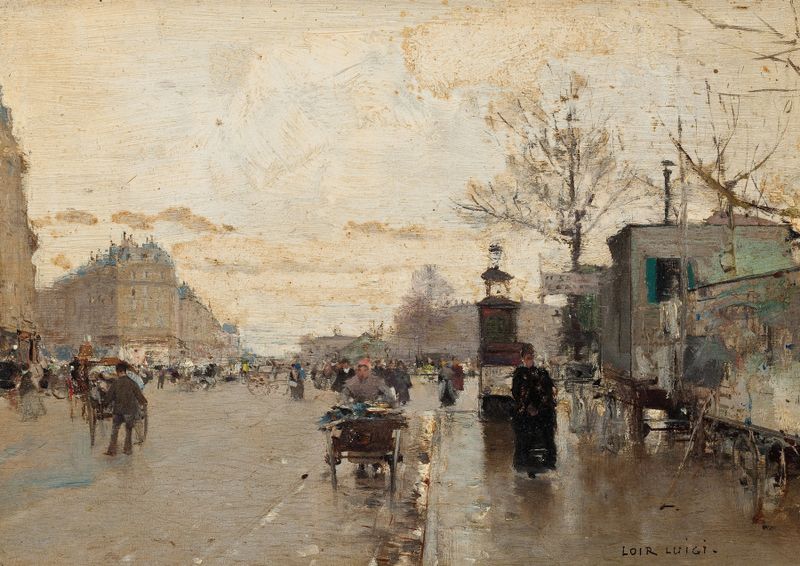
Parisian Street Scene
Luigi Loir

Les Quais De La Seine, 1900
Luigi Loir
Quai Au Bord De La Seine, Paris
Luigi Loir
La rue des Nations, à l’Exposition Universelle de 1900
Luigi Loir





