
La Place de la République, Paris — History & Facts
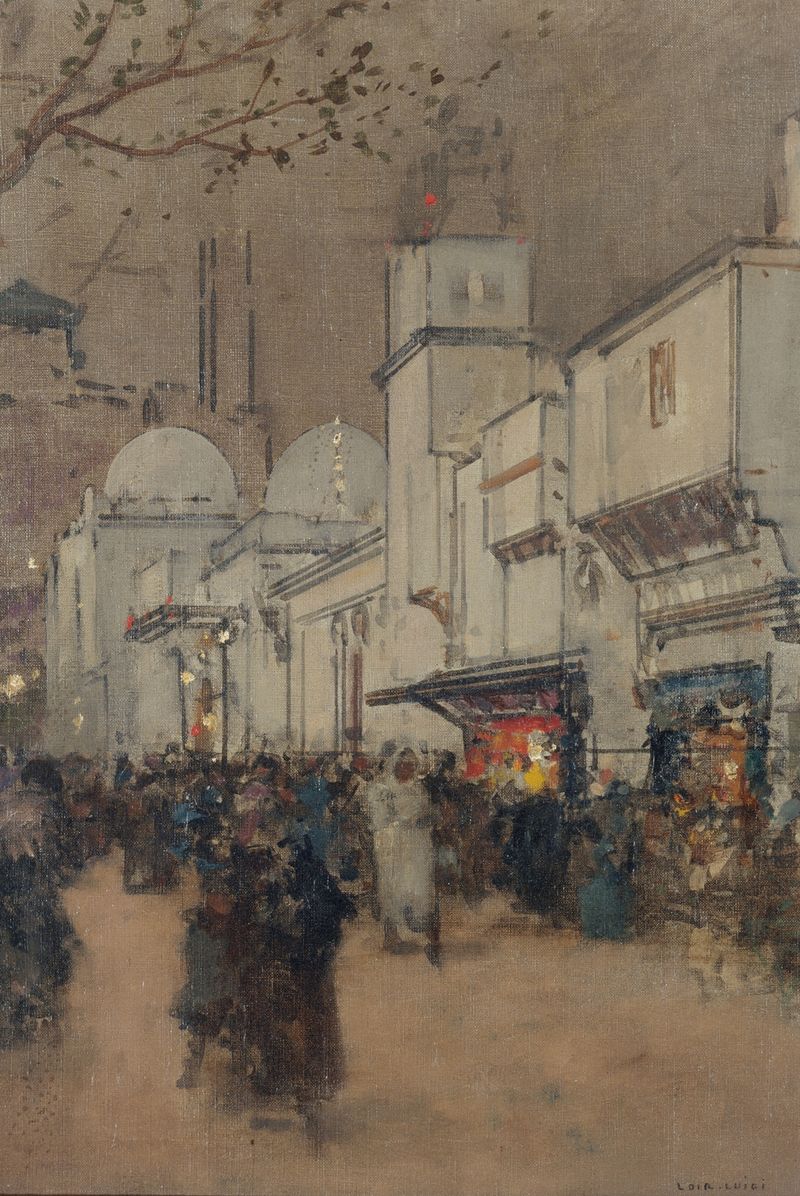
In a world of transience, obsession becomes the heartbeat of memory. Look to the center, where the grand statue of Marianne rises majestically, commanding attention with her resolute expression. The bustling crowd, a sea of vibrant colors and varied gestures, swirls around her, embodying the fervor of a Parisian day. Notice the interplay of light and shadow, particularly how the soft sunlight filters through leaves, casting dappled patterns on cobblestones, enhancing the vibrancy of the scene.
The artist’s brushstrokes capture not just the likeness of the Republic, but the pulse of life itself. Yet beneath the surface of camaraderie lies a tapestry of contrasts—hope and despair, joy and melancholy. The diversity of the crowd reflects a city grappling with its identity, a microcosm of societal change. Each individual embodies a personal story, their expressions ranging from exuberance to contemplation, suggesting that within this moment of collective unity, there exists an undercurrent of obsession with the past and future, intertwined like the very branches that frame the square. Luigi Loir painted this piece in the 1880s, a time when Paris was undergoing significant transformation, both architecturally and socially.
The city was thriving in its post-Haussmannian era, an age marked by modernization and the emergence of Impressionism. This period was pivotal for the artist, as he sought to capture the essence of Parisian life amidst the burgeoning artistic movements that defined his surroundings.
More Artworks by Luigi Loir
Browse all →
Marché aux fleurs sous la neige
Luigi Loir

Le Louvre, Paris
Luigi Loir
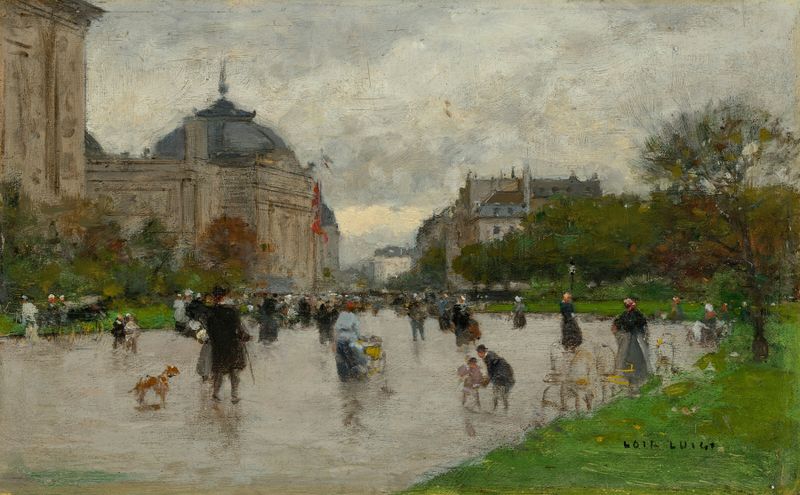
The Champs Élysées, Paris
Luigi Loir

Le boulevard du Palais, vu de la place Saint-Michel
Luigi Loir

La fête foraine
Luigi Loir
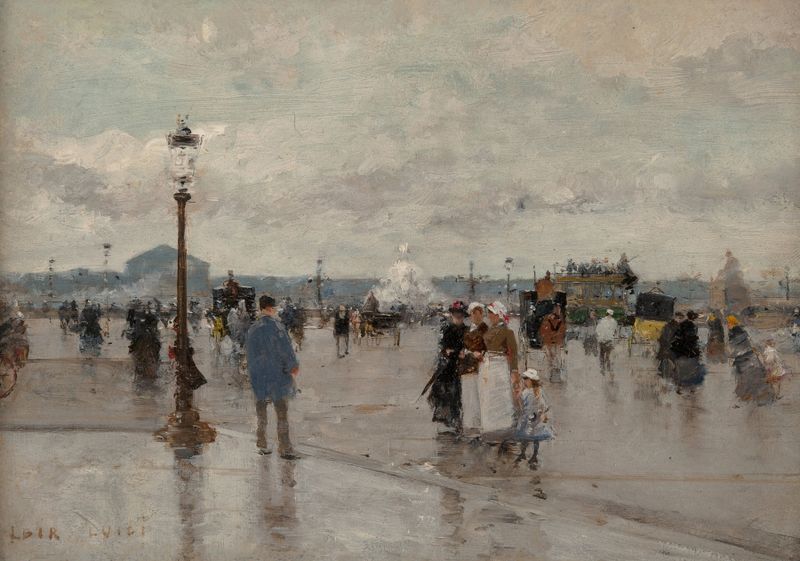
La sortie de Paris, Porte d’Asnières
Luigi Loir
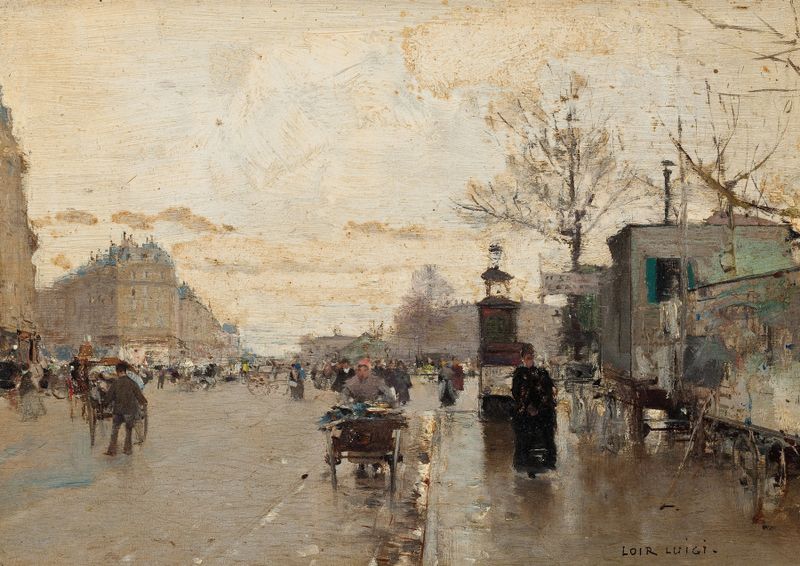
Parisian Street Scene
Luigi Loir

Les Quais De La Seine, 1900
Luigi Loir
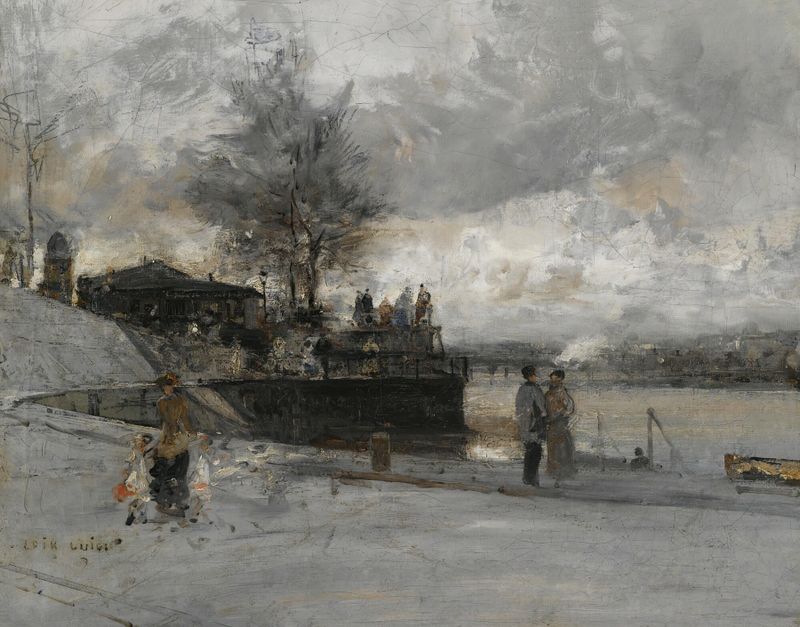
Quai Au Bord De La Seine, Paris
Luigi Loir
La rue des Nations, à l’Exposition Universelle de 1900
Luigi Loir





