
Le marché aux fleurs, la Tour de l’Horloge, le Pont au Change et le Pont-Neuf — History & Facts
Can beauty exist without sorrow? This question lingers over Le marché aux fleurs, la Tour de l’Horloge, le Pont au Change et le Pont-Neuf, a work that masterfully balances vibrant life against the backdrop of impermanence. The scene invites contemplation, revealing layers of existence in a bustling Parisian market. Look to the left where the vivid hues of flowers burst from their stalls, each petal seemingly alive, drawing you into a world of sensory richness. The play of light dances across the cobblestone paths and the flowing Seine, creating a luminous contrast between the vibrant market life and the stillness of the surrounding architecture.
Notice the soft shadows that define the contours of the towers and bridges, suggesting a steady rhythm of life beneath the serenity of the structures that have withstood the test of time. In this painting, the juxtaposition of lively blooms and the stoic, enduring bridges tells a story of transience and stability. The flowers, bright and ephemeral, represent the fleeting nature of joy, while the sturdy bridges symbolize a lasting connection, both physical and emotional, within the ever-changing city. This balance of elements evokes a deep sense of nostalgia, urging viewers to reflect on their own experiences of beauty intertwined with the passage of time. Giuseppe Canella painted this piece in 1832 while living in Paris, a city undergoing significant changes following the July Revolution.
During this period, he was immersed in a vibrant artistic community, influenced by Romanticism's emphasis on emotion and nature. His focus on urban life and landscapes reflected both the nostalgia for the past and the hope for the future in a rapidly transforming society.
More Artworks by Giuseppe Canella
Browse all →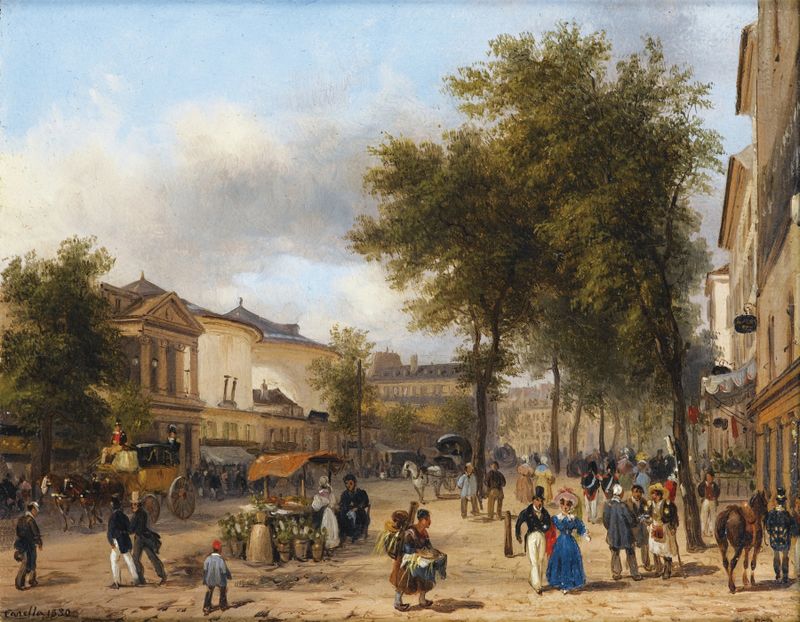
Paris, Vue du Théâtre des Variétés sur le Boulevard Montmartre
Giuseppe Canella

L’Hôtel de Ville et la place de Grève, vus de l’Ile de la Cité
Giuseppe Canella
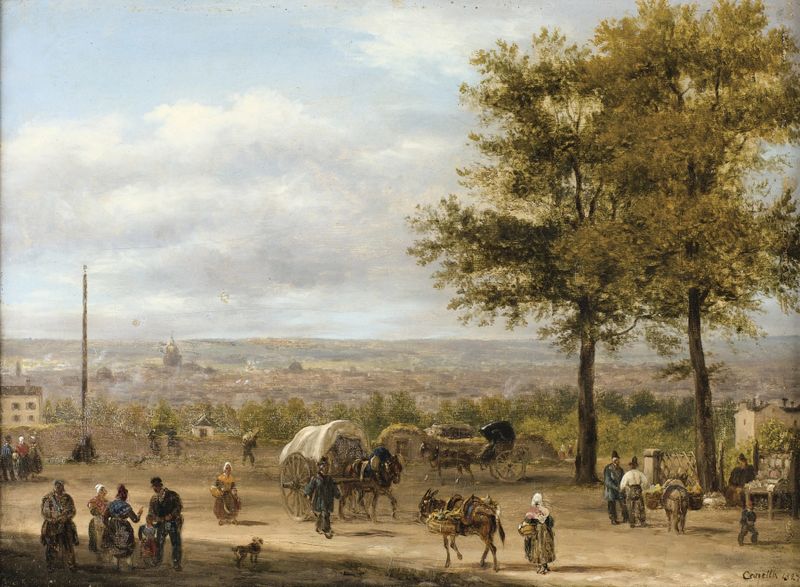
Vue des hauteurs de Paris
Giuseppe Canella
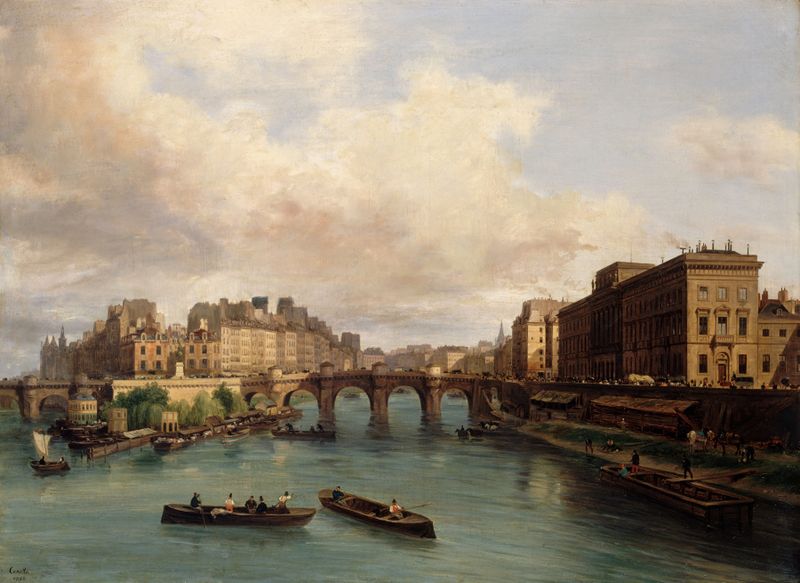
L’Ile de la Cité et le quai Conti, vus de la passerelle des Arts
Giuseppe Canella

Amsterdam, A View of the Royal Palace
Giuseppe Canella

Les Halles et la rue de la Tonnellerie
Giuseppe Canella
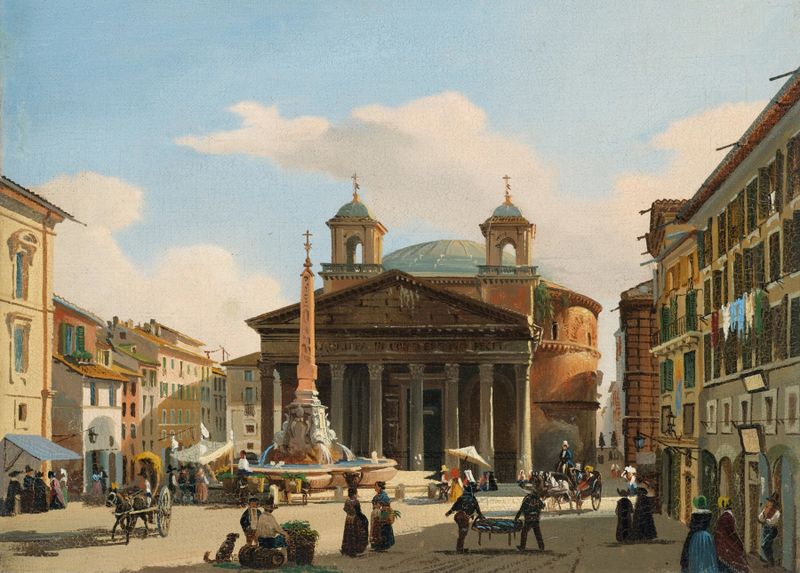
Vue du Panthéon à Rome
Giuseppe Canella
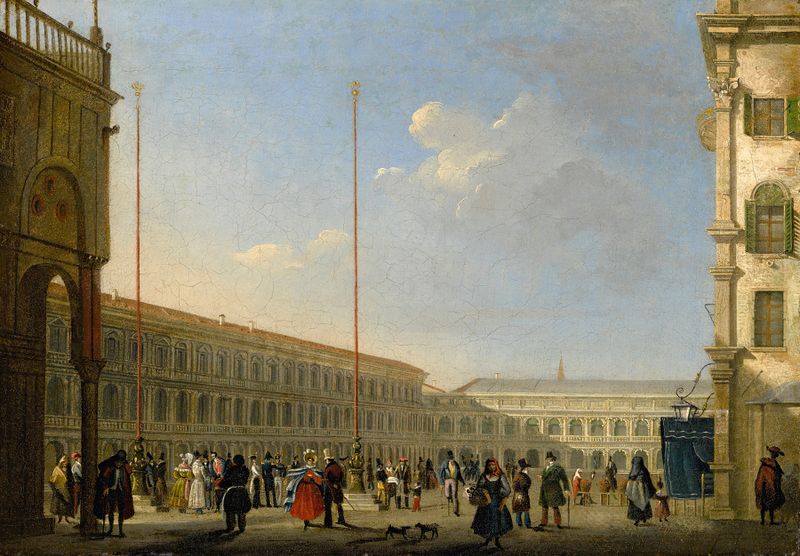
Venice, A View Of Piazza San Marco From Piazzetta Dei Leoncini
Giuseppe Canella

A Venetian scene with a gondola on a lagoon
Giuseppe Canella

A street in Chartres with the Cathedral in the background
Giuseppe Canella





