
Les Halles et la rue de la Tonnellerie — History & Facts
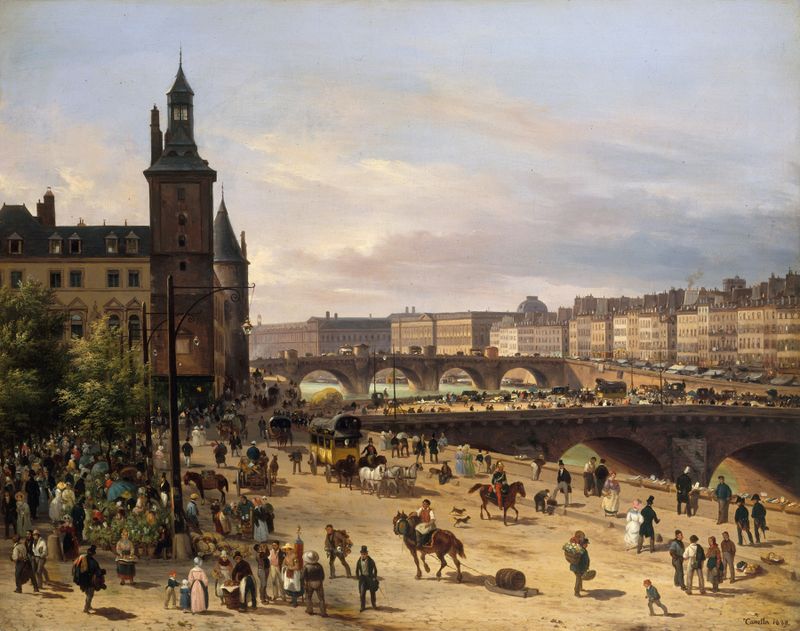
What if beauty was never meant to be finished? In Les Halles et la rue de la Tonnellerie, an ethereal play of light captures the essence of a time suspended, revealing both the vibrancy and the transience of life within a bustling market scene. Look closely at the foreground, where soft brushstrokes delineate the figures of merchants and pedestrians. The play of light dances across the cobblestone street, illuminating the warm hues of ochre and gold. Notice how the delicate interplay of shadows enhances the dimensionality of the buildings, creating a sense of depth that invites the viewer to step into the scene.
The composition is rich yet intimate, with Canella’s meticulous attention to detail drawing the eye toward the lively exchange between the inhabitants of this Parisian landscape. Delving deeper, one can sense the contrast between the transient nature of the market and the permanence suggested by the architecture behind it. The figures, though alive with movement, seem ephemeral, fading as the day progresses. This juxtaposition of energy and stillness evokes a contemplative tension—much like life itself, there’s beauty in both the hustle and the inevitable passage of time.
The light, a central character in this work, serves as a reminder of the fleeting moments that define human experience. Giuseppe Canella painted this piece in 1828, during a transformative period for Paris and the world of art. As the city embraced modernization and the artistic community flourished under the influence of Romanticism, Canella sought to capture the soul of urban life. This work reflects not only his mastery of light and shadow but also a lingering nostalgia for a bygone era amidst the rapid changes of the city around him.
More Artworks by Giuseppe Canella
Browse all →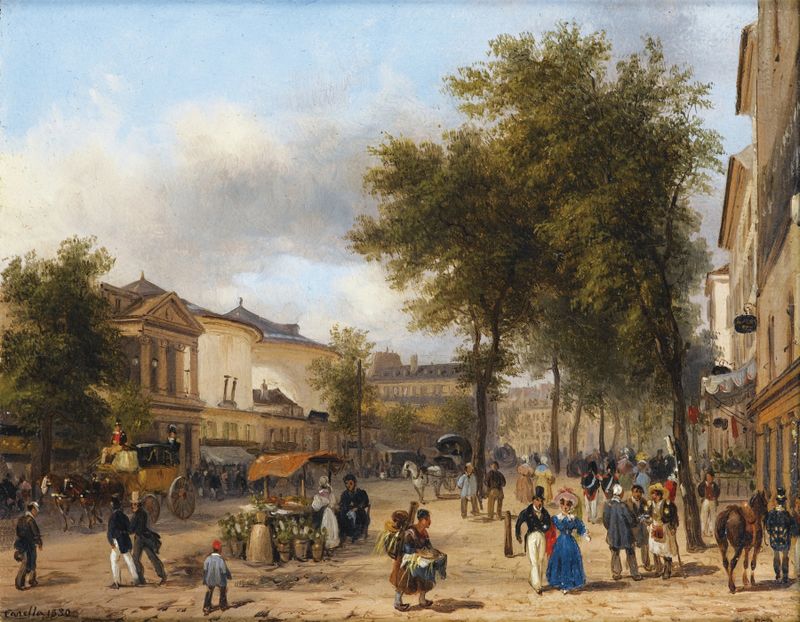
Paris, Vue du Théâtre des Variétés sur le Boulevard Montmartre
Giuseppe Canella

L’Hôtel de Ville et la place de Grève, vus de l’Ile de la Cité
Giuseppe Canella
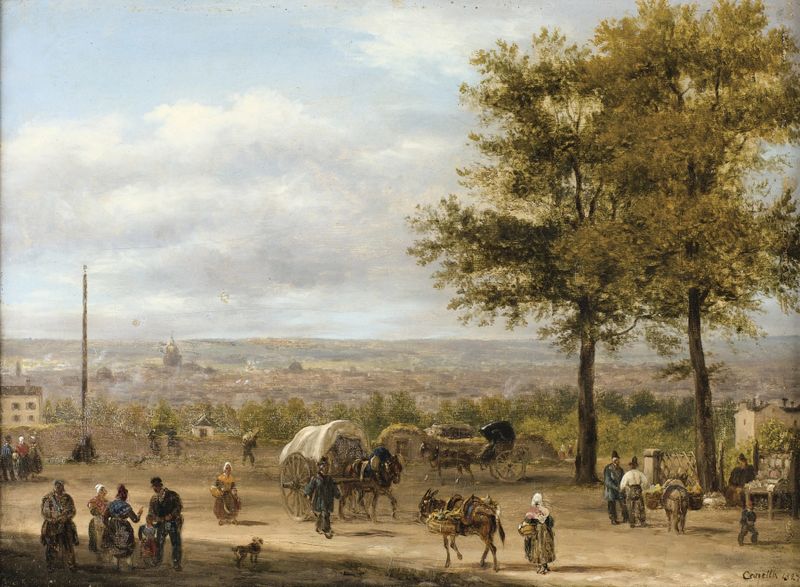
Vue des hauteurs de Paris
Giuseppe Canella
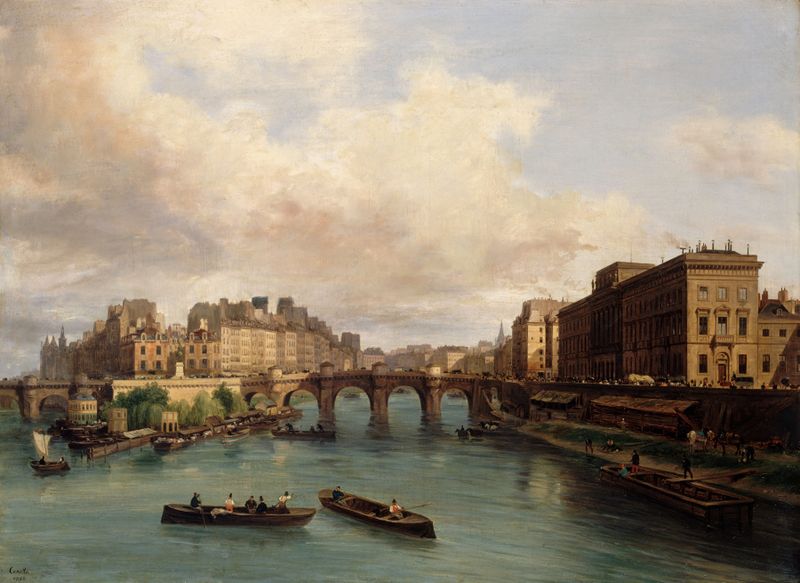
L’Ile de la Cité et le quai Conti, vus de la passerelle des Arts
Giuseppe Canella

Amsterdam, A View of the Royal Palace
Giuseppe Canella
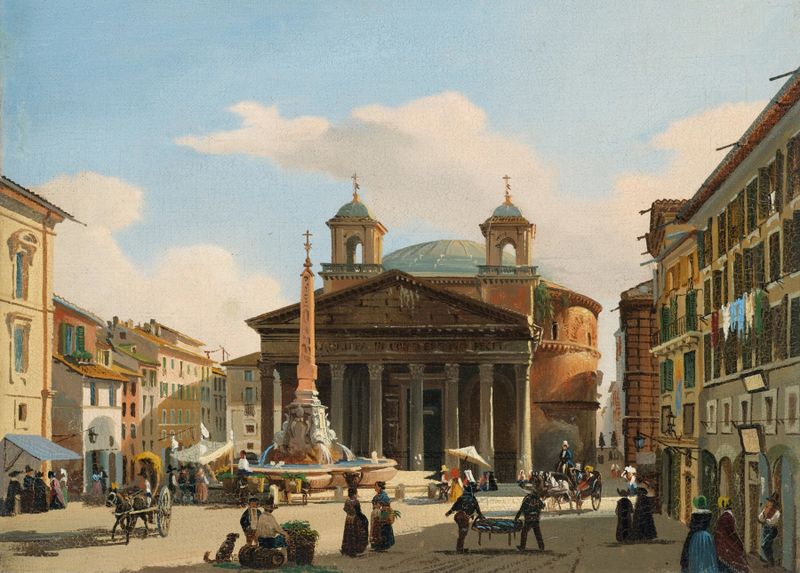
Vue du Panthéon à Rome
Giuseppe Canella
Venice, A View Of Piazza San Marco From Piazzetta Dei Leoncini
Giuseppe Canella
Le marché aux fleurs, la Tour de l’Horloge, le Pont au Change et le Pont-Neuf
Giuseppe Canella

A Venetian scene with a gondola on a lagoon
Giuseppe Canella

A street in Chartres with the Cathedral in the background
Giuseppe Canella





