Le passage de la rivière — History & Facts
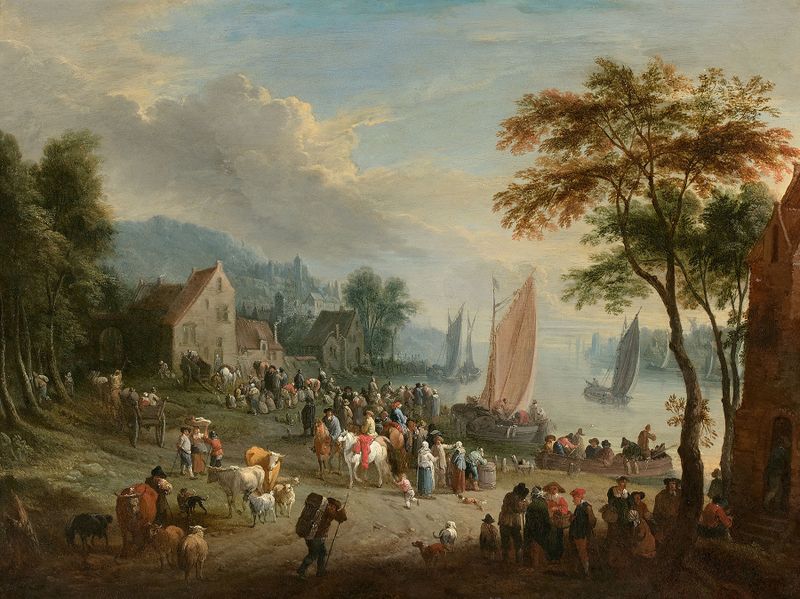
In Le passage de la rivière, Theobald Michau captures the haunting essence of violence that belies the serene surface of nature. The juxtap of tranquility and turmoil invites us to explore deeper themes of conflict and human struggle. Look closely at the foreground; notice the subtle ripples disturbing the otherwise calm water. The figures crossing the river appear almost ghostlike, their forms blurred as if caught between worlds.
The muted colors—soft greens and ochres—contrast sharply with dark strokes that suggest impending danger. Observe how the light dances on the water’s surface, creating a shimmering illusion that conceals the weight of their journey. Beneath the apparent peace lies a potent tension, a reminder of the violence that often accompanies survival. The figures’ expressions, though indistinct, are laden with urgency, hinting at struggles that go beyond the mere act of crossing.
The river, a symbol of transition, becomes a boundary between safety and peril, masterfully reflecting the fragility of life in moments of conflict. During the time Michau painted this scene, details of his life remain elusive, yet it is evident that the era was rife with socio-political upheaval. Emerging in the early 18th century, he navigated a world of shifting artistic movements, drawing inspiration from landscapes that evoked both beauty and strife. In Le passage de la rivière, he encapsulates not only the natural world but also the human condition in moments of vulnerability.