Scène de village animé au bord d’un fleuve — History & Facts
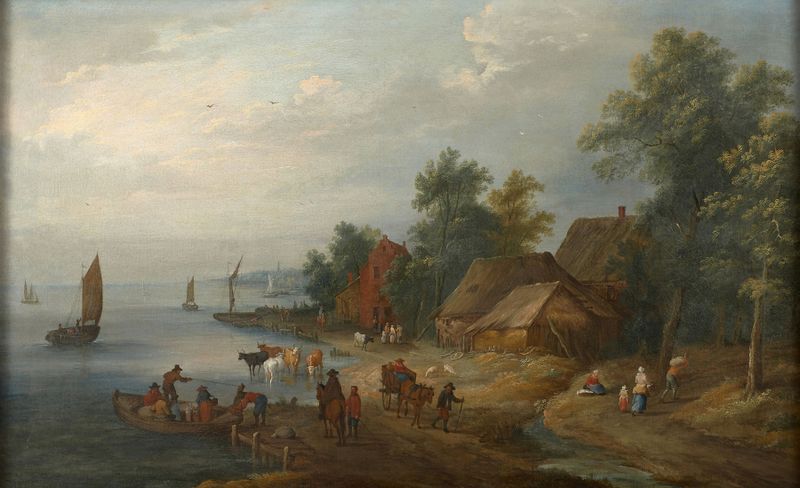
In the intertwining of hues and whispers, a glimmer of hope shines through, beckoning us to explore the depths of our shared existence. Look to the left at the vibrant clusters of villagers, their figures animated in motion. The rich, earthy tones of their clothing meld with the verdant greens of the landscape, creating a tapestry that pulls the eye towards the flowing river. Notice how the light dances upon the water’s surface, reflecting both the joy of life and the stillness of contemplation.
The bold brushstrokes convey a sense of immediacy, infusing each character with an emotional pulse that transcends the canvas. Deeper within this lively scene, a dialogue unfolds between the joyful laughter of the day and the solemnity of the river’s passage. The juxtaposition of the active villagers against the calm, flowing water speaks to the transient nature of life itself. Each figure carries an unspoken story, and within their gestures lies a shared sense of hope—a reminder that even amid chaos, moments of connection and beauty flourish. Theobald Michau painted this work during the early 18th century, a time when the art scene in Europe was experiencing shifts towards realism and landscape representation.
Living in the Netherlands, he was influenced by the vibrant culture around him, particularly the interactions of everyday life along riverbanks. This piece reflects not only his mastery of color and composition but also a growing appreciation for the simple yet profound moments that define the human experience.