
Le pavillon de verre — History & Facts
Who listens when art speaks of silence? In Le pavillon de verre, the weight of quietude reveals a world teetering on the edge of madness, where the stillness envelops like a heavy fog around the viewer's thoughts. Look to the center, where the transparent pavilion floats, caught in a web of ethereal light. Its crystalline structure refracts the colors surrounding it, a kaleidoscope of muted greens and blues mingling with soft grays. Notice how the delicate interplay of shadows interlaces with the edges of the glass, suggesting a fragility that mirrors the tumultuous emotions lurking just beneath the surface.
The composition invites the eye to wander, the light beckoning, yet simultaneously hinting at the disquiet within the apparent calm. In the contrasting imagery of clarity and obscurity, the viewer can sense the tension that lies between sanity and chaos. The open space within the pavilion suggests a sanctuary, yet its glass walls expose the vulnerability of what lies within, a reflection of inner struggles. The colors, gentle yet haunting, evoke a melancholic atmosphere, urging us to confront the madness that often lurks behind the façade of tranquility.
It’s this duality that draws us in and keeps us questioning. Created during an uncertain period for Pierre-Marcel Roy, the exact date of this work remains elusive, yet it captures the zeitgeist of the early 20th century when art began to grapple with the complexities of the human psyche. Living in France, an artist navigating the aftermath of World War I, Roy faced a world that was both fragile and fractured, mirroring the transparent yet impenetrable nature of the glass pavilion he chose to depict.
More Artworks by Pierre-Marcel Roy
Browse all →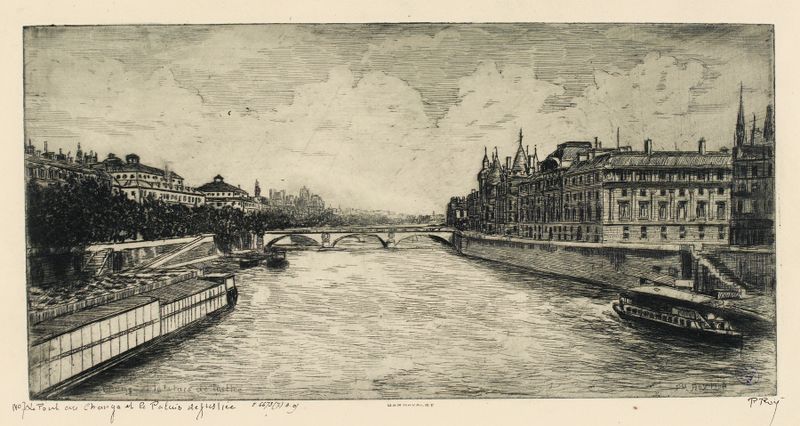
Le Pont au Change et le Palais de Justice
Pierre-Marcel Roy

Pavillon de l’Asie Russe
Pierre-Marcel Roy

La Sainte Chapelle
Pierre-Marcel Roy
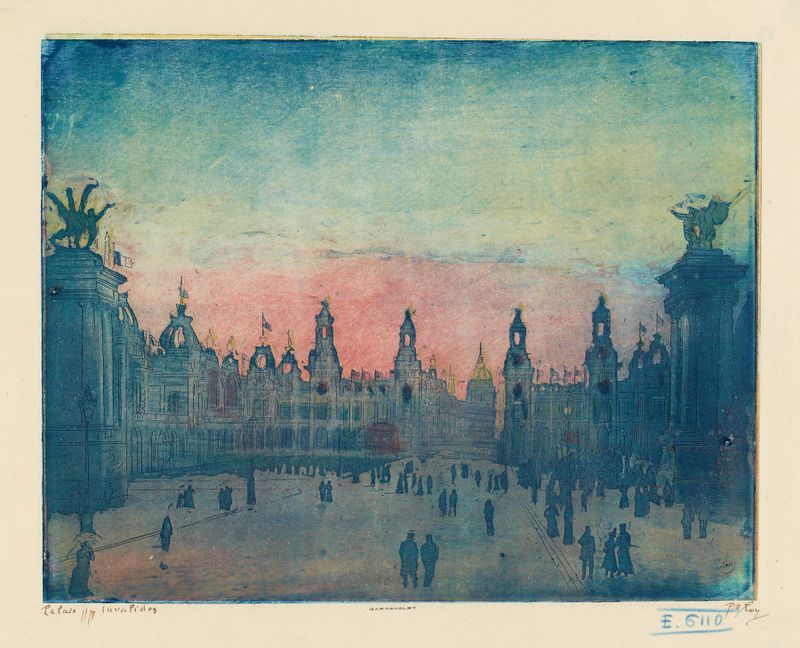
Palais des Invalides
Pierre-Marcel Roy

Eglise de Ste Eustache
Pierre-Marcel Roy

Pont Sully – Abside de Notre-Dame
Pierre-Marcel Roy

Place Maubert
Pierre-Marcel Roy

Palais d’Italie, de Norvège, d’Allemagne, d’Espagne et Roumanie
Pierre-Marcel Roy
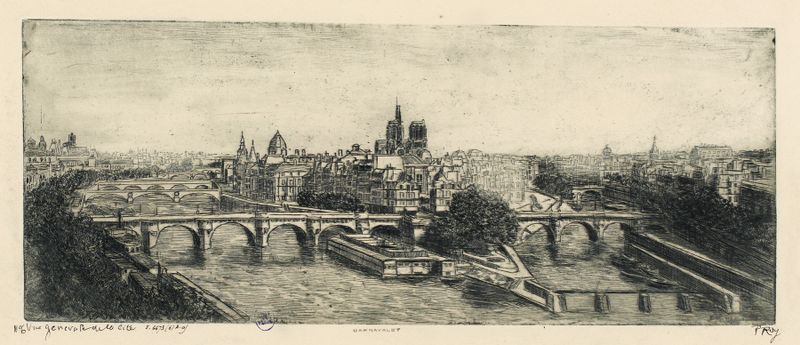
Vue générale de la Cité
Pierre-Marcel Roy

Palais de l’Electricité
Pierre-Marcel Roy





