Le Petit Pont et le pont Saint-Charles — History & Facts
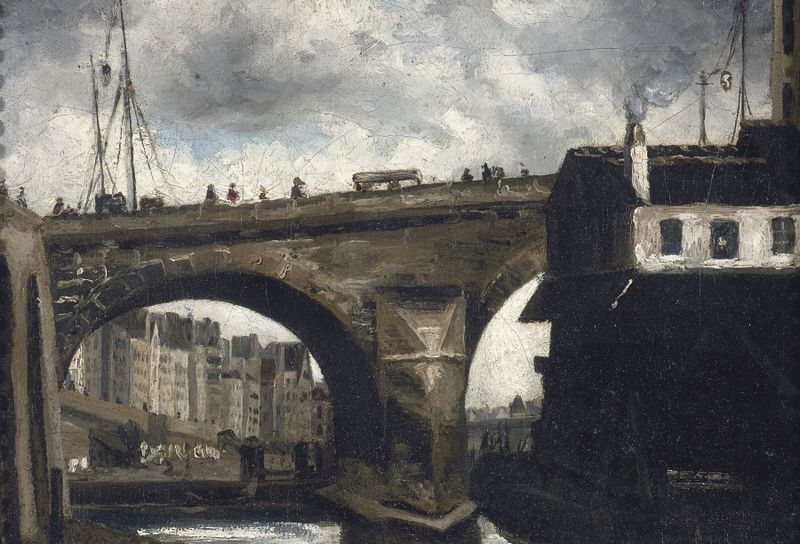
This sentiment bleeds into the essence of transformation, capturing moments that flicker like fireflies before the darkness of oblivion. The interplay of memory and decay reverberates throughout this piece, echoing the fragility of existence. Focus on the gentle curve of the bridge in the foreground, where the delicate strokes invite you to traverse its arch. The lush greenery flanking the sides draws your gaze deeper into the canvas, while the shimmering water reflects hues of blue and gold, hinting at a vibrant life just beneath its surface.
Notice how the soft light bathes the scene, creating a warm embrace that contrasts the cool shadow of the bridge, enriching its structure and inviting contemplation. As you observe, consider the juxtaposition between the serene landscape and the engineered beauty of the bridge. The artist captures a fleeting moment of tranquility, yet beneath this calm lies an undercurrent of change—nature’s slow reclamation of space. The vibrant colors suggest a dance of growth and decay, urging the viewer to ponder the relentless passage of time and the inevitability of transformation in all things. Created in 1825, this work emerged during a period of significant artistic experimentation in France.
Jadin, influenced by the romanticism of the era, sought to blend natural beauty with man-made structure. At this time, the world was witnessing rapid industrialization, prompting artists to reflect on the tension between nature and progress, a theme vividly echoed in this evocative piece.