Le pont et la pompe Notre-Dame — History & Facts
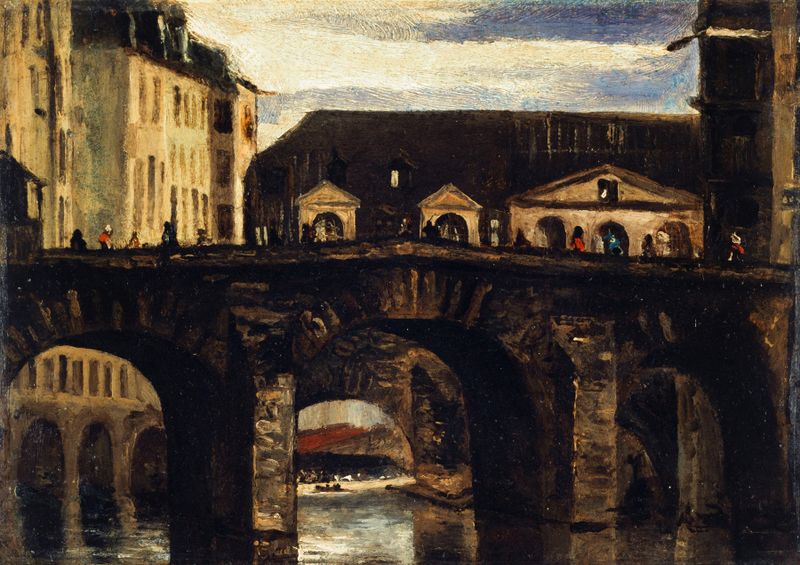
Where does light end, and longing begin? This question echoes through the soft, glowing tones of the canvas, inviting contemplation of the spaces we occupy and the voids that linger in our hearts. Look to the left at the delicate arch of the bridge, its detailed stonework juxtaposed against the soft, sweeping strokes of the water below. Notice how the sunlight dances on the surface, illuminating the fleeting moment between reality and reflection. The muted earth tones of the architecture contrast sharply with the vibrant hues of the foliage that frame the scene, offering a sense of balance that pulls the viewer's gaze inward and outward simultaneously. As you delve deeper, one can sense the emotional tension between the structured forms of the bridge and the fluidity of the river beneath it.
The painting captures a fleeting moment of stillness, yet the rippling water suggests a yearning for something beyond reach. The absence of figures enhances the feeling of solitude, evoking a poignant reflection on the nature of existence and the spaces wherein we find ourselves lost. Created in 1825, this work emerged during a period of profound transition in the art world, as Romanticism began to overshadow Neoclassicism. Louis-Godefroy Jadin painted Le pont et la pompe Notre-Dame in France, where the burgeoning interest in nature and emotion fueled new artistic expressions.
In his life, Jadin navigated the shifting tides of the artistic landscape, seeking to harmonize the beauty of the natural world with the structures imposed by civilization.