
Le Pont au Change, le palais (conciergerie) et la Seine vers l’aval, actuel 1er arrondissement — History & Facts
Could a single brushstroke hold eternity? In Le Pont au Change, le palais (conciergerie) et la Seine vers l’aval, Angelo Garbizza captures not just a moment in time, but a lingering ache for connection and permanence amid the transient flow of life. The scene unfolds on the banks of the Seine, where the enduring architecture meets the ever-changing waters, echoing the tumult of the early 20th century. Look to the left at the intricate forms of the Conciergerie, its gothic outlines rising majestically against a muted sky. The painter’s palette employs a delicate interplay of ochres and blues, creating a serene yet poignant atmosphere.
Notice how the light glimmers upon the water, reflecting the structures while subtly hinting at their impermanence. The brushwork is both precise and fluid, inviting admiration for both the artist's technical skill and his emotional depth. The tension between stability and fluidity permeates the piece. The rigid lines of the palace contrast sharply with the soft ripples of the Seine, suggesting an underlying yearning for permanence in a world marked by change.
Garbizza’s choice to emphasize the water's movement hints at time's relentless passage, reminding viewers of the continual dance between memory and oblivion. Each detail, from the gentle waves to the distant silhouettes, serves as a metaphor for emotions we often struggle to articulate. During the years spanning 1915 to 1945, Garbizza created this work amidst the backdrop of significant upheaval and transformation in Europe. Living in Paris during a time of both artistic innovation and societal strife, he utilized this canvas to express the dualities of stability and flux, reflecting the complexities of human experience in a rapidly changing world.
More Artworks by Angelo Garbizza
Browse all →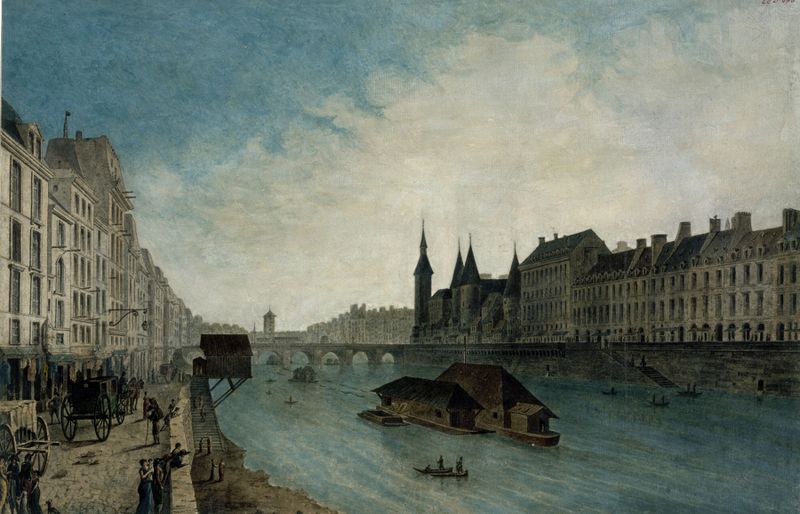

More Architecture Art
Browse all →
The statue of Liberty
Frédéric Auguste Bartholdi

View of Houses in Delft, Known as ‘The Little Street’
Johannes Vermeer

View of Houses in Delft, Known as ‘The Little Street’
Johannes Vermeer

The Cathedral in Rouen. The portal, Grey Weather
Claude Monet

The yellow house
Vincent van Gogh

The Church in Auvers-sur-Oise, View from the Chevet
Vincent van Gogh