Le pont de l’Alma et l’ancien Trocadéro vus du quai d’Orsay — History & Facts
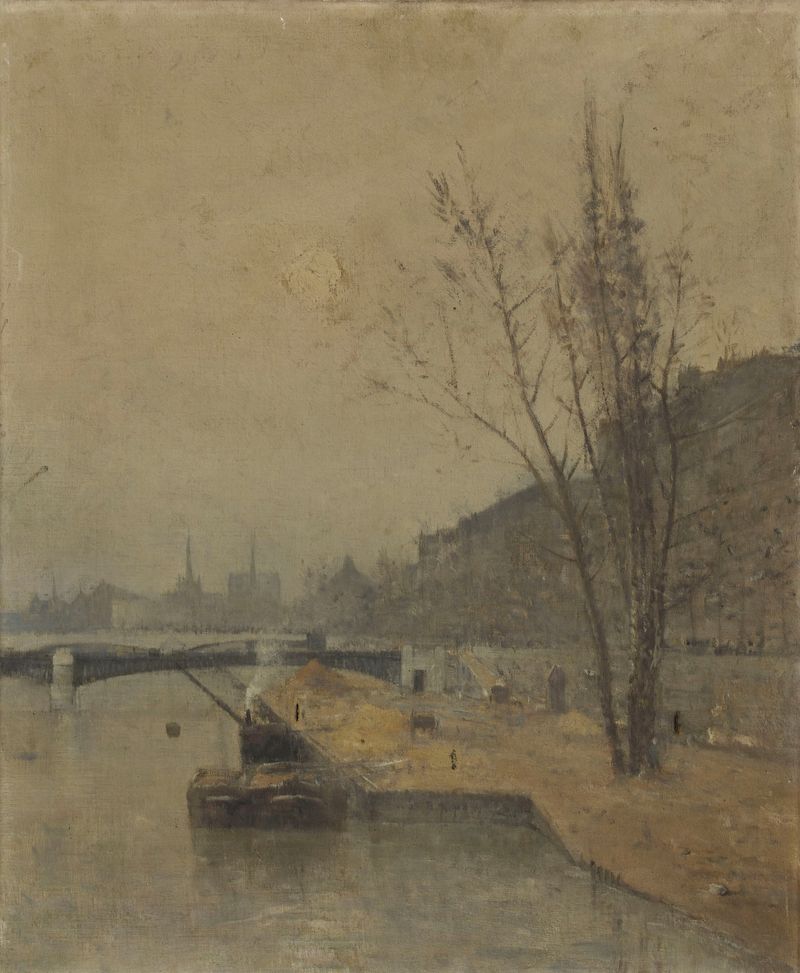
Is this a mirror — or a memory? In Le pont de l’Alma et l’ancien Trocadéro vus du quai d’Orsay, the water reflects not just a landscape but a transformative moment in Parisian history, where familiar landmarks rise and fade into the echo of time. Look to the lower portion of the canvas; the shimmering river captures the essence of the city, guiding your gaze toward the bridges and buildings that cradle the horizon. The artist employs a soft palette of blues and silvery grays, inviting a sense of tranquility, while the smooth brushwork creates almost rhythmic waves across the water’s surface. The interplay of light and shadow across the structures hints at the fleeting nature of both light and memory, as if the scene itself is in a gentle state of flux. Delve deeper into the painting's emotional undertones; the juxtaposition of the old Trocadéro against the new bridge suggests an inevitable cycle of change, embodying both nostalgia and progress.
The delicate reflections in the water can be seen as a metaphor for how the past continuously shapes the present, urging viewers to contemplate their own memories. Each brushstroke seems to whisper stories of the countless lives that have passed through these streets, transforming them into a shared legacy. Painted in 1880, this work emerged during a time of significant change for Billotte, reflecting the modernization of Paris under Haussmann’s urban redesign. The artist, while establishing his own career among the Impressionists, captured a transitional moment where the old and new coexisted, mirroring the artist's own journey through the evolving landscape of contemporary art.