Le pont Royal et le Pavillon de Flore, vus du quai Voltaire — History & Facts
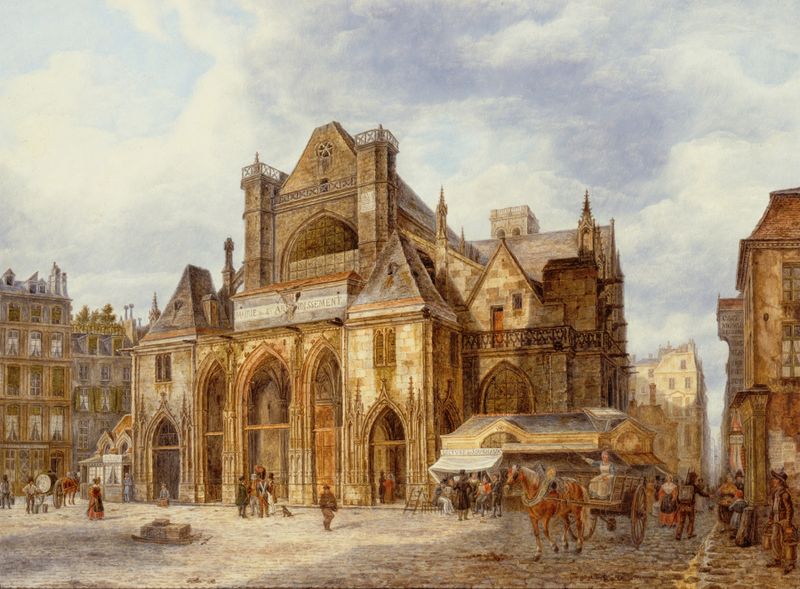
Where does light end, and longing begin? In Le pont Royal et le Pavillon de Flore, vus du quai Voltaire, the interplay of shadow and sunlight draws us into a contemplation of existence, elevating a simple landscape into a meditation on mortality. Look to the left where the soft glow of the setting sun bathes the bridge in warm hues, casting long, delicate reflections upon the still water below. The meticulous brushwork captures each detail—the arches of the bridge, the ornate decorations of the Pavillon de Flore, and the rippling surface, all harmonizing with a palette dominated by golden yellows and muted blues. This careful orchestration of light and color not only conveys a sense of tranquility but also evokes the passage of time, whispering of fleeting moments. Within the canvas lies a rich tapestry of contrasts: the solidity of the bridge against the ephemeral nature of water, the intricate architecture juxtaposed with the flowing river.
The viewer senses a hidden tension between permanence and transience, inviting an introspective exploration of life and its inevitable conclusion. Each brushstroke seems to echo the artist's awareness of mortality, urging us to appreciate the beauty that resides in the present moment, for it will soon dissolve into memory. In 1831, Auguste Wynantz painted this piece while living in Paris, a city undergoing significant changes amidst the backdrop of political unrest and social transformation. This era marked a departure from the romanticism of the past toward a more modern sensibility in art.
As the world around him shifted, Wynantz found solace and meaning in the picturesque landscapes of his surroundings, capturing not just a view, but a profound reflection on the nature of life itself.