Le Quai De Bercy — History & Facts
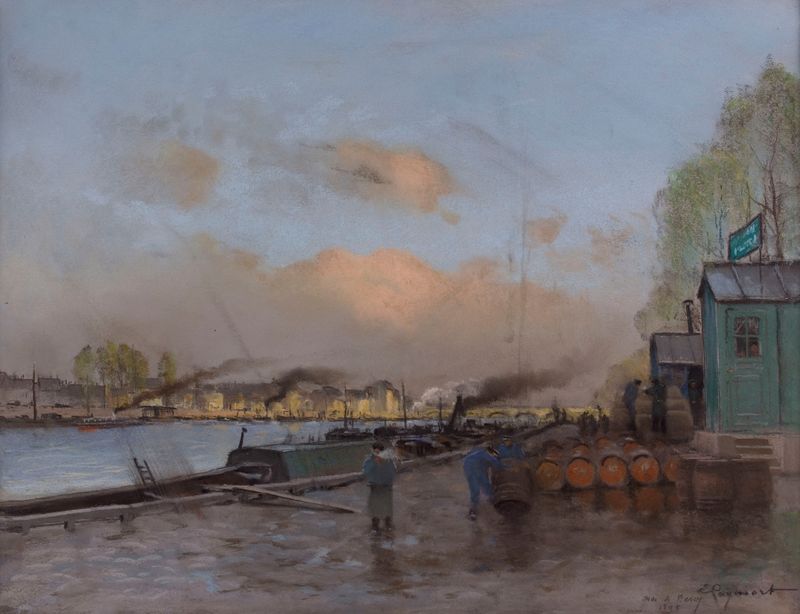
What secret hides in the quiet of the canvas? In Le Quai De Bercy, the interplay of shadow and light draws the viewer into a world where tranquility veils deeper narratives. Look to the left at the gentle ripples on the water’s surface, where reflections dance like whispered secrets. Emile Cagniart's use of soft blues and silvery grays creates a serene palette, evoking a sense of calmness that belies the tension beneath. Notice how the elongated shadows of the boat and figures stretch toward the foreground, inviting you to step into the frame and experience the stillness of the moment.
The composition guides the eye along the quay, capturing a fleeting yet profound connection between the man-made structures and the natural world. Delve deeper into the scene, and you’ll sense the delicate balance between solitude and presence. The lone figure on the quay stands in contemplative silence, suggesting a narrative of introspection or longing, amplifying the painting's emotional depth. The shadows cast by the evening sun hint at the passing of time, a reminder of moments that linger before fading into memory.
Cagniart seems to encapsulate a quiet yet profound statement about existence, presence, and the complexities that lie within stillness. Created in 1895, Le Quai De Bercy reflects a significant period in Cagniart's career as he was refining his technique in the Impressionist style. Living in Paris, he was immersed in the artistic movements of the time, characterized by a growing emphasis on capturing fleeting moments of everyday life. This painting aligns with the late 19th-century fascination with urban landscapes, celebrating both the beauty and the subtle stories that a seemingly unremarkable scene can convey.