Le quai de Bercy — History & Facts
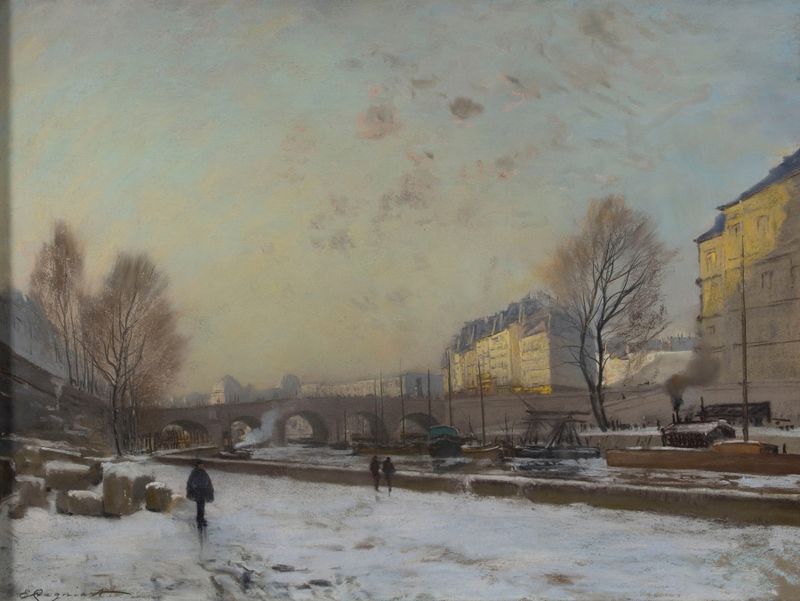
Can beauty exist without sorrow? In the gentle hues of twilight, Le quai de Bercy seems to whisper this timeless question through every brushstroke. Look to the left, where the ochres and golds of the sunset cascade across the tranquil River Seine, creating a warm embrace with the cool blues of the evening sky. The composition draws the eye to the elegant silhouettes of the bridges arching gracefully overhead, while figures on the quay become mere shadows against the luminescent backdrop. Notice how the light reflects off the water, creating a shimmering pathway that invites the viewer to follow the fleeting moment captured in time. Yet beneath this idyllic scene lies a profound contrast—an interplay of stillness and motion.
The distant boats suggest a world in transit, a fleeting engagement with life that mirrors the changing seasons. The artists’ choice to depict a seemingly serene moment hints at the underlying currents of life’s transience, a divine beauty intertwined with the sorrow of inevitable departure. Each figure, while bathed in the warmth of the sunset, carries an aura of solitude that evokes introspection. In 1895, as Cagniart painted this piece, he found himself amidst a Paris flourishing with artistic innovation.
The Impressionist movement had matured, and his work reflects the influence of capturing light and atmosphere. His focus on the everyday scenes of urban life resonated with the city's pulse, marking a moment in his career where he sought to balance the divine beauty of nature with the inherent melancholy of human experience.