Le square de la Trinité; le bassin — History & Facts
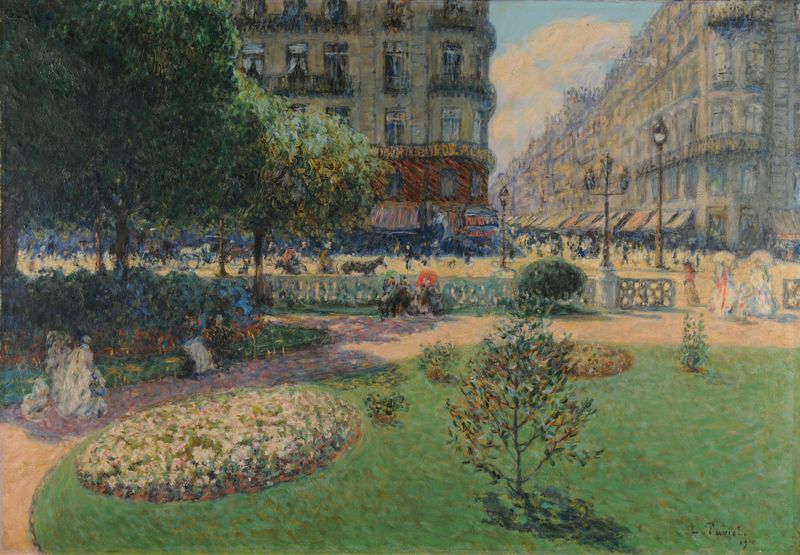
This sentiment resonates deeply within the essence of visual ecstasy captured by Paviot, an invitation to linger in captured moments beyond the relentless flow of time. Look closely at the foreground, where the shimmering surface of the basin reflects playful splashes of color. As your gaze drifts upward, notice the rich greens of the surrounding trees, enveloping the scene in a soothing embrace. The vivid palette and delicate brushwork evoke a sense of movement, as if the foliage whispers secrets to the vibrant waters below.
A careful balance between light and shadow creates a dance of serenity and excitement, compelling viewers to experience both the stillness of the moment and its inherent vibrancy. There’s an underlying tension in this seemingly tranquil park scene. The juxtaposition of the lively splashes against the still surface of the water speaks to the duality of joy and contemplation. Moments of ecstasy emerge from within the mundane, highlighting how fleeting beauty exists in harmony with the everyday.
The figures, lost in their own reveries, embody a collective sense of tranquility that radiates outward, inviting contemplation on the nature of happiness and stillness. In 1901, while painting Le square de la Trinité; le bassin, Paviot was immersed in the vibrant art scene of Paris, where impressionism was evolving into new narratives. This period saw artists experimenting with color and light in fresh ways, as traditional boundaries were pushed. Paviot, navigating between realism and abstraction, captured the essence of urban life, revealing how beauty flourished in everyday interactions with nature amidst a rapidly modernizing world.