Le Tréport — History & Facts
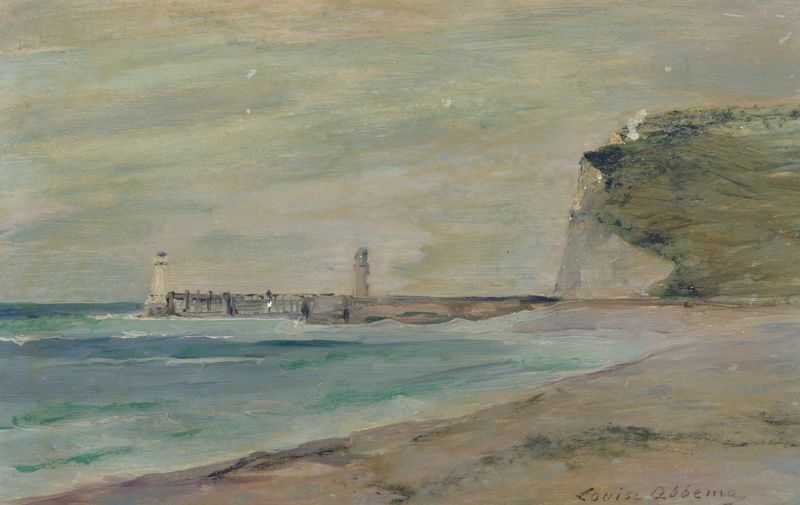
In Le Tréport, the viewer is beckoned into a delicate interplay of illusion and reality, a world that straddles the tangible and the imagined. Look to the right at the vibrant cliffside, where soft greens and browns blend seamlessly in a gentle embrace of nature. Notice how the sunlight dances over the water’s surface, casting a shimmering reflection that invites you to peer deeper into the depths of the canvas. The soft brushwork and ethereal palette create a dreamlike quality, drawing your gaze as you meander through the landscape Abbéma masterfully conveys. The horizon appears almost to dissolve into the sky, a metaphorical separation between the earthly and the ethereal.
Tiny figures dot the beach, their presence contrasting with the grandeur of the cliffs, embodying the transient nature of humanity against the eternal backdrop of nature. This tension between the smallness of life and the vastness of the landscape evokes a sense of humility in the spectator, prompting introspection and connection with the sublime. Painted in 1872, during a time when Abbéma was establishing herself within the Parisian art scene, Le Tréport reflects her ongoing exploration of Impressionism. She was among a group of women artists challenging societal norms and gaining exposure despite the constraints of the era.
This artwork not only showcases her skill but mirrors the broader shifts in artistic expression, capturing a moment where illusion and reality coalesce in a breathtaking dialogue.