Paysage de plage, Fécamp — History & Facts
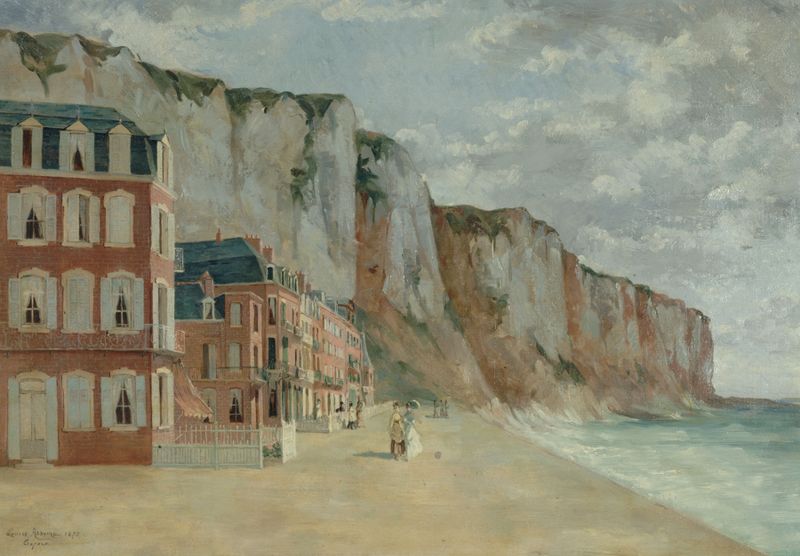
Can paint confess what words never could? In Paysage de plage, Fécamp, the canvas breathes a silent declaration of solitude and longing, captured in the gentle embrace of a coastal landscape. Look to the left at the rolling waves, where soft blues and greens merge in a delicate dance. The horizon blurs into a tranquil gradient, inviting the eye to linger over the exquisite brushwork that simulates the rhythm of the sea. Notice how the light glimmers on the surface of the water, creating a shimmering pathway that draws your gaze toward an absent shoreline—an invitation into a void that evokes both peace and melancholy. The contrasting colors—warm sandy yellows juxtaposed with cool ocean hues—speak to the duality of experience.
Each stroke suggests an emotional depth, reflecting the artist's nuanced understanding of nature and the human condition. The absence of figures in this expansive landscape amplifies the feelings of isolation and contemplation, evoking questions of existence and connection, as if the beach holds secrets that can only be whispered by the waves. Created during a period of personal exploration, Paysage de plage, Fécamp emerged from Abbéma's life in the late 19th century, a time when she was establishing herself in the Parisian art scene. Surrounded by a burgeoning movement of Impressionism, she deftly engaged with the interplay of light and color in her work, influenced by both her contemporaries and her own introspective journey through the ever-changing landscape of her surroundings.