
Le Vent — History & Facts
In the stillness of a moment, time breathes with a quiet intensity, inviting us to explore its depths. Look to the left where the horizon meets the sea, and notice how the brush strokes ripple like the waves themselves, capturing both movement and stillness. The color palette, dominated by soft blues and pale grays, evokes a sense of tranquility while hinting at the wind’s unseen presence. The subtle play of light shimmering on the water draws your gaze, creating a pathway into the painting's heart. As you delve deeper, observe the tension between the calmness of the sea and the vibrant clouds swirling above.
This juxtaposition suggests a narrative of change, where nature’s serene surface belies the force of the wind beneath. Each stroke tells a story of fleeting moments, echoing the relentless passage of time that shapes both landscape and memory. In 1899, Maxime Maufra created Le Vent during a period marked by a growing interest in Impressionism and a desire to capture ephemeral effects in nature. Painting in the coastal landscapes of Brittany, he sought to embody the spirit of a changing world, one where the artist's interpretation of light and atmosphere became paramount.
This work reflects not just his artistic evolution, but also the broader movement of artists eager to convey the transient beauty of life itself.
More Artworks by Maxime Maufra
Browse all →
Le pont de l’Isle-Adam ou le Vieux pont
Maxime Maufra

Féérie nocturne: Exposition Universelle Paris 1900
Maxime Maufra
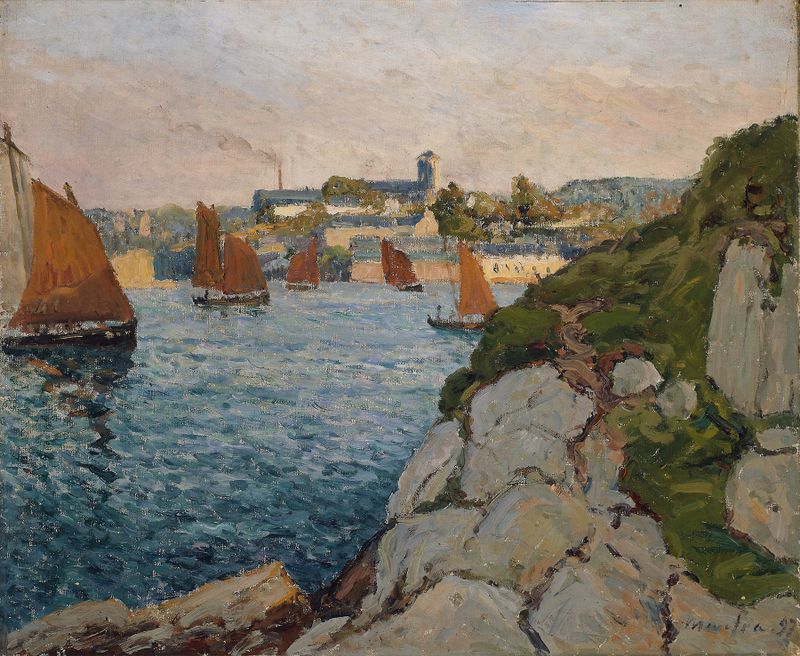
Douarnenez in Sunshine
Maxime Maufra
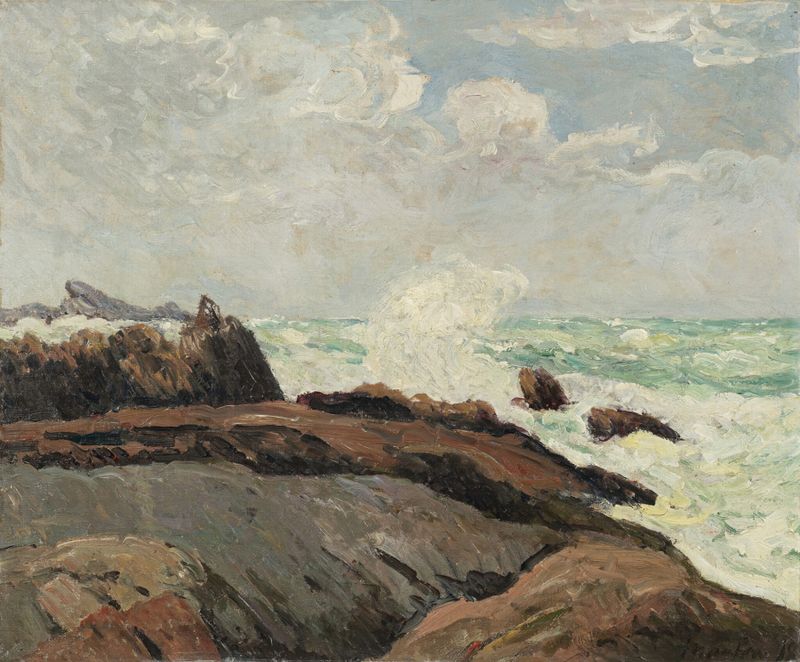
Mer forte à Saint-Guénolé Penmarc’h
Maxime Maufra

Marée Basse À La Plage De Port-Blanc, Presqu’île De Quiberon
Maxime Maufra
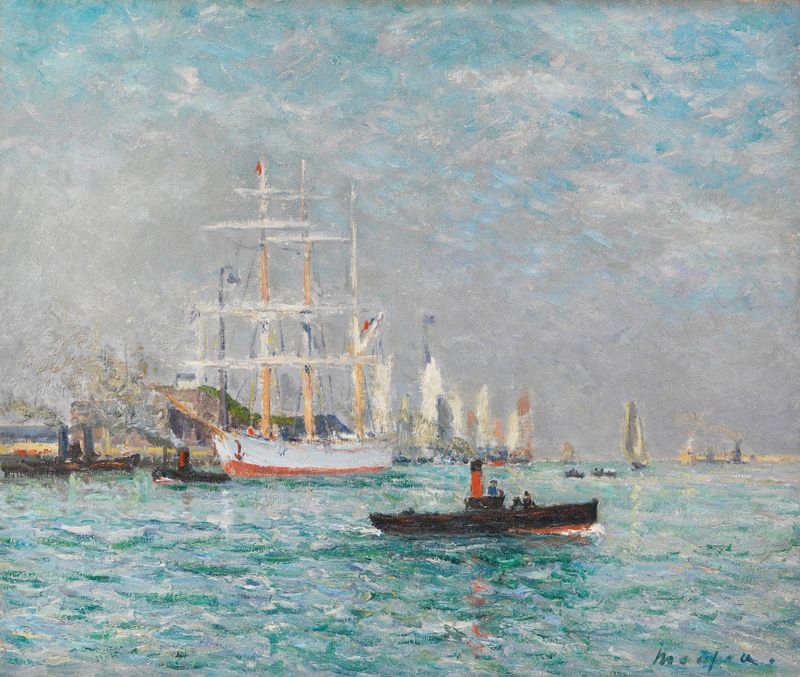
Entré d’un trois-mats, Le Havre
Maxime Maufra

Les rochers du château de Dinan, Morgat, Novembre 1903
Maxime Maufra
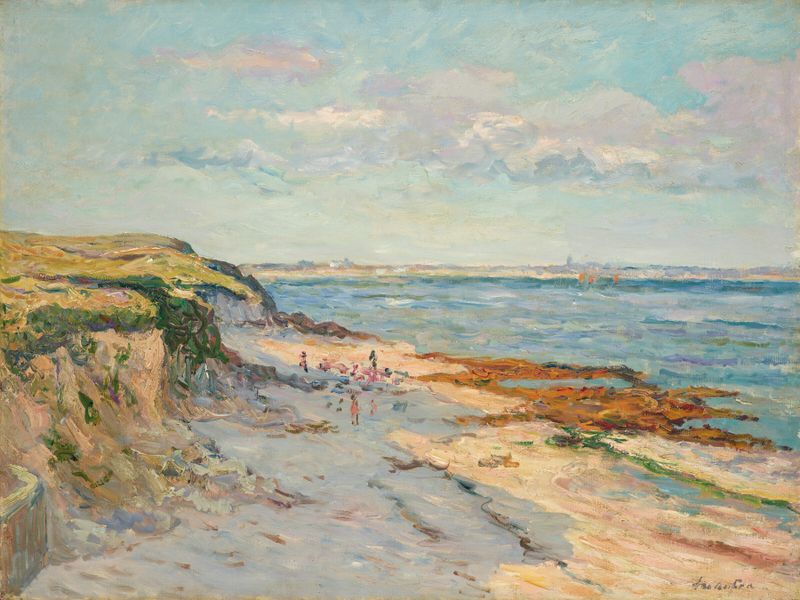
La Plage de Kerhostin, Morbihan
Maxime Maufra
Rochers au soleil couchant
Maxime Maufra
Soir D’orage À Kerhostin
Maxime Maufra





