Leader Of The Herd — History & Facts
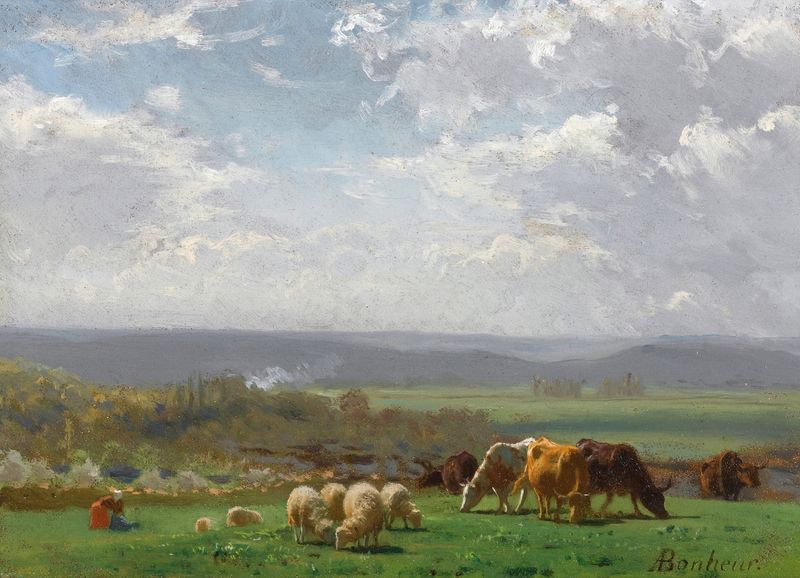
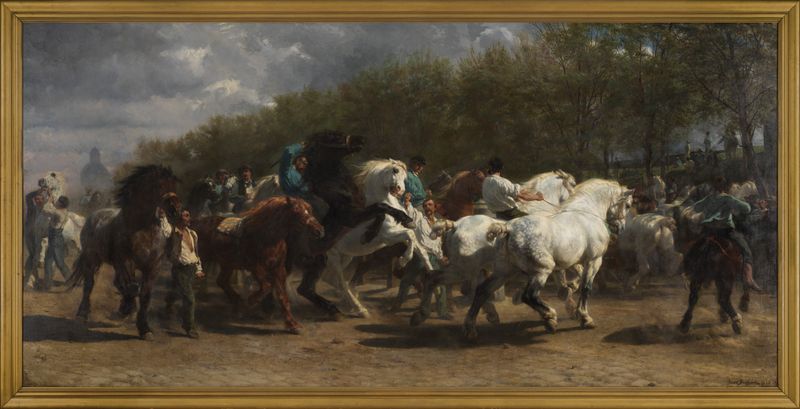
In the stillness of a moment, the violent pulse of nature's hierarchy beats fiercely. Here, in the depths of a pastoral setting, a majestic leader stands firm, embodying both power and vulnerability, while the surrounding chaos of the herd plays out, hinting at unseen tensions that lie just beneath the surface. Look to the center of the painting, where the leader of the herd commands attention with an imposing presence. The rich, earthy tones of the landscape contrast with the vibrant hues of the animals, drawing the eye to the intricate textures of their fur.
Notice how the light cascades down, highlighting the sinewy muscles and the protective stance of the figure, evoking a sense of both reverence and trepidation. These visual choices serve to amplify the underlying narrative of survival and dominance in this natural world. Delve deeper, and you’ll uncover the emotional tensions at play. The leader is not merely a figure of strength; there is an underlying vulnerability in its posture, as if aware of the constant struggle for supremacy.
The disarray of the herd around it reflects the chaotic dance of power and submission, suggesting that violence is an inherent part of their existence. The juxtaposition of serenity and turmoil invites the viewer to ponder the cost of leadership and the fragility of life in this untamed realm. Auguste Bonheur created this evocative piece in a time when the art world was embracing the realism of nature and animal life, likely in the mid-19th century. Known for his keen observance of animals, Bonheur was influenced by both the Romantic and Realist movements, capturing the raw essence of life on the brink of violence, where the natural order reigns with both beauty and brutality.