
Leidschevaart bij de Raaks ziende naar het zuiden met de Prins Hendrikbrug — History & Facts
In a world that moves ever faster, art remains a refuge for our most cherished memories. Look to the left at the gentle curve of the waterway, where the subtle reflections dance like fleeting thoughts on the surface. Notice how the light bathes the scene in a soft, golden glow, enhancing the warm hues of the surrounding landscape. The bridge, a sturdy emblem of connection, stands tall against the backdrop of lush greenery, drawing the eye towards its architectural grace.
Each brushstroke captures the essence of a moment, inviting viewers to linger and breathe in the tranquility of the scene. Delve deeper into the painting's emotional undercurrents, where nostalgia intertwines with the passage of time. The quiet stillness of the water contrasts with the lively greens and blues, evoking a bittersweet longing for a simpler past. Small details, such as the distant figures strolling along the bank, reveal the human element that breathes life into the landscape, suggesting stories untold and memories waiting to be reclaimed. In the early 20th century, Hendrik Hulk created this piece between 1902 and 1907, during a period of artistic exploration in the Netherlands.
Following the influence of the Hague School, he embraced the interplay of light and nature, striving to immortalize the scenes of everyday life. His work reflects not only the aesthetic values of his time but also a growing interest in capturing the essence of place and emotion, drawing viewers into a shared experience of nostalgia.
More Artworks by Hendrik Hulk
Browse all →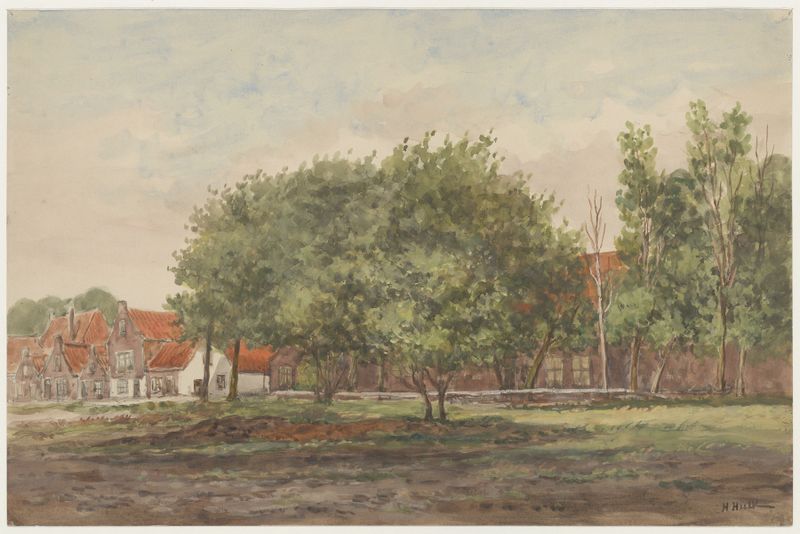
Jacobstraat en Gedempte Voldersgracht, met terrein der gesloopte gasfabriek
Hendrik Hulk
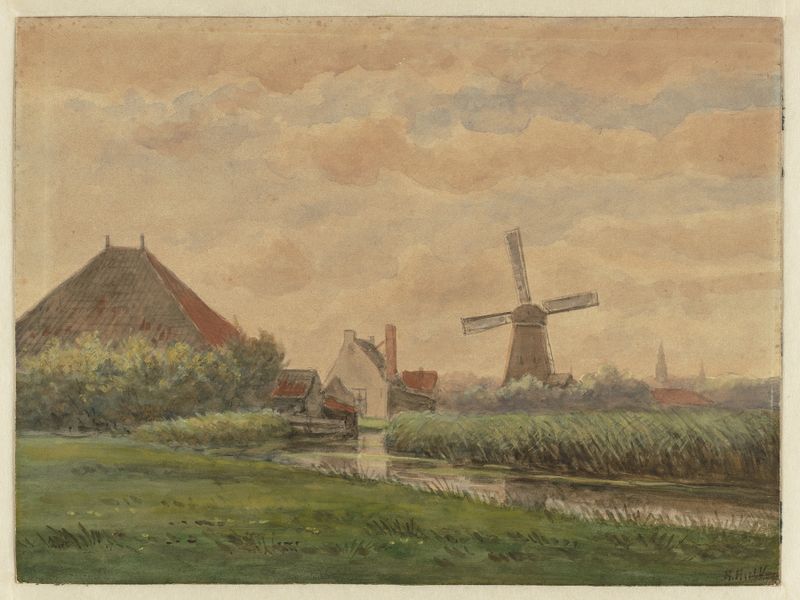
Gezicht op molen de Liefhebber
Hendrik Hulk
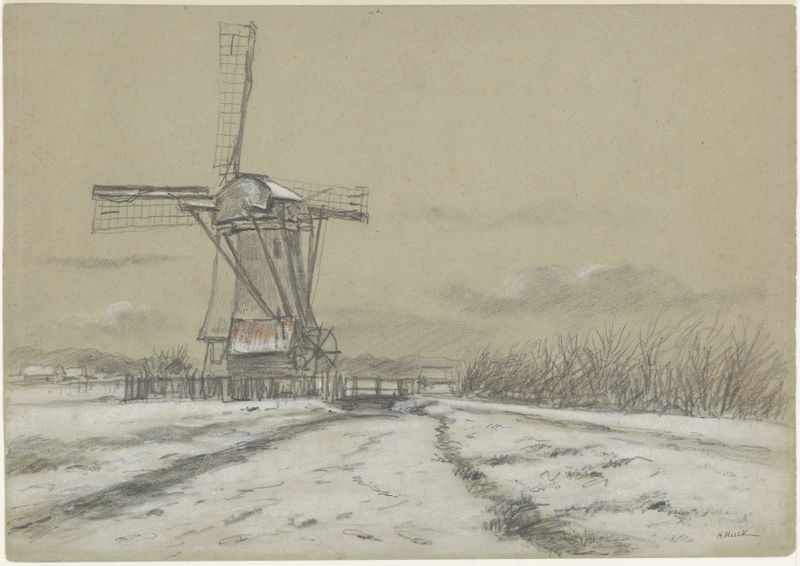
Molen in de Veenpolder bij de Leidsevaart
Hendrik Hulk
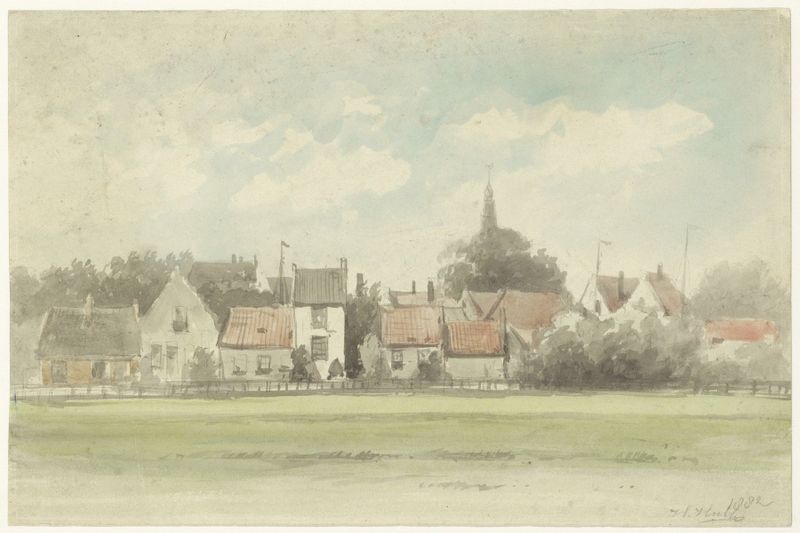
Rozenprieel, van de Zuidzijde
Hendrik Hulk
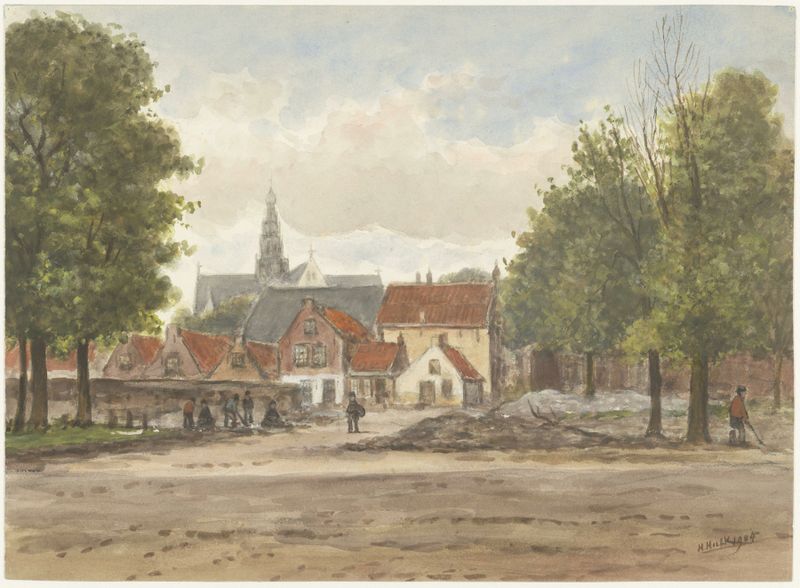
Jacobstraat bij de Zuiderstraat, met terrein der gesloopte gasfabriek
Hendrik Hulk
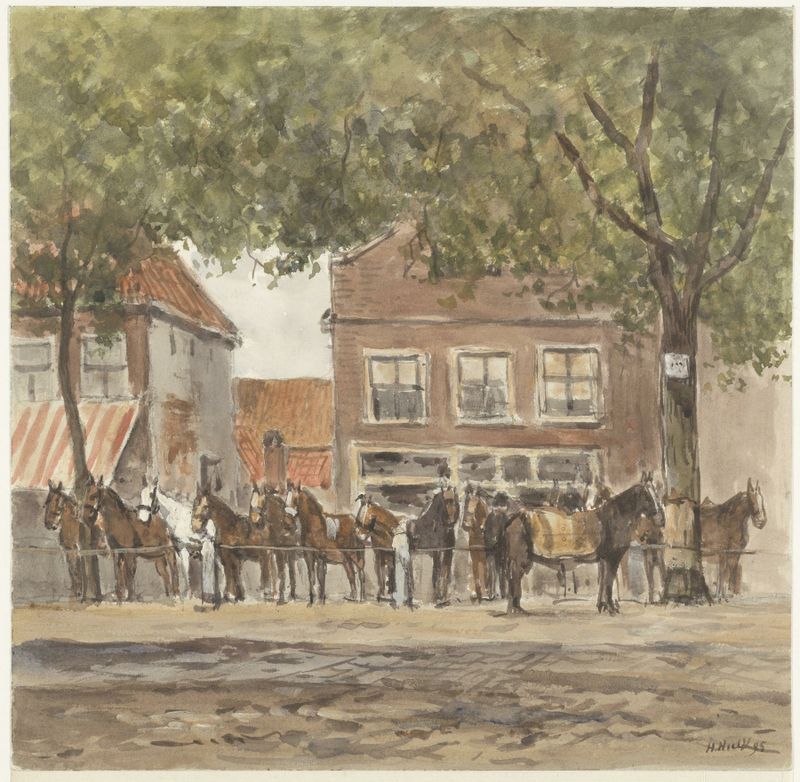
Paardenmarkt op het Plein
Hendrik Hulk





