Les Bords Du Nil — History & Facts
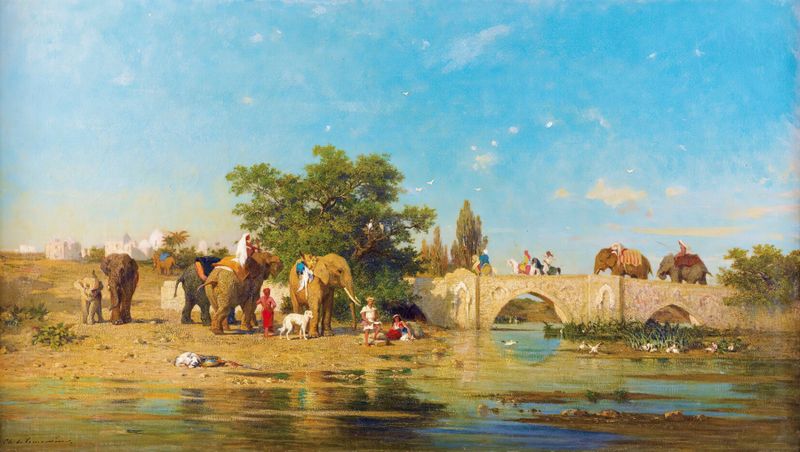
Did the painter know this moment would outlive them? In Les Bords Du Nil, a subtle dance unfolds, capturing the essence of life along the riverbanks, where every brushstroke hints at movement and continuity. Look to the left at the gentle curve of the Nile, its waters a reflective palette of blues and greens that shimmer under the sun. Notice how the artist expertly blends soft earth tones in the foreground, allowing figures to emerge with quiet dignity, their postures suggesting a harmony with the landscape. The composition guides the eye along the banks, inviting one to experience the tranquil yet vibrant life that flourishes in this lush setting. Within this serene vista lies a profound contrast.
The interplay of light and shadow not only highlights the physical beauty of the location but also evokes a deeper sense of time’s passage. The figures, engaged in their daily routines, serve as a reminder of the cyclical nature of existence, where each moment flows into the next. The rhythmic brushwork embodies the very movement of life, suggesting both permanence and transience. Charles de Tournemine painted this piece during an era marked by explorations into the romanticized aspects of nature and human connection to it.
The exact date remains uncertain, but his work emerged as part of a broader artistic dialogue in the late 19th century, where artists sought to capture the ephemeral beauty of landscapes and the intimate stories woven within them.