
Ligurian Academy of Fine Arts in Venice — History & Facts
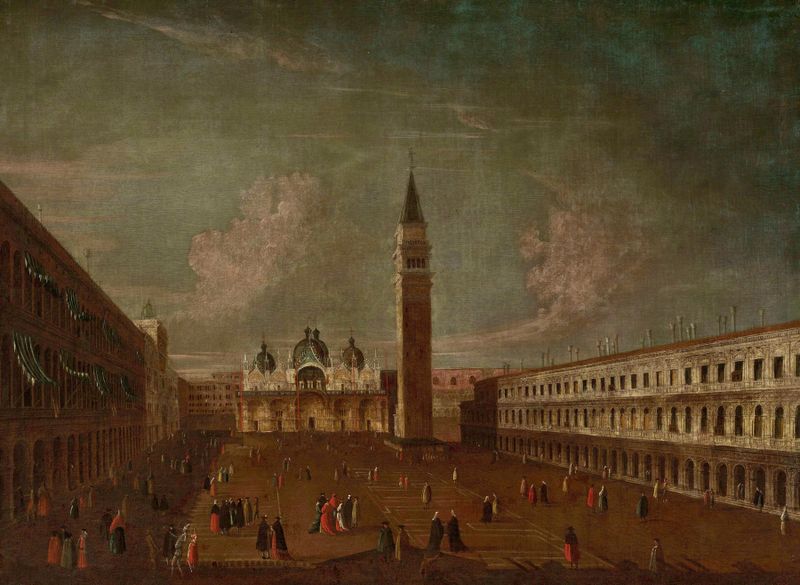
What if beauty was never meant to be finished? In the ethereal realms of the canvas, there lies a vision of artistic pursuit where the divine touches the human hand. Begin your exploration in the foreground, where architectural lines draw you into the grandeur of the Ligurian Academy of Fine Arts. Notice how the sunlight bathes the entrance, creating a luminous halo that beckons the viewer toward the welcoming arches. The meticulous attention to detail in the stone and the delicate brushwork breathe life into the structure, inviting you to linger.
Focus on the soft hues of blue and beige; they evoke a sense of calm, while the shadows playfully dance across the façade, hinting at the life that thrives within. As you delve deeper, consider the contrasts embodied in the piece. The solidity of the academy stands in stark juxtaposition with the fluidity of the surrounding landscape, suggesting the tension between artistic ambition and the natural world. The light serves as a metaphor for enlightenment, illuminating the pursuit of knowledge.
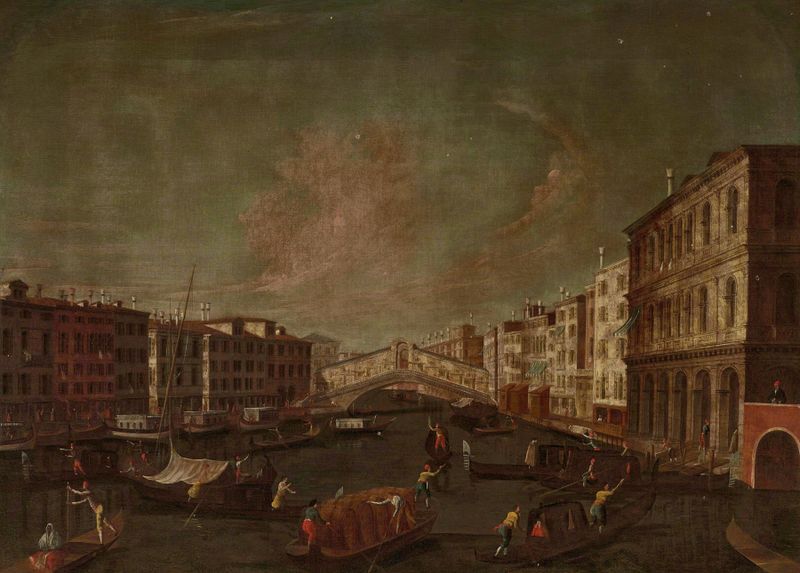
Each element within the composition resonates with the ideals of beauty and creativity, intertwining with the notion that art is an endless journey rather than a destination. Pietro Bellotti di Canaleti painted this work between 1742 and 1770, a time when he was immersed in the flourishing art scene of Venice. The academy itself was a cradle of artistic thought, nurturing the talents of many aspiring artists. During those years, the world was witnessing significant shifts in artistic styles and philosophies, with a growing emphasis on capturing the sublime beauty of both nature and human creativity.
More Artworks by Pietro Bellotti di Canaleti
Browse all →

More Architecture Art
Browse all →
The statue of Liberty
Frédéric Auguste Bartholdi

View of Houses in Delft, Known as ‘The Little Street’
Johannes Vermeer

View of Houses in Delft, Known as ‘The Little Street’
Johannes Vermeer

The Cathedral in Rouen. The portal, Grey Weather
Claude Monet

The yellow house
Vincent van Gogh

The Church in Auvers-sur-Oise, View from the Chevet
Vincent van Gogh