
Loch Awe, Argyllshire — History & Facts
In the stillness of nature, light dances with water, illuminating truths hidden beneath the surface. Within the confines of a painted landscape, the viewer is beckoned to explore the ethereal interplay between earth and sky, as every brushstroke whispers secrets of the Scottish highlands. Look to the foreground, where the gentle ripples of Loch Awe mirror the soft, muted tones of the overcast sky. Notice how the artist captures the subtle variations in color — from the deep greens of the rugged terrain to the soft grays of the clouds.
The composition draws your eye toward the horizon, where distant mountains stand shrouded in mist, creating a sense of depth and intrigue. The delicate interplay of light and shadow enhances the tranquility of this scene, inviting contemplation. The emotional tension in this piece lies in the juxtaposition of serenity and the ever-present possibility of change. The calm waters reflect a moment frozen in time, yet the looming clouds suggest impending storms, hinting at life's unpredictability.
Additionally, the foreground's vibrant flora contrasts with the subdued sky, representing the resilience of nature amidst the ephemeral moments that define existence. In 1785, Alexander Nasmyth painted this landscape while establishing himself as a leading figure in the Scottish art scene. Living in Edinburgh, he was inspired by the picturesque qualities of the Scottish countryside, capturing its beauty during a time of expanding Romantic ideals in art. This work is emblematic of his desire to elevate landscape painting, as it reflects both the grandeur of nature and the intimate connection humans share with their environment.
More Artworks by Alexander Nasmyth
Browse all →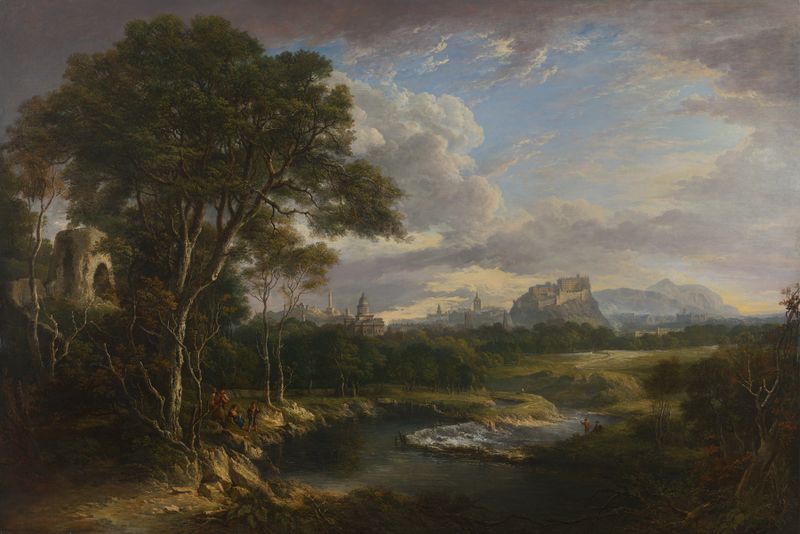
View of the City of Edinburgh
Alexander Nasmyth
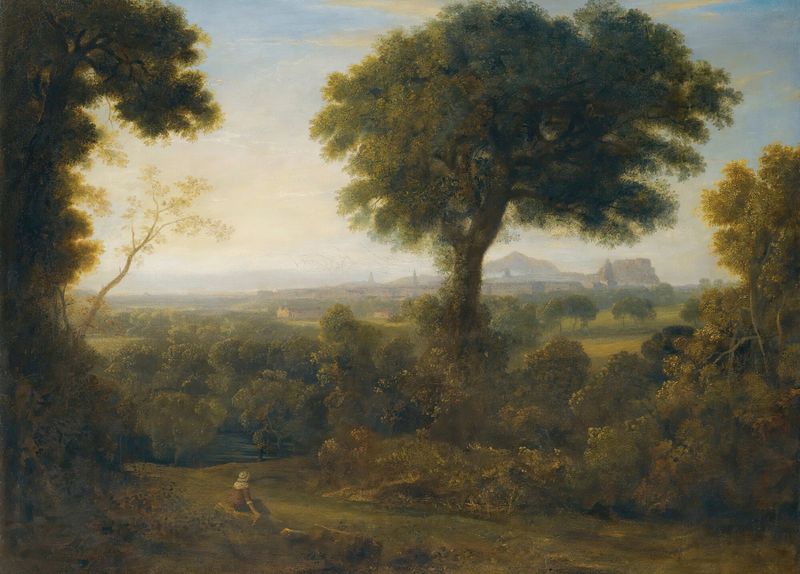
A View Of Edinburgh From Corstophine Hill
Alexander Nasmyth
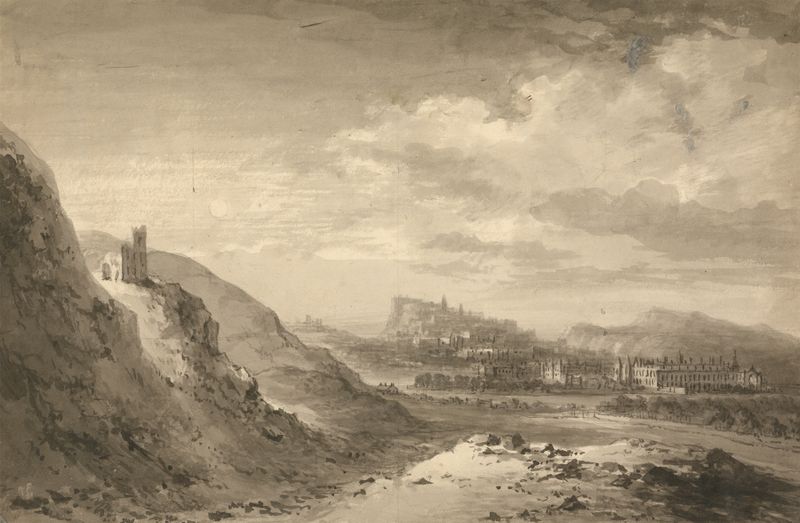
Edinburgh
Alexander Nasmyth
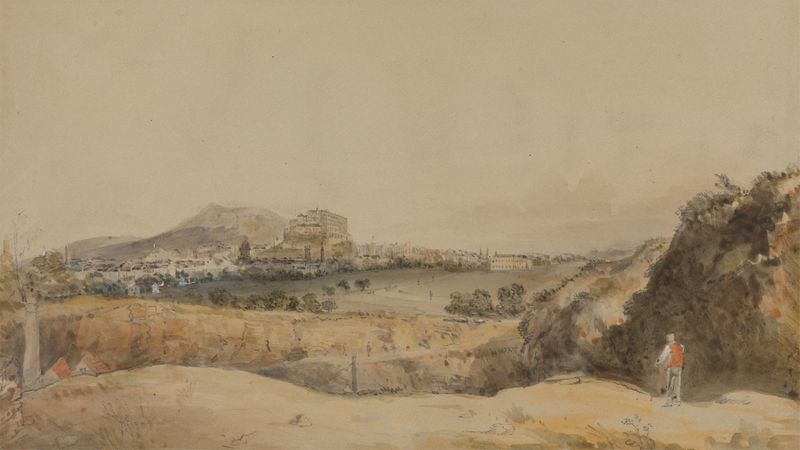
A View of Edinburgh
Alexander Nasmyth
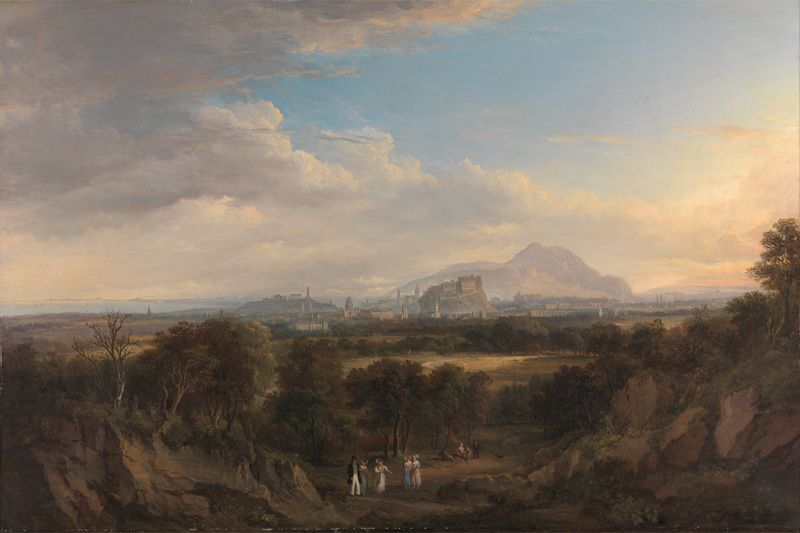
A View of Edinburgh from the West
Alexander Nasmyth

Hawthornden Castle, near Edinburgh
Alexander Nasmyth
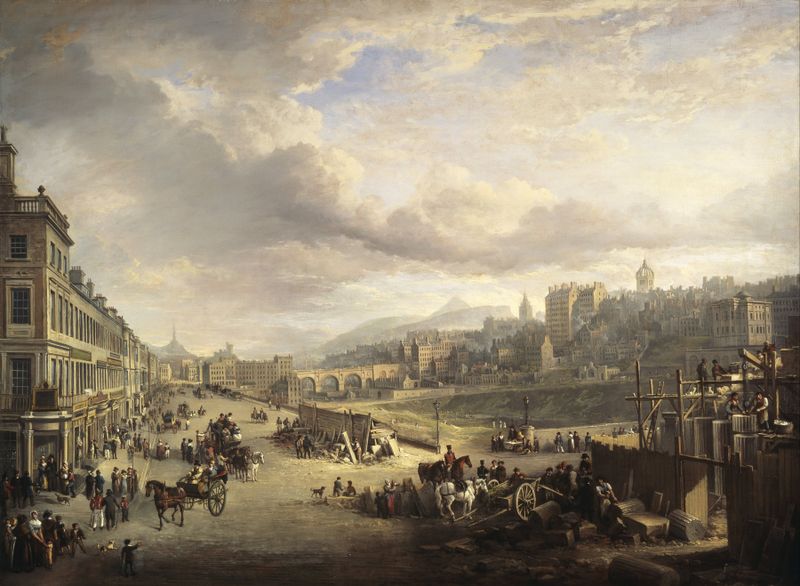
Princes Street with the Commencement of the Building of the Royal Institution
Alexander Nasmyth
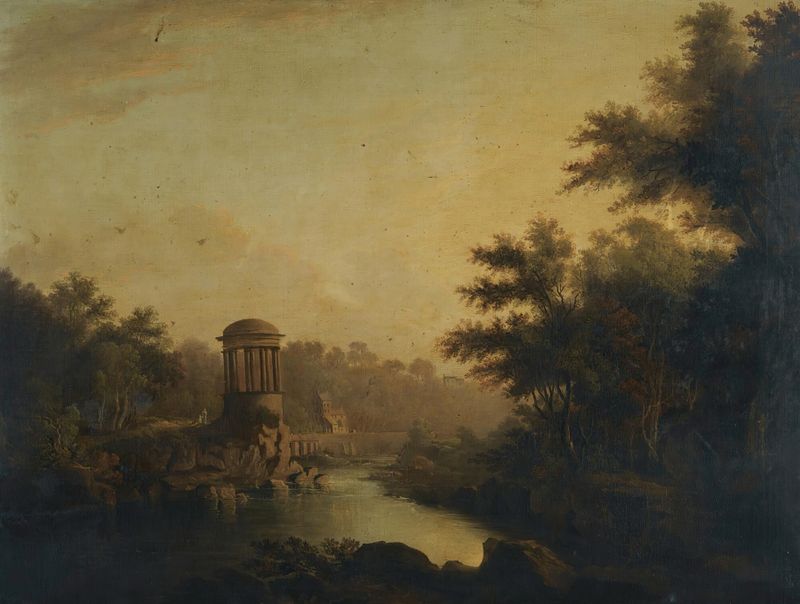
St Bernard’s Well
Alexander Nasmyth





