
Lwów – Cerkiew Wołoska — History & Facts
Did the painter know this moment would outlive them? In Lwów – Cerkiew Wołoska, innocence is captured in a fleeting breath of time, inviting the viewer to ponder the essence of existence and memory. Look to the center of the canvas where the Cerkiew stands resilient against a backdrop of soft pastels, a gentle testament to both the weight of history and the lightness of being. Notice how the warm glow of the setting sun bathes the church in golden hues, contrasting with the cool shadows that cradle the surrounding landscape. The focal point emerges not just in the structure itself, but in the delicate interplay between light and shadow, guiding your gaze through the serene expanse of the composition. Beyond its picturesque beauty, the artwork speaks volumes about the innocence of a bygone era.
The church, a symbol of spiritual refuge, stands amidst a world often fraught with turmoil. This juxtaposition evokes a silent dialogue between permanence and transience, urging the viewer to reflect on what is cherished but cannot endure. The ethereal quality of the colors suggests a longing for the simplicity of belief and hope amid the complexities of life. Wiktoria Goryńska painted this piece in 1930 during a time of profound change in Poland, as it navigated its post-war identity.
Living in Lwów, she was surrounded by rich cultural heritage, blending influences from Eastern and Western traditions. The canvas serves not only as a snapshot of a specific moment in history but as a poignant reminder of the innocence that art can preserve even as the world evolves.
More Artworks by Wiktoria Goryńska
Browse all →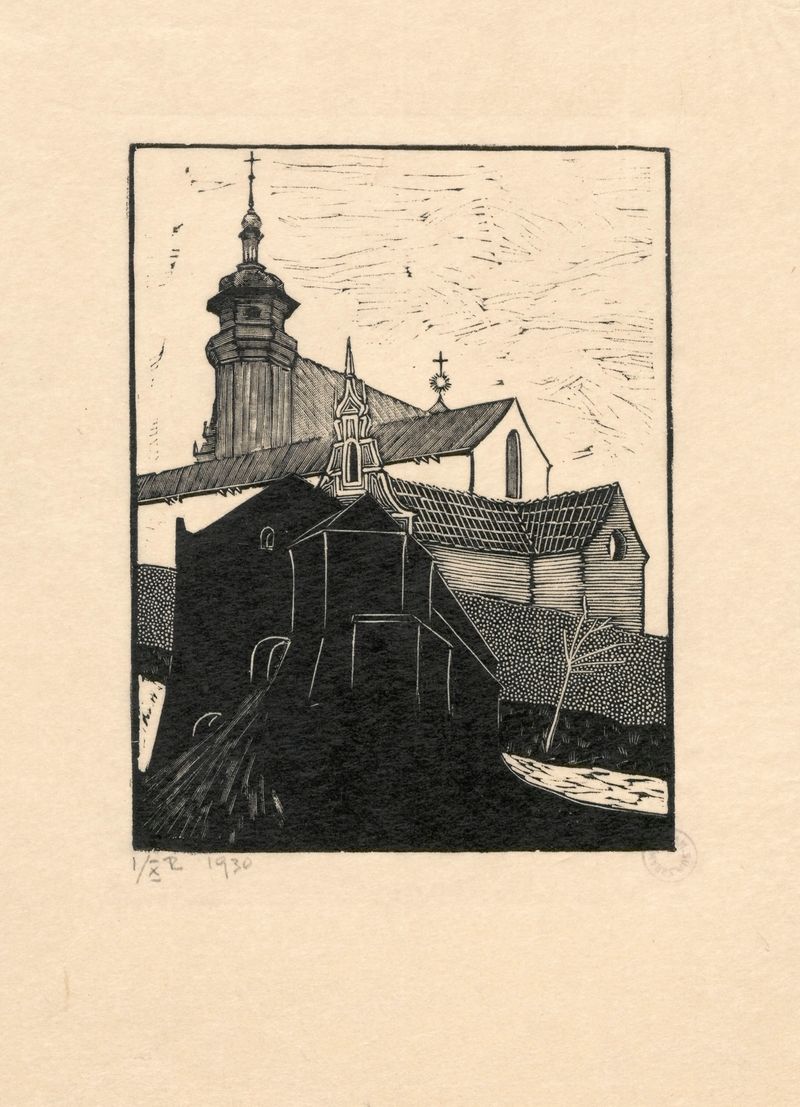


More Architecture Art
Browse all →
The statue of Liberty
Frédéric Auguste Bartholdi

View of Houses in Delft, Known as ‘The Little Street’
Johannes Vermeer

View of Houses in Delft, Known as ‘The Little Street’
Johannes Vermeer

The Cathedral in Rouen. The portal, Grey Weather
Claude Monet

The yellow house
Vincent van Gogh

The Church in Auvers-sur-Oise, View from the Chevet
Vincent van Gogh