Madrone Falls of Milliken Creak (Six Rivers National Forest, California) — History & Facts
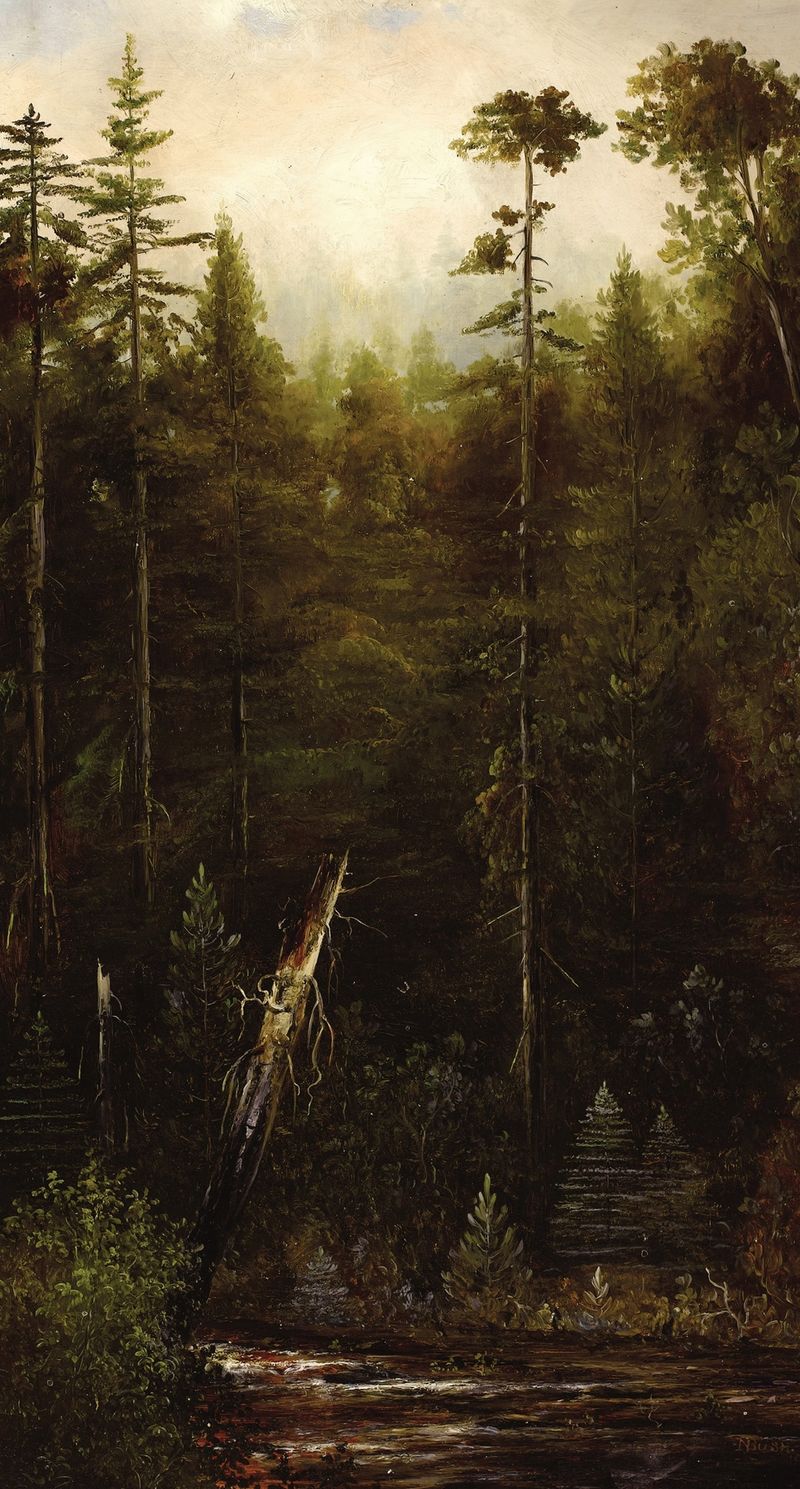
In the heart of a peaceful landscape lies a profound truth: nature holds both serenity and turmoil in its embrace. Look to the left where vibrant greens and deep browns intertwine, forming a lush tapestry that draws you inward. The cascade of water tumbles from a rocky outcrop, glistening with hints of sunlight that dance upon its surface. Notice how the delicate strokes capture the movement of the water, creating a sense of both fluidity and permanence, as if time momentarily halts in this tranquil sanctuary.
Bush's deft use of color creates a vivid contrast: the cool blues of the falls juxtaposed against the warm earth tones of the surrounding foliage. Delve deeper into the layers of this scene, where tranquility and revolution coexist. The cascading water symbolizes the unstoppable flow of life, representing change and renewal amid the stillness of the forest. The towering trees, stoic and steadfast, serve as guardians of this sacred space, embodying resilience even as nature’s forces shape their existence.
Together, they reflect the tension between the gentle beauty of the landscape and the underlying tumult of natural upheaval. In 1882, Norton Bush painted this piece while residing in California, a period when the American landscape was experiencing a profound transformation. As the nation expanded westward, artists like Bush sought to capture the sublime beauty of nature, promoting conservation amidst the encroaching developments. His work is part of a broader movement, highlighting not only the aesthetic allure of the wilderness but also a pioneering spirit that questioned humanity’s place within it.