Off the Coast of Peru — History & Facts
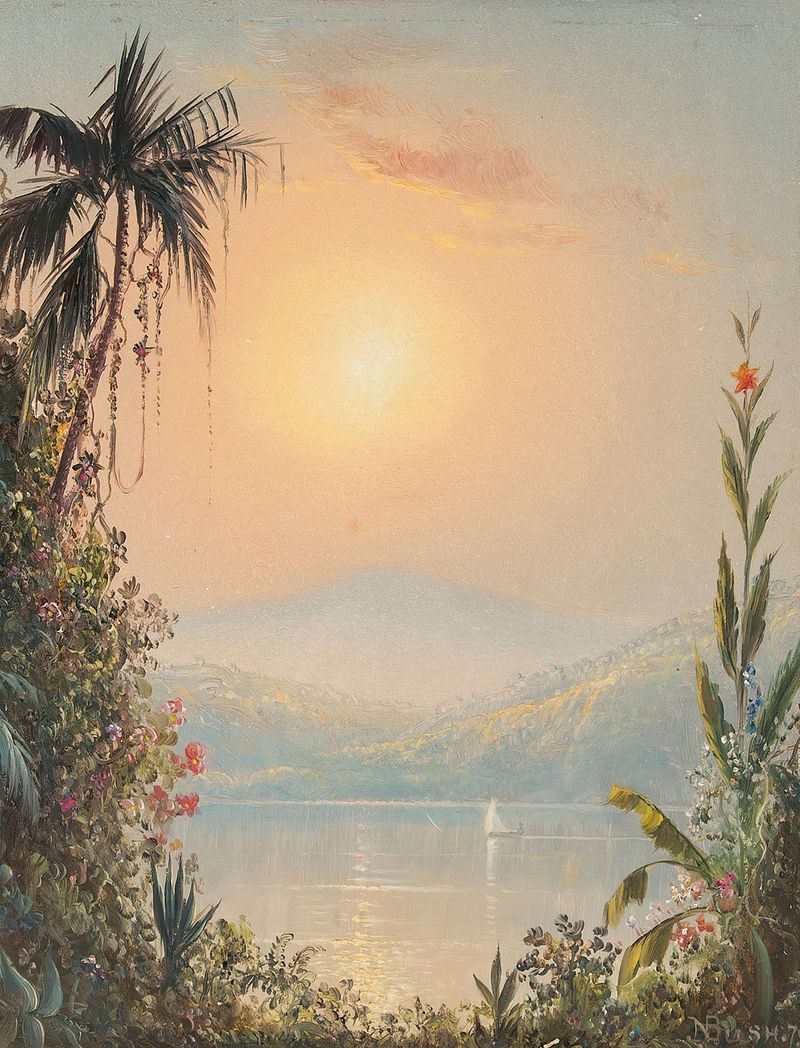
In the realm of art, light is a transformative force, capable of revealing hidden beauty in the unpredictable dance of nature. Begin your exploration at the center of the canvas, where the vibrant blue of the ocean pulsates with rhythmic waves. Notice how the artist masterfully layers shades of cerulean and azure, creating a depth that draws the eye into the heart of the sea. To the left, the sun breaks through a veil of cloud cover, casting golden light that glimmers on the water’s surface.
This interplay of color and luminosity communicates a sense of movement and life, inviting the viewer to linger in this serene maritime expanse. As you observe closely, subtle details emerge—the delicate brushstrokes that suggest the turbulence beneath the calm exterior of the water. Here, the artist contrasts tranquility with the hint of chaos lurking in the depths, reflecting the duality of nature. The clouds, with their soft edges and varying shades of gray, evoke a fleeting moment of uncertainty, a reminder of the ever-changing coastal weather.
This tension between peace and turmoil embodies the complexity of the human experience, inviting reflection on our own inner landscapes. Created during a time of artistic exploration in the late 19th century, the work emerges from the period when plein air painting was gaining momentum. Norton Bush, known for his evocative landscapes, painted this piece amidst a growing fascination with capturing the ephemeral qualities of light and atmosphere. His devotion to depicting the beauty of the natural world resonates with the broader movements in American art, reflecting a deepening appreciation for the sublime forces of nature.