
Maison dans un paysage — History & Facts
When did color learn to lie? In Maison dans un paysage, the interplay of light and shadow reveals the duality of perception, inviting us to question the truth behind what we see. Look to the center of the canvas, where a quaint house emerges, its soft hues blending harmoniously with the surrounding landscape. Notice how the vibrant greens of the trees and the warm, inviting tones of the architecture draw your gaze, while the shadows play coyly beneath them, suggesting depth and intrigue. The artist employs a delicate balance of brushstrokes, creating a sense of movement in the foliage, while soft light bathes the scene, imbuing it with an almost ethereal quality. Delve deeper into the details, and you’ll discover the tension between presence and absence; the shadows, while enriching the composition, also evoke a sense of melancholy.
The home, though picturesque, stands alone, suggesting both comfort and isolation. The contrasts in color—lively greens against muted browns—invite contemplation about human connection to nature and the fleeting nature of happiness. In 1897, during a prolific period of his career, Roussel created this work amidst the rise of Symbolism in French art, which sought to capture emotional truths beneath surface appearances. At this time, he was exploring the interplay of color and form, influenced by his exposure to the Impressionists and their revolutionary ideas.
The world of art was evolving rapidly, and Roussel's exploration in Maison dans un paysage reflects both a personal and collective journey towards deeper expressions of experience.
More Artworks by Ker-Xavier Roussel
Browse all →
La Source
Ker-Xavier Roussel

Baigneuses
Ker-Xavier Roussel
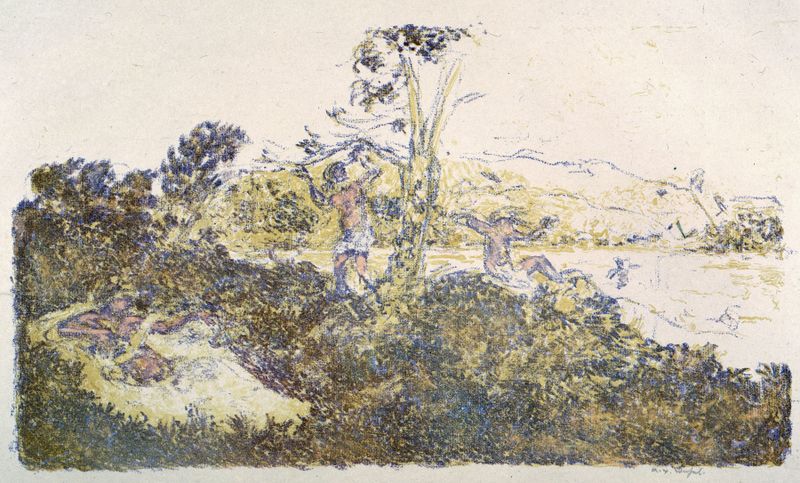
Personnages au bord de la mer
Ker-Xavier Roussel

Faunes et nymphes dans un chemin forestier
Ker-Xavier Roussel
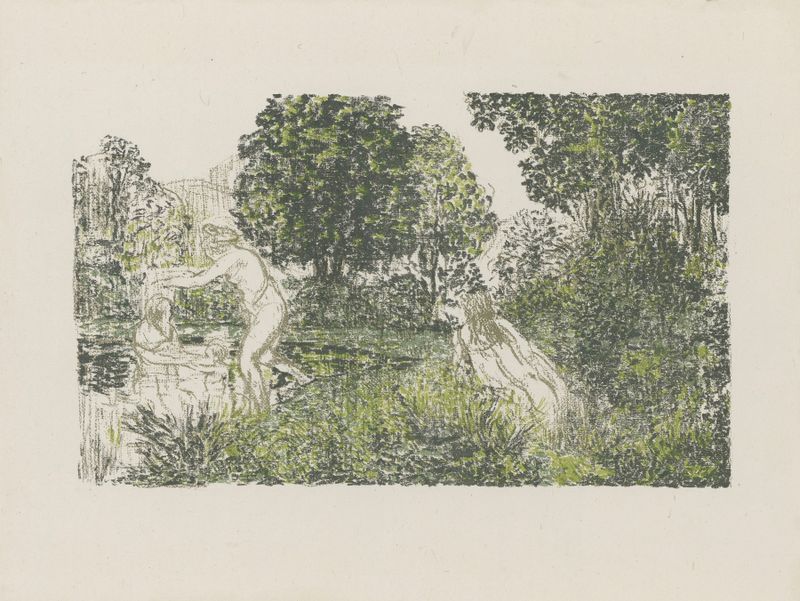
Baigneuses
Ker-Xavier Roussel
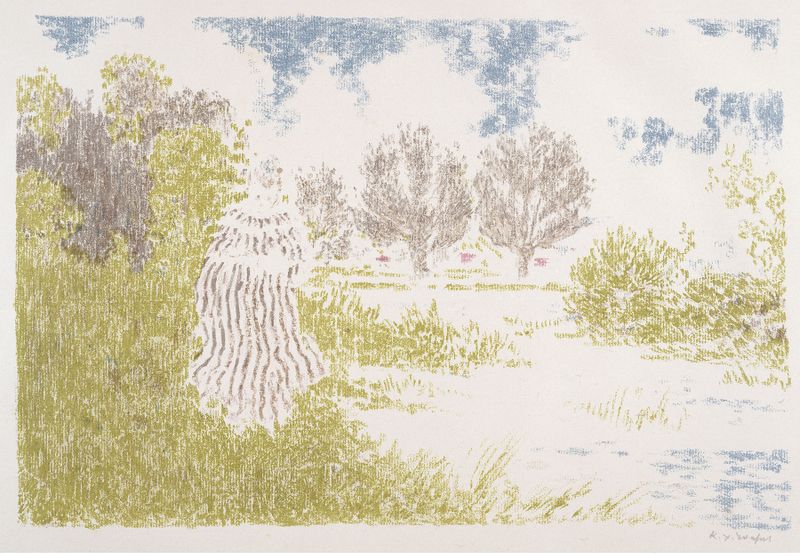
Femme en robe à rayures
Ker-Xavier Roussel
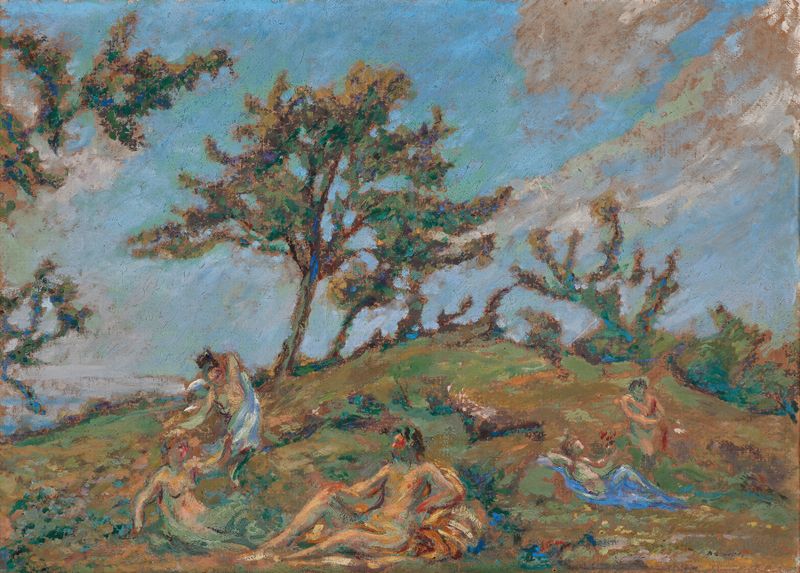
Pastorale
Ker-Xavier Roussel

Deux femmes assises dans un paysage de l’Ile de France
Ker-Xavier Roussel
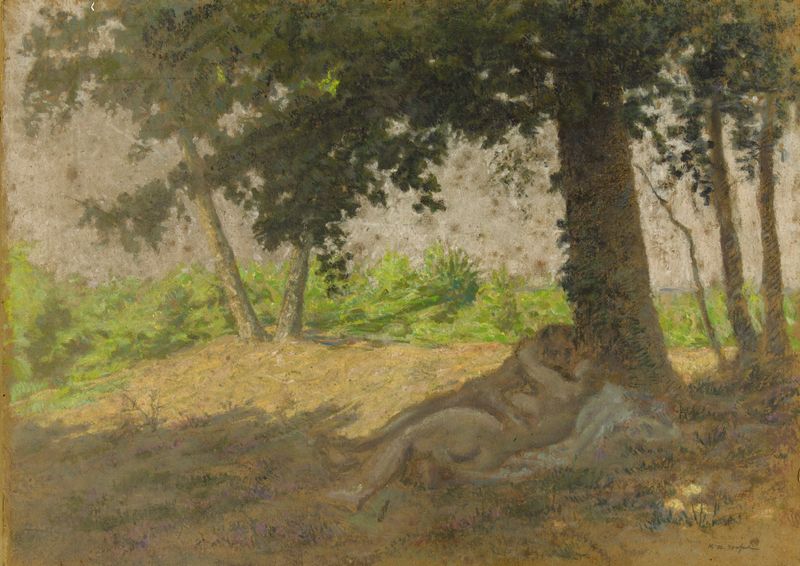
Couple enlacé couché dans un paysage
Ker-Xavier Roussel

Femme en rouge dans un paysage
Ker-Xavier Roussel





