Marailsjakohoen (Penelope marail) — History & Facts
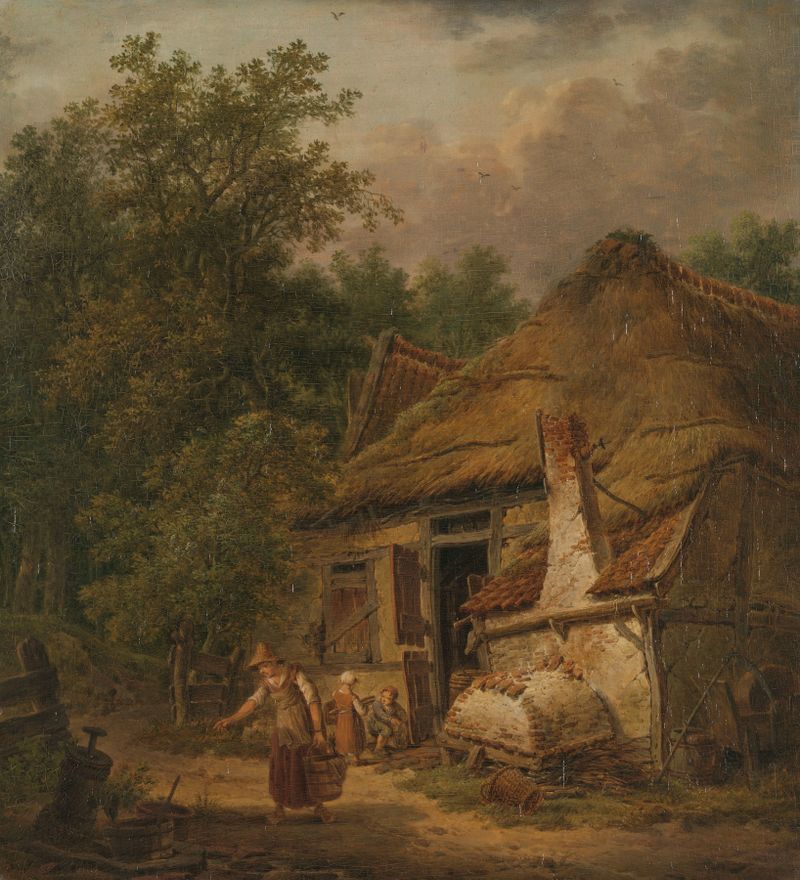
Is this a mirror — or a memory? In Marailsjakohoen, innocence is captured in a delicate balance, drawing the viewer into a realm where past and present intertwine effortlessly. Look to the center of the canvas where the figure stands, draped in soft, flowing garments that seem to whisper of youth and grace. The artist employs a muted palette of pastels, bathing the scene in a gentle light that invites contemplation. Notice how the light contours the figure’s face, illuminating her expressive gaze while shadows linger around her, suggesting the complexity of her inner world.
Each brushstroke reveals Barbiers’ mastery in rendering fabric and form, lending a tactile quality that transcends the two-dimensional surface. As you explore further, observe the subtle interplay between innocence and experience. The delicate positioning of the hands, resting lightly on her waist, hints at a vulnerability that contrasts with the strength of her posture. The background, barely defined, seems to dissolve into hues that evoke nostalgia, reinforcing the idea that this moment is a fleeting glimpse into a life rife with untold stories.
Here, innocence is not merely depicted; it is felt, resonating deep within the viewer. Pieter Pietersz. Barbiers painted this work during a period marked by significant shifts in European art, from the Rococo's playful exuberance to a burgeoning Romanticism that favored deep emotional engagement. Active in the early 19th century, Barbiers navigated these transitions while developing a unique voice, often exploring themes of femininity and human emotion.
In Marailsjakohoen, his ability to capture the essence of innocence reflects not only his technical skill but also his engagement with the evolving artistic landscape of his time.