Mill in the forest — History & Facts
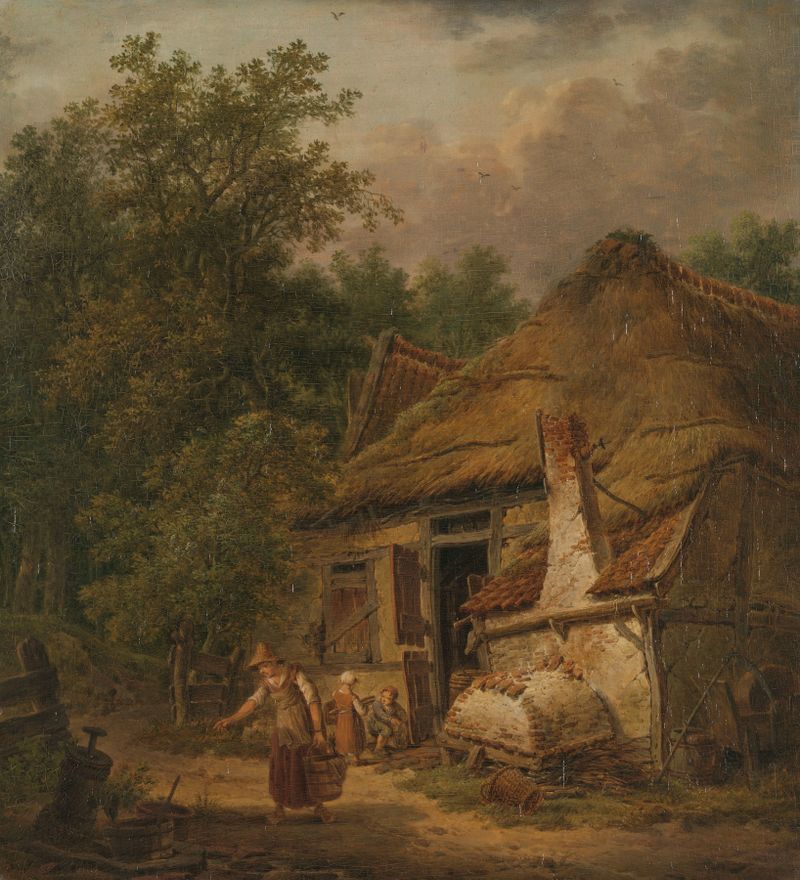
This sentiment resonates deeply when contemplating the intricate landscapes of the past, where nature's rawness can cloak profound revelations. Look to the gentle curve of the river, flowing unobtrusively through the scene, its shimmering surface drawing the eye with promise. Notice how the dense canopy overhead fractures the light, creating a dance of shadows that mingle harmoniously with the warm earth tones below. The mill stands as a steadfast sentinel, its rich textures inviting viewers to explore the interplay between man and nature, revealing an era where industriousness was both a necessity and a burden. Hidden beneath this pastoral charm lies a tension between serenity and industriousness.
The mill, often a symbol of progress, juxtaposes the untamed wilderness that encircles it. One can sense the weight of human endeavor, as if the labor carried out here whispers truths about the struggle against nature's indifference. The soft palette evokes a bittersweet nostalgia, hinting at the duality of beauty and toil that permeates rural life. Pieter Pietersz.
Barbiers painted this scene at an undetermined moment in his career, likely during a time when the Dutch landscape was in tumultuous transition. The rising interest in rural subjects coincided with Barbiers' exploration of natural landscapes, a reflection of a society grappling with change while yearning for simplicity. His work emerges amidst a broader movement towards realism, capturing not just the physical beauty of the world, but its complex emotional undercurrents as well.