March Day in Le Jardin du Luxembourg, Paris — History & Facts
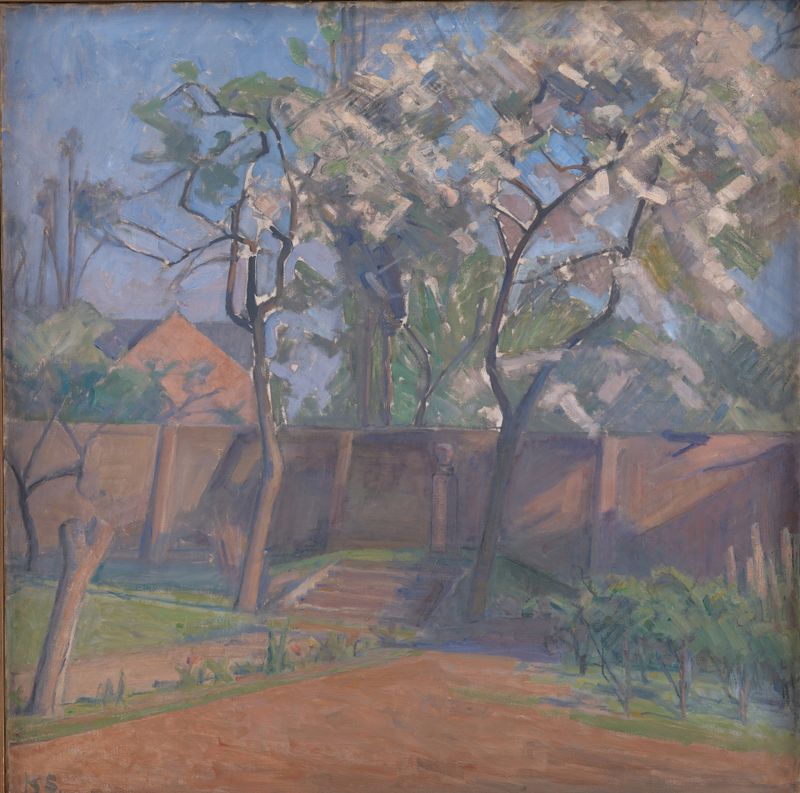
What if silence could speak through light? In March Day in Le Jardin du Luxembourg, Paris, the hush of an early spring afternoon whispers softly across the canvas, inviting reflection and creation. Focus first on the gentle interplay of light and shadow throughout the scene. The sun filters through delicate branches, casting dappled patterns on the ground, where vibrant greens and soft pastels emerge from a slumberous winter. Notice how the figures in the park, seemingly lost in their own worlds, contribute to the harmony of the composition, inviting you to join their quiet revelry.
The use of structured brushstrokes enhances both the textures of the foliage and the dreamy atmosphere, creating an inviting emotional landscape. Deeper insights reveal a world where stillness fosters connection. The contrast between the lively patches of color and the muted tones of the background suggests a tension between the vibrancy of life and the calm introspection of lingering moments. Small details, like the way a child’s hand reaches towards a blossoming flower, echo the theme of creation — not just of nature, but of fleeting memories and blossoming relationships.
Every gaze and gesture offers a glimpse into the inner world of the park-goers, whispering stories untold. In the years 1921-1922, while March Day in Le Jardin du Luxembourg took shape, Karl Schou found himself in a Paris undergoing a cultural renaissance. Fresh from the upheavals of World War I, artists were exploring new forms of expression, and Schou, influenced by the Impressionists, sought to capture the tranquility of urban life. This painting embodies his dedication to the beauty of everyday moments, reflecting a world reborn amidst the backdrop of post-war rejuvenation.