Marcheline arabe — History & Facts
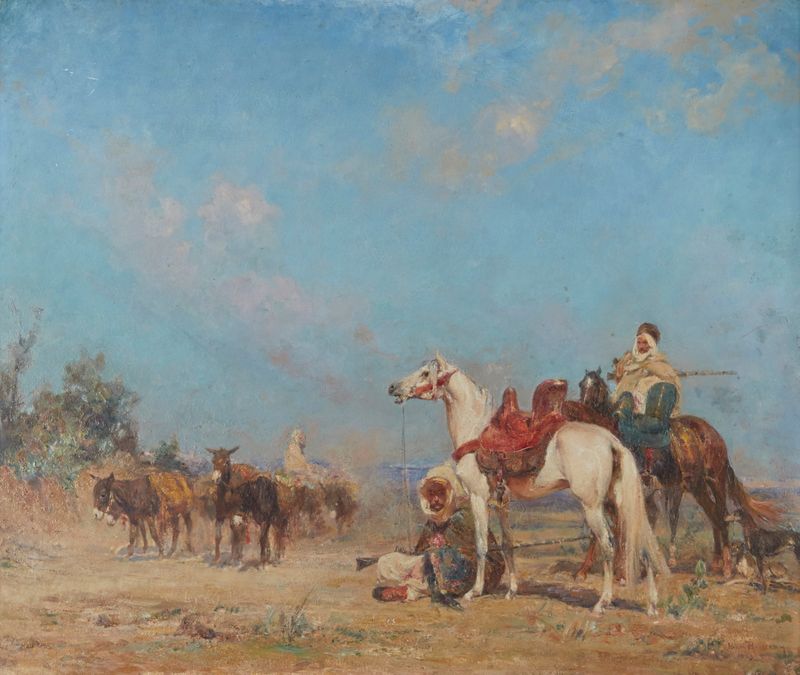
Where does light end, and longing begin? In Marcheline arabe, an exquisite interplay of shadow and illumination draws the viewer into a world suspended between reality and reverie. Look to the center of the canvas, where a delicate figure emerges, seemingly caught in a moment of contemplation. The soft hues of ochre and emerald swirl around her, evoking the warmth of a sun-drenched landscape. Notice how the brushstrokes pulsate with an ethereal quality, capturing not just the essence of her posture but the very spirit of her thoughts.
The ambient light dances across the surface, creating a shimmering effect that invites you to explore the depths of her introspection. Yet, hidden beneath this serene facade lies a palpable tension. The figure’s gaze, both distant and intimate, suggests a yearning that transcends the earthly bounds of her surroundings. The rich textures of the fabric she dons ripple like waves, hinting at a journey unspoken, while the contrasting shadows frame her in solitude, amplifying a sense of isolation despite the vibrancy around her.
It is in these dichotomies that the painting reveals layers of emotional complexity, urging viewers to confront their own desires and memories. Henri Émilien Rousseau painted Marcheline arabe during a period marked by personal exploration and a collective shift in artistic expressions. Living in the early 20th century, Rousseau found himself at the confluence of traditional techniques and modern ideals, reflecting the broader artistic movements of his time. This painting embodies his exploration of light and emotion, capturing a moment that resonates with both the artist's internal struggles and the evolving landscape of art itself.