A caravan at rest — History & Facts
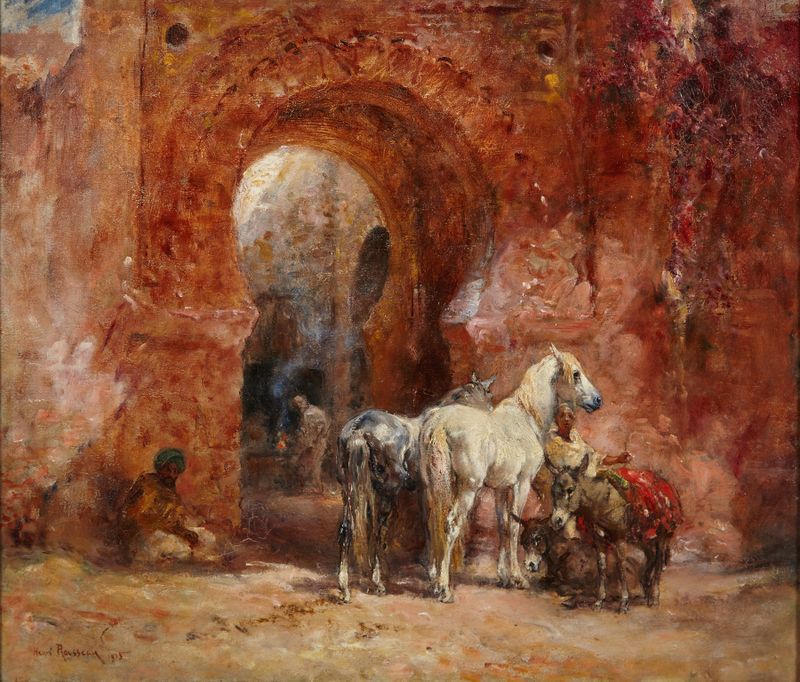
In the stillness of a dream, a caravan rests beneath the sprawling canopy of a twilight sky, suggesting an ethereal pause in the journey of life. The air hums with a sense of reverie, both tranquil and charged with the stories held within each figure and animal. Focus on the warm blend of earthy hues that saturate the canvas, inviting you to explore the resting caravan at its center. Notice how the artist’s deft brushwork creates an interplay of light and shadow, enveloping the scene in a soft glow.
The subtle gradient from deep indigo to burnished gold implies a world poised on the brink of night, emphasizing the stillness of the moment. Each detail, from the texture of the tents to the posture of the animals, draws the viewer into an intimate tableau of transient lives suspended in time. Look closer for the intricate patterns woven into the caravan’s fabric, hinting at the diverse cultures that intersect in this space. The juxtaposition of the calm setting against the suggestion of travel and adventure stirs a profound longing within us.
These characters, seemingly at rest, pulse with the energy of where they’ve been and where they might yet go, challenging the notion of stillness as merely passive. During the time this work was created, Rousseau was deeply engaged with capturing the essence of human experiences through simple yet profound narratives. Painted in the late 19th century, likely amidst the burgeoning fascination with Impressionism, the artist sought to bridge the gap between realism and the dreamlike quality of life, reflecting the complexities of existence and the hope inherent in every journey.