Margate — History & Facts
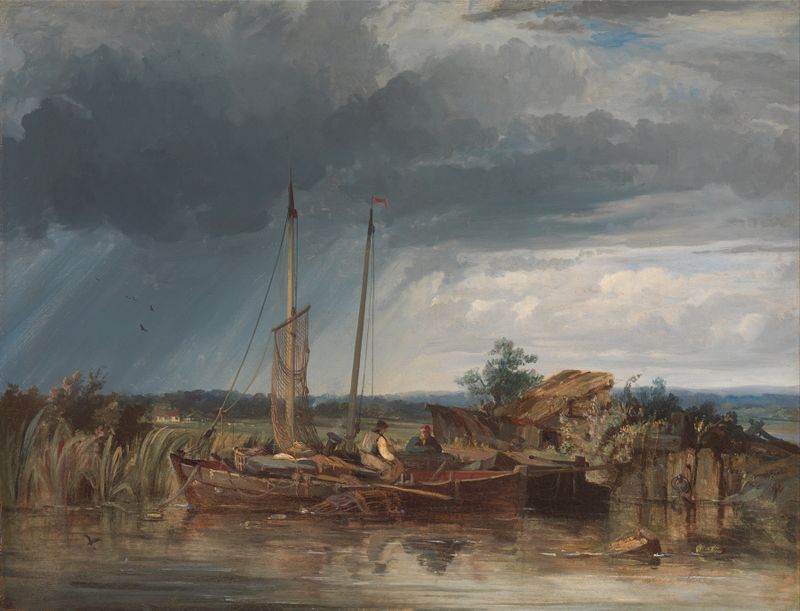
What if silence could speak through light? In George Chambers' Margate, the tranquil interplay of muted colors and soft brushwork hints at a world awakening, pulsating quietly with life. Focus on the horizon where the gentle waves meet the pastel sky, painted in serene blues and soft pinks that communicate a sense of calm. Notice how the light filters down, casting delicate reflections upon the water's surface and illuminating the silhouettes of distant boats, inviting contemplation. The subtle variation in brushstrokes captures the ethereal quality of the seaside atmosphere, drawing the viewer into a moment suspended in time. Within this composition lies a deeper narrative—the juxtaposition of the stillness of the sea against the fleeting nature of life itself.
The boats, though static in their depiction, seem to beckon toward adventure, contrasting with the serene backdrop. Additionally, the soft blending of colors mirrors the transition from day to night, symbolizing the passage of time and the awakening of a new day—a reminder of life's cyclical nature. In 1837, the artist found inspiration on the coasts of England, where he painted Margate during a period of personal exploration and artistic growth. Art was evolving, with Romanticism paving the way for impressionistic techniques, and Chambers was a part of this transformative era.
His work reflects the burgeoning interest in capturing not just scenes but the very essence and atmosphere of life along the coast.