Marina — History & Facts
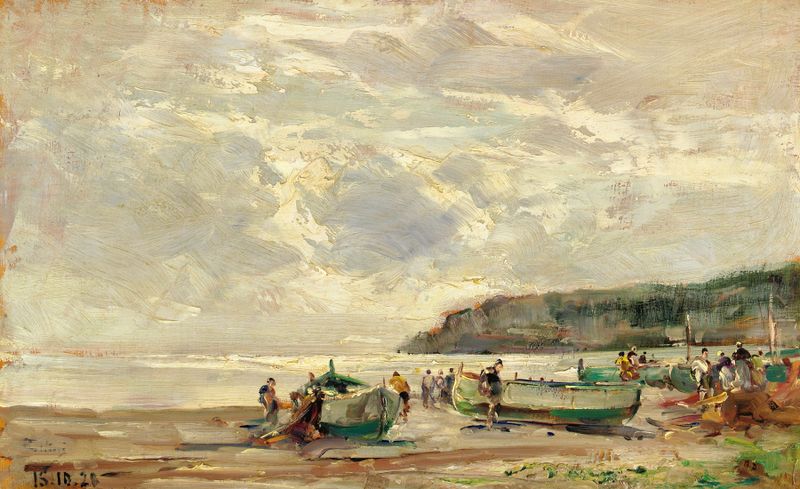
When did color learn to lie? In a world where hues can evoke memories and emotions, loss becomes an intricate tapestry woven through the threads of vibrant pigments, reminding us of what is no longer here. Focus on the deep azure that envelops the canvas like a memory slowly fading into the ether. The undulating waves, rendered in fluid strokes, draw the eye toward the horizon, hinting at a distant shoreline. Notice how the light dances upon the crests of the water, an ephemeral shimmer that both captivates and confounds.
The palette is rich with contrasts; warm ochres and cool blues create an emotional push and pull, evoking feelings of longing and nostalgia. Within the rippling surface, the interplay of light and shadow reveals deeper truths about absence and remembrance. The quiet solitude of the scene speaks to the ache of what was lost—perhaps a moment shared or a place left behind. The ethereal quality of the water suggests an elusive connection, inviting contemplation on the nature of life and memory.
Subtle details, like the unfurling waves or the soft caress of the breeze, challenge the viewer to confront their own experiences of longing. Carlo Follini painted Marina during a period when he was exploring the emotional weight of landscapes. The exact date remains uncertain, yet the work reflects his ongoing engagement with color and form as a means to express the complexities of the human experience. The art world was embracing abstraction, yet Follini remained committed to capturing the poignant intersections of nature and emotion.