Marine — History & Facts
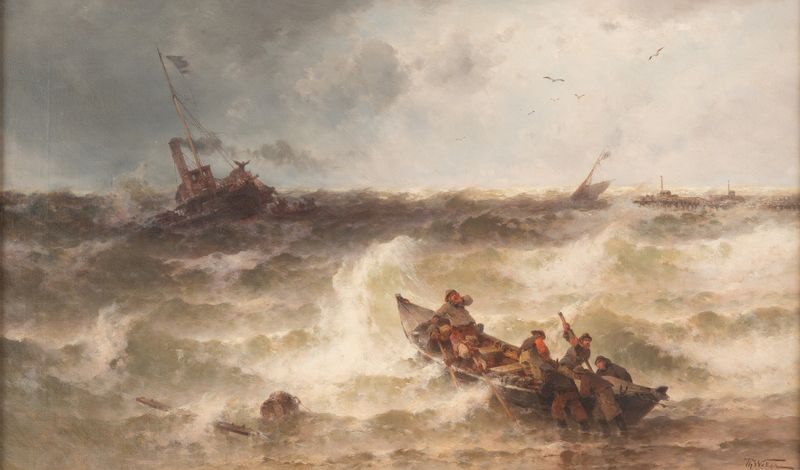
Could beauty survive in a century of chaos? The deep blue waves crash against the cliffs, whispering secrets of solitude as they reach for the shore. In this moment, isolation feels palpable, as if the vast ocean holds the weight of countless untold stories. Each crest rises and falls, like the heartbeat of a world teetering between tranquility and turmoil. Focus on the horizon, where the sea meets an expansive sky, merging shades of azure with hints of ochre.
The brushwork reveals a delicate interplay between light and shadow, capturing the ethereal quality of twilight. Notice how the swirling clouds draw the eye upward, creating a sense of longing that contrasts with the solid, unyielding cliffs below. The color palette communicates both danger and beauty, evoking feelings of loneliness and awe. The emotional tension resides in the juxtaposition of the tranquil sea and the rugged land, symbolizing the duality of existence itself.
The gentle waves beckon with their allure, contrasting sharply against the steadfast cliffs, representing the isolation that beauty can often impose. Small details, like the distant sailboat on the horizon, evoke the human experience, suggesting that even in solitude, there is a yearning for connection with something greater. In the 19th century, Theodor Alexander Weber painted this work during a period marked by transformation and societal upheaval. Living and working in Europe, he was part of a movement that sought to navigate the delicate balance between nature and the human soul amid rapid industrialization.
This artwork reflects not only his personal struggles but also the collective sentiment of a world caught in the throes of change, yearning for the solace found in the beauty of nature.